Due to an extremely deadly winter here on the Northern Plains, a winter which has claimed the life of a tribal member, we are raising funds to deploy 20 home pilot projects to receive multi-fuel stoves to replace dependency on fossil fuels to heat our homes (namely propane). We will grow our fuel source and manufacture our own fuel sources in the immediate future to start this shift to renewables. We send our condolences to the family of the lady we lost to a home which could not afford to be heated. Google “Standing Rock propane crisis” for more info. email us at lastrealindians@gmail.com with any questions. We thank you genuinely. Lila wopila tanka
Was thinking that Governor Inslee should write another proclamation to honor the First Peoples of this land. Thinking we should make it for February 12th, it will be a day to be witness that the first people are still here. Thank you Creator! The day would honor the Boldt Decision and the ancestors of this land! What do you guys say ? We all need to write to him and make this so.
Write
Governor Jay Inslee
Office of the Governor
PO Box 40002
Olympia, WA 98504-0002
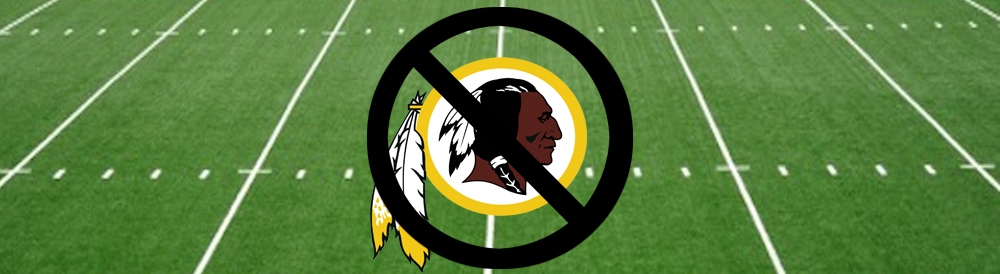
Watch the #Big Game commercial the NFL would never air. Get involved by contacting the Washington Professional Football Team, the NFL and the Washington Post:
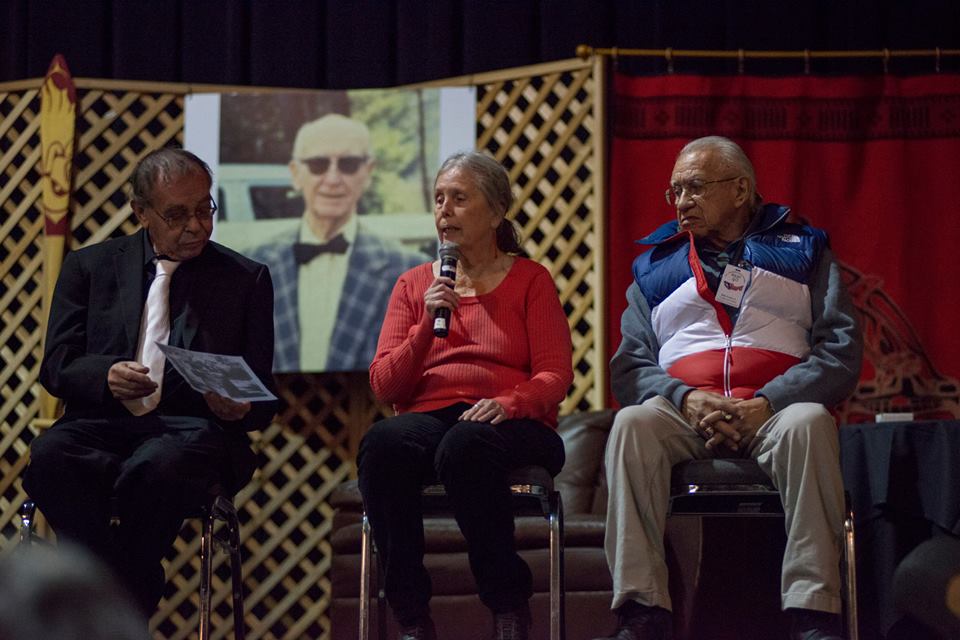
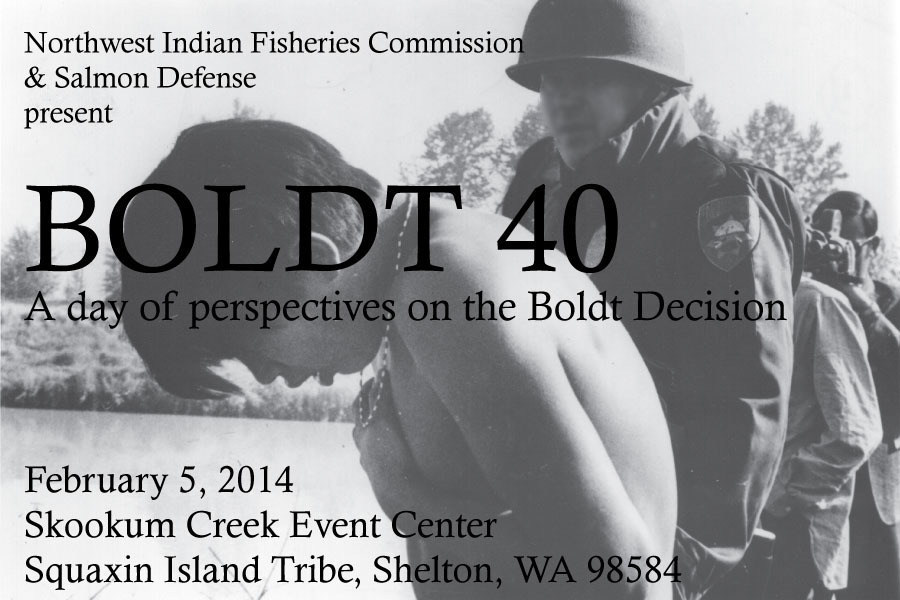
The Northwest Indian Fisheries Commission & Salmon Defense will host an event, “Boldt 40″, a day of perspectives on the Boldt Decision, on February 5, 2014, 10 am-4pm at the Skookum Creek Event Center, Squaxin Island Tribe, Shelton, WA. 10 am-4pm
Subject: Seattle Ad: MLK Would Demand D.C. Team Name Change
Good Morning,
D.C.’s NFL team may not be joining the Seahawks in the playoffs, but the push to change the team’s name continues in full force in Seattle and Washington.
In the lead-up to Sunday’s NFC Championship Game, a new ad from the Oneida Indian Nation’s Change the Mascot campaign will run in Seattle. Airing over Martin Luther King, Jr. Day weekend, the latest radio spot features civil rights leader and D.C. Congresswoman Eleanor Holmes Norton saying that Dr. King would support calls for the Washington team to drop its racist “R-word” mascot.
The new radio ad will run on local station KIRO, as well as Denver’s KDSP and D.C.’s WMAL.
A press release with further details is below. Full audio of the new advertisement is available at www.changethemascot.org.
If you are interested in additional information or speaking with a representative of the Oneida Indian Nation, then please contact me at this email or at 954-789-9112.
Regards,
Evan
MLK Day Ad: D.C. Congresswoman and Civil Rights Leader Says Dr. King Would Demand End to Washington NFL Team Name
The latest ad from the Oneida Indian Nation’s Change the Mascot campaign will air this weekend in Washington, D.C., along with Denver and Seattle, sites of the NFL’s conference championship games.
Oneida Nation Homelands (NY) (PRWEB) January 16, 2014
As part of its season-long Change the Mascot campaign to end the use of the R-word slur by Washington’s NFL team, the Oneida Indian Nation of New York today released a new radio ad entitled “Civil Rights” featuring civil rights leader and Congresswoman Eleanor Holmes Norton (D-D.C.). Having helped organize Dr. King’s 1963 March on Washington, Norton says in the ad that if Dr. King were alive today, he would support the Change the Mascot campaign. The latest radio spot is set to run over Martin Luther King, Jr. Day weekend in Washington, D.C., as well as in Denver and Seattle, the sites of the NFL’s conference championship games.
“As the lone congressional representative of the District of Columbia and a renowned civil rights leader, Congresswoman Eleanor Holmes Norton is a uniquely powerful voice telling the NFL that it must stop the Washington team from continuing to promote a dictionary-defined racial slur,” said Oneida Indian Nation Representative Ray Halbritter. “As we celebrate the life and legacy of Dr. King this weekend, the NFL should honor his crusade for equality and mutual respect by finally using its power to change the Washington team’s name.”
As the Change the Mascot campaign’s radio ads have aired throughout the current NFL season, public health experts, civil rights groups, editorial boards, city councils, sports-industry icons, members of Congress from both parties, and the President of the United States have all spoken out against the Washington team’s continued use of the R-word.
Added Halbritter: “From city councils to top editorial boards to Members of Congress to the President of the United States, those supporters who have joined the Change the Mascot campaign understand a very simple truth: marketing a team with a slur against Native peoples is unacceptable, especially when the team represents our nation’s capital. The fact is that we don’t deserve to be treated as the target of such an epithet, we deserve to be treated as what we are: Americans.”
Last month, the membership of The Leadership Conference on Civil and Human Rights, the nation’s premier civil and human rights coalition representing more than 200 diverse national organizations, voted unanimously for a resolution urging the owner of the Washington NFL franchise to change the team’s offensive name.
The latest ads will air on radio stations WMAL in Washington, D.C., KDSP in Denver and KIRO in Seattle.
You can learn more about the campaign and download the new ad at http://www.changethemascot.org.
To listen to the new radio ad, titled “Civil Rights,” click here.
Full text of the “Civil Rights” ad:
CONGRESSWOMAN HOLMES NORTON: “Hello, I am Congresswoman Eleanor Holmes Norton. It is my privilege to represent the residents of the District of Columbia.
The residents of the capital of our nation have always tried to set an example for tolerance and mutual respect. Yet the current name of our NFL football team stands in stark contrast to these values. Many of our residents, like me, were part of the civil rights movement or identify strongly with its goals and philosophy. We recognize that the Change the Mascot campaign to end the use of the ‘R-word’ is both a moral and civil rights issue in keeping with our city’s respect for the dignity of all people.
We have no doubt that if Martin Luther King Jr. could speak today, he would lend his support to the current efforts of our Native American brothers and sisters. We know from our history as African Americans in this country that offensive terms not only should, but can, be cast aside if we do not retreat into silence.
The Washington football team should change the mascot and make the name of our team a source of pride that honors D.C.’s tradition of respect for all Americans.”
VOICEOVER: “Paid for by the Oneida Indian Nation of New York.”
###
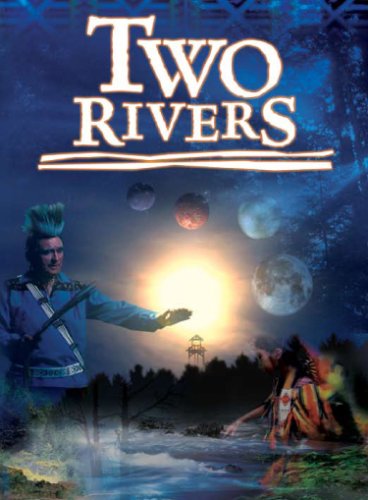
Two Rivers” is a rich, lyrical, 60-minute documentary that seamlessly layers together several powerful components. The contemporary story is told through in-depth interviews with all the Native and European American principals who spearheaded the reconciliation meetings, as well as exclusive, intimate footage of the Two Rivers Powwows.
The tale of the past unfolds through memoirs, letters, prophecies, and other historical materials, read by Native and European American actors. The spiritual element is conveyed through the use of authentic Plateau Indian prayers and sacred songs (many of them recorded live during ceremonies filmed for “TWO RIVERS”), as well as through hauntingly beautiful, visually poetic images of the Methow Valley today.
“Two Rivers” is aimed at a wide, multi-faceted audience. Although attempts at Native and European American reconciliation are not unheard of, they typically fail to produce lasting changes—usually because whites set the agenda. “TWO RIVERS” will thus appeal to both whites and Natives who want to learn effective means for connecting and healing their wounds, as well as to any individuals or groups interested in healing rifts caused by racism or divisions of any sort.
In addition, by honoring the Native point of view, “TWO RIVERS” reveals a history that is becoming increasingly unfamiliar to Native American youth and is largely unknown to European Americans. But more than anything else, “TWO RIVERS” is a fascinating human story with large implications. “TWO RIVERS” shows how people from different worlds can create profound, lasting friendships if they are willing to adopt an open attitude, experiment with new ways of connecting, and learn to speak, listen, and act from their hearts.
Cangleska Wakan is a Lakota term meaning Sacred Circle or Hoop. It is based on the Sioux concept that everything in the universe is interrelated, human beings and all things which exist in their environment are connected in one continuous process of growth and development. Cangleska being circle and Wakan meaning holy or sacred. The film addresses the concept of the Sacred Hoop through the eyes and voices of the Lakota Nation. Shot on the Pine Ridge Indian Reservation in South Dakota during the Winter/ Spring of 2008 /09 the cinematography captures a stark and unrivaled beauty which transcends all barriers connecting it’s heart to that of it’s audience.
The film is considered a performative documentary. Stressing an emotional response to the world it is personal, unconventional and experimental. Linking personal accounts with historical realities through interviews the film includes hypothetical enactments and historical re-enactments of events which offers the viewer a specific perspective on a world which is not theirs yet provides a spiritual connection they can relate to.
The Cangleska Wakan / Sacred Hoop represents the unity that binds the Lakota nation together with shared values and a clan system. These values include amongst others the language, ceremonies such as the sweat lodge and vision quest, the pipe, storytelling, songs, religion, bravery, respect, wisdom, generosity, the four directions, mother earth, father sky, teachings from elders and a belief that everything which is good and holy is circular in shape.
Personal and in depth discussions through interviews with people such as Russell Means, Donovin Hump and Dallas Chief Eagle plus other Lakota from the seven bands of the Great Sioux Nation such as Oglala, Minneconjou etc. Questions addressed include What is the Sacred Hoop / Circle Of Life, Has it been broken and if so when? Can it be mended?
One of the most poignant and interesting topics covered include the notion that everything that is good and holy is ‘round’ and revolves in a circular fashion such as the sun, earth, moon, planets, women’s menstrual cycle, shape of an eagles nest, tipi etc.
Some people believe the hoop was broken with the arrival of the Europeans in the 1400s, others believe it was compromised with the surrender of prominent chiefs such as Crazy Horse and Red Cloud in the 1800s.Some believe it has not been broken, yet the film does portray the fact that the Cangleska Wakan is a lifecycle which encompasses everyday life which is connected to the whole world. Cangleska Wakan is an intriguing documentary, an absolute must see for anyone interested in spirituality and the history of the American ‘In Dio’ ( In With God )
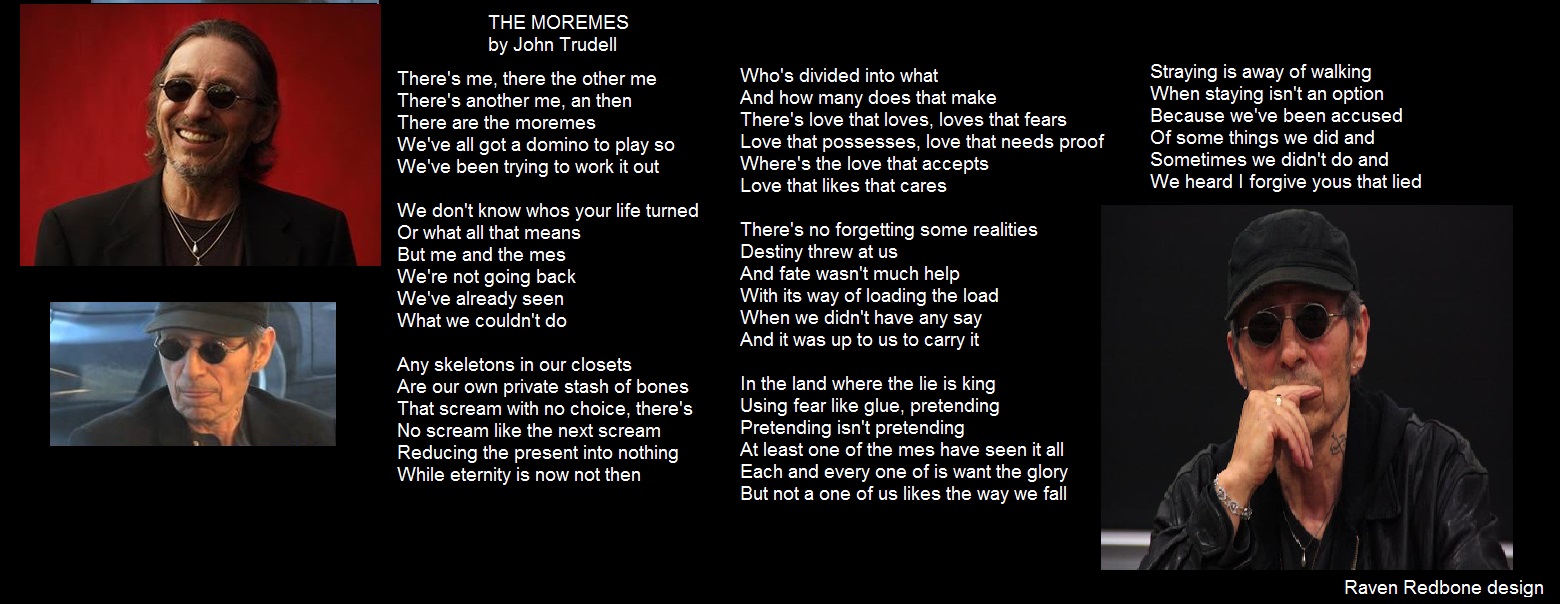
There’s me, there the other me
There’s another me, an then
There are the moremes
We’ve all got a domino to play so
We’ve been trying to work it out
We don’t know whos your life turned
Or what all that means
But me and the mes
We’re not going back
We’ve already seen
What we couldn’t do
Any skeletons in our closets
Are our own private stash of bones
That scream with no choice, there’s
No scream like the next scream
Reducing the present into nothing
While eternity is now not then
Who’s divided into what
And how many does that make
There’s love that loves, loves that fears
Love that possesses, love that needs proof
Where’s the love that accepts
Love that likes that cares
There’s no forgetting some realities
Destiny threw at us
And fate wasn’t much help
With its way of loading the load
When we didn’t have any say
And it was up to us to carry it
In the land where the lie is king
Using fear like glue, pretending
Pretending isn’t pretending
At least one of the mes have seen it all
Each and every one of is want the glory
But not a one of us likes the way we fall
Straying is away of walking
When staying isn’t an option
Because we’ve been accused
Of some things we did and
Sometimes we didn’t do and
We heard I forgive yous that lied
Me and the mes are looking
For a me that will answer to me
So far there’s no me who will.
Welcome! It is an honor to contribute and give another voice to the “The First Peoples” of our world.
Make No Bones About It. * KAOS 89.3 FM
Sundays 4pm to 6 pm with your Host, Raven Redbone.Visit KAOS 89.3 FM @ www.kaosradio.org!
Make No Bones About It
Make No Bones About It- Sound Cloud
World Peace and Prayer Day 2013
Encouraging Words from our Elders
"I appreciate your work in giving voice to our peoples. Blessings to you." Grandmother Mona Polacca
Quote of the Month
Yes, our life energy must be a gift for our future. Your life, my life, everybody’s life must follow your given path. So pray or meditate. Follow your inner path and learn just how powerful you are and learn that you are a leader for your people, your family, your children, and the Mother Earth.
-Chief Arvol Looking Horse, Lakota




 Make No Bones About It