Tag Archives: Make No Bones About It

Joanelle Romero on “Make No Bones About It.” June 26th, 2016 at 4 pm

red

Joanelle Romero

We will be visiting Joanelle Romero  tomorrow on KAOS radio 89.3 fm Olympia-www.kaosradio.org. Talking about Native Woman in film and possibly, her book, Red Nation Television and more …. tune in and check it out!

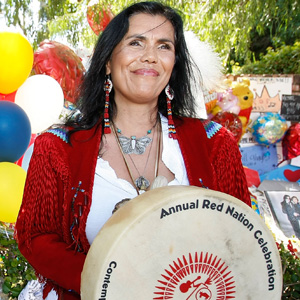
Joanelle Romero, humanitarian, filmmaker, actress, recording artist/singer/songwriter, in 2006 launched Red Nation Media Internet and Television Channel with all Native programming.  Her accomplishments as a pioneer in film, television, non-profit organizations, educator, philanthropist, producer, director, have established her as one of the most respected and admired public figures today.  Born in Albuquerque, New Mexico of Apache/Cheyenne, Jewish and Spanish descent, Romero was raised in Los Angeles on a variety of TV and movie sets, where she learned her craft.

As an actress, singer, songwriter, entrepreneur, producer and filmmaker of American Indian performing arts including programming on her Red Nation Media Network Channel, she has entertained, inspired, moderated, enlightened the general public for the almost 3 decades. Using media as a primary tool, Romero has created a connection within Indian Country; including the film, television, music industries and to people around the world.

In 1991, Romero founded Spirit World Productions, as she saw a need for American Indian people to tell their own stories in television, film, and music. Spirit World Productions continues to American Indian films, pilots, and music, giving voices to those who would otherwise remain unheard.  Through her company’s film division Spirit World Productions, Romero has become an award-winning American Indian documentary filmmaker & drama series producer.

In 2000, Spirit World Productions released the internationally critically acclaimed Award –Winning documentary film American Holocaust: When It’s All Over I’ll Still Be.Indian  Narrated by Ed Anser.  This film has the last footage shot of the Late Grandpa Wallace Black Elk and Former Chairwoman Mildred Clayhorn of the Ft. Sill Apache Nation.  Romero directed, produced, wrote, and scored the music for this controversial and groundbreaking film.  This documentary is the first and only film that compares Hitler’s attempted genocide of German Jews with the U.S. government’s treatment of American Indians and the lasting effects on the culture today.

To provide multiple, ongoing avenues for the exploration and presentation of contemporary and traditional American Indian performing arts, in 1995, Romero founded the non-profit organization, Red Nation Celebration (RNC). This organization premieres contemporary and traditional American Indian performing arts of diverse artistic disciplines to the mainstream media and to the global communities with the goal of encouraging understanding of the cultural traditions, performing arts, community and the advancement of indigenous nations.  Additionally, RNC educates the public on aspects of American Indian cultural and artistic expression; educates and informs the music and film industries on new talent within the American Indian community; provides youth with educational and vocational opportunities related to the music and entertainment industry; and introduces American Indian artists to larger, global mainstream audiences.

In 2005 she received the Armin T. Wegner “Humanitarian” Award for the vision to see the truth…and the courage to speak it.

Continuing her on-going work to ensure that the culture, traditions, and history of American Indians would be recognized and celebrate, Romero initiated the first annual American Indian Heritage Month with the City of Los Angeles in November 2006 and she was named “The First Lady” of American Indian Heritage Month by American Indian Spiritual Leaders.

President Bruce Richard Dumont of the Metis Nation on Make No Bones About It. May 22, 2016

BruceSmLogo

Bruce Richard Dumont was born in Olds, Alberta in 1944 to his Mother, Cecile Marie Dumont (Vaness) from Onion Lake Saskatchewan, and father Joseph Ambrose Dumont, from Camrose, Alberta. Bruce is of Métis ancestry from parents, grandparents and great grandparents traced back to the 1700’s.


Mother –Cecile Marie Vaness of Cree and Scot ancestry

Born November 15, 1917 in Onion Lake, Saskatchewan to Daniel Vaness and Anna Dufresne. Mary Dumont’s grandfather Francois Dufresne and Bleasdale Cameron were captured by Wandering Spirit in April 1885 during the Metis Resistance prior to Battles at Duck Lake, Fish Creek and Batoche Saskatchewan. Wandering Spirit was a radical Chief of Big Bear’s Tribe.  Bleasdale Cameron wrote the book “Blood Red the Sun” a true factual account of the First Nations uprising prior to the Riel Resistance of 1885 Francois and Bleasdale were released in June after the Battle of Batoche.

Mary Dumont’s (Vaness) Grandfather Baptiste Annas hunted buffalo with Gabriel Dumont.


Father – Joseph Ambrose Dumont of Cree and French Ancestry

Born January 25, 1917 in Gwynne Alberta near Camrose, AB to St. Pierre Dumont and Marie Boudreau. Ambrose is a direct descendant of Isadore Dumont the first Métis killed at the Battle of Duck Lake. Gabriel Dumont was Isadore’s son.  Bruce is the fifth of ten children born to Ambrose and Mary Dumont. English was a second language to their native Cree tongue. They were a Metis Road Allowance family until the owner of the land they squatted on decided to burn them out.

Bruce is following the path of his family tradition, fighting for the betterment of Métis Peoples.


Bruce received his Grade School Education in Sundre, Alberta and completed his Secondary Education at  Northern and Southern Alberta Institutes of Technology (NAIT) and (SAIT) as a Red Seal Tradesman in Electronics. Bruce changed occupation to the BC Forest Industry and completed this career with the Workers Compensation Board of BC as a Professional Safety Officer. Bruce spent 9 years in the Electronics field, 20 years in the BC forest Industry as a supervisor on the West Coast of Vancouver Island, the Mainland Coast and Haida Gwaii. He spent 14 years inspecting Industry Worksites primarily Logging which was his expertise from 1992 to 2006.


As an active Métis Community Member serving his community for many years, Bruce ran for the position of Vice President for the Métis Nation British Columbia and won his election in 2004 where he served less than six (6) months before successfully winning the election for the position of President in 2005.  He is currently serving his third term in office as President of the Métis Nation British Columbia and is the longest reining President of Metis Nation BC.  He will be retiring in September of 2016.


In addition to his role and responsibilities as President, Bruce is the MNBC Minister of Natural Resources and sits as a Board of Governor at the national level for the Métis National Council as Minister for Culture, Heritage and Language and Minister for Health and Sport. Appointed in 2014, he also sits on two important Committees; BC Hydro – Strategic Aboriginal Engagement Committee / SAEC and an AEP Steward with the Northern Gateway Project / NGP as MNBC is an Aboriginal Equity Partner / AEP.


Bruce presently resides in Victoria, BC with his Wife Joanne; together they share 7 children (4 boys and 3 girls) and 12 grandchildren (3 girls and 9 boys) from ages 6 to 22.

BC has over 13,000 registered Métis Citizens and represents the majority of nearly 70,000 self-identified Métis people across the province of British Columbia.  MNBC is recognized by the Federal and Provincial Government and the Metis National Council as the only recognized provincial Métis governing organization of British Columbia.

Bruce BIO Mar 22 2016

Raven visits with Chief Phil Lane Jr. -The Death Pangs of the Old and the Birth Cries of the New! only on KAOS!

headdress

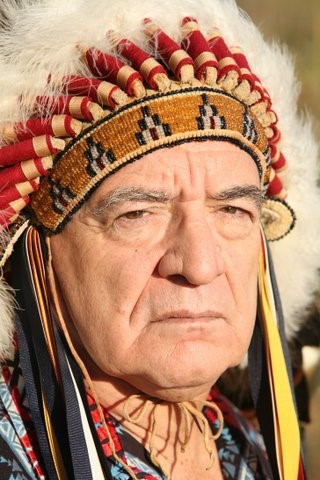
Chief Phil Lane Jr. (Philip Nathan Lane, Jr.) (born 1944) is a traditionally recognized Hereditary Chief and Elder.[1] He is an enrolled member of the Ihanktonwan Dakota and Chickasaw Nations, and is a citizen of both Canada and the United States. The founder and chairman of the Four World’s International Institute (FWII), an organization dedicated to “unifying the human family through the Fourth Way”, Chief Phil Lane, Jr. is the recipient of many awards, including the John Denver Windstar Award, and is a frequent speaker on behalf of indigenous rights and wisdom. York for the coalition of Land is Life. For more info visit site: http://www.fwii.net/

Chief Arvol Looking Horse on Make No Bones About It. March 27th, 2016 at 4 pm

559004_10151859592981887_38088706_n

Chief Arvol Looking Horse is the 19th generation keeper of the White Buffalo Calf Pipe Bundle and holds the responsibility of spiritual leader among the Lakota, Dakota and Nakota People. He holds an honorary Doctorate from the University of South Dakota, and travels and speaks extensively on peace, environmental and native rights issues. He has been the recipient of several awards, including the Wolf Award of Canada for his dedicated work for peace. A skilled horseman, he shares his knowledge with the youth on the long distance rides that take place in South Dakota throughout the year.

World Peace and Prayer Day

An evening with Nisqually Canoe Family Coordinator Hanford McCloud on Make No Bones About It. March 27th, 5pm

12182891_10207046430054546_5279486004343293171_o

Hanford McCloud Leschi Heritage Foundation, Executive Director. Learn about the Tribal Canoe Journeys, the unique 2016 Paddle to Nisqually, and how you can help.

The Canoe Family welcomes your assistance in working with the Nisqually Tribe to make gifts from red cedar bark and native plants,  giving financially to a blanket fund, and  by helping with parking and transportation (golf carts, buses); by donating food and preparing meals; and by volunteering on the Green  Team. Photo

by Zoltán Grossman

Mark Shark on “Make No Bones About It.” 2-28-2016 5 pm

12241577_1652598025019392_3067426398763781267_n

In His Own Words

Born in St. Louis Missouri some years back, to a musical heritage, my earliest memories include watching my parents practice on the beautiful black Steinway piano in our living room.

Both my mother Mary Bray, and my father William Schatzkamer, were concert pianists who met at Julliard.

After graduating they played many concerts together, then my father spent years on the road recording for RCA, touring with Paul Robeson, then onto Professor Emeritus and Conductor of both the Washington University and the Gateway Symphonies of St. Louis.

Both high achievers, my mother graduated from Smith College, received a masters degree in Ed. Psych from Washington University and her Ed.D from U Mass in Amherst. In addition to having four children she also enjoyed educating with the Head Start program, teaching music, and writing. Mark Shark, playing guitar for John Trudell I started most of my days listening to my father practice Brahms, Scriabin,  Bach, Beethoven and ended most days singing Pete Seeger folk songs with my mother out of the Fireside Songbook as she played along.

I believe all of us, my brother Bill and sisters Laura and Nina at some point attempted to learn piano, but we were quickly intimidated by either our lack of innate ability or the fear of the bar that was set before us.

I clearly remember the first time I heard an electric guitar.  I was riding in the car with my dad when Chuck Berry came on the radio “ugh” he exclaimed “what dreck!”  and he quickly turned the radio off.

I quickly turned it back on desperate to learn more about this exciting new sound!

My father glanced suspiciously over at me, his menacingly high arched brow raised the question before he spoke “You like this noise Mark?”

“I do like it Pi, it’s great…it’s exciting!”

His large shoulders slumped heavily and I could feel the distance starting to take shape between us but neither of us said more.  He indulged my desire for the radio as we drove on.  One mans poison…

About this time my older brother Bill brought home his very own record player and broadened my musical horizons with John Lee Hooker, Muddy Waters, Sonny Terry and Brownie McGee.

He invested in an electric guitar and started teaching himself to play.  I loved watching him figure it out and wanted to play too, but he was left handed and switching the guitar around was not convenient.

I would have to get my own.

I started singing in bands around the eighth grade with my friends and after a while bought a guitar and started taking lessons with Doug Niedt.  Even then Doug was freakishly good and completely disciplined and driven to  know his instrument.  Naturally, he expected me to be as committed as well, and sadly, he was quickly disappointed.

I was interested in playing songs.  I didn’t care about knowing the intricacies of the instrument.

I did not practice scales, chords, and modes as instructed, and he immediately showed me the door.  His time was valuable and he couldn’t waste it.  (Doug was then a freshman in high school.)

I was shocked and shamed into promising him I’d go through Sal Salvador’s’ Single String Studies and Mel Bays’ chord method  books if he would give me another chance and teach me songs by the Animals and the Lovin’ Spoonful!  He agreed, and I continued to play and learn throughout  high school.

Playing the Bar Mitzvah circuit and school dances was fun and a chance to put a sound together.  I spent hours practicing scales and chord patterns and I didn’t necessarily enjoy that, however I am eternally grateful to Doug for insisting that I do it.  He was absolutely right…it has made me a better musician; thanks again Doug.

At seventeen I attended Webster College in St. Louis for two years and eventually tired of that and took a job with a show band.

I was restless, and being on the road seemed exciting.  Not to mention the money was… well, seductive.

It didn’t take too long for me to realize that although fun, and certainly exciting on some levels, playing in a show band was inevitably a dead end street.

I wanted to create on my own and knew I didn’t have the depth of knowledge I needed in order to do what I wanted to on the guitar.

I noticed that Jerry Hahn (a favorite Guitar Player magazine columnist of mine) was teaching at Wichita State University.  I called him on a whim and told him that I wanted to know how chords and scales all fit together, and that I wanted to learn how to play “outside.”

Jerry chuckled and said quietly that he could help me with all that, but first I should learn how to play “inside!”

I moved to Wichita at twenty one and began taking music theory and guitar classes with Jerry.  Learning from him was a life changing experience and I still use his book “The Complete Method for Jazz Guitar” when I teach today.  My time at Wichita State was inspirational, but brief, and after completing one year the road called again.

If my choice of music was disappointing to my parents, my decision to leave school before earning a degree was the proverbial icing on the cake.  Nevertheless, I packed up and moved out to California.  We lost my brother Bill in December of 1978 and I couldn’t spend one more cold chilling winter in St. Louis.

California was the promised land then — the place where it was all happening — and I wanted to be part of that scene.

The year was 1979 and L.A. was all I had heard it would be, both good and bad.

Fascinated by the palm trees, the girls, and the music scene I took every job I could find in every hell hole imaginable.

My playing continued to broaden as it must when you’re trying to pay the rent.  One night I’d be playing Jobim at a wedding, another night would be Kool and the Gang at the Hacienda Lounge, another found me rising from the basement of Disneyland on the Tomorrowland stage wearing an electric blue tuxedo and playing disco, another would be covering George Jones at the Stetson in Garden Grove, and yet another would be doing Lightning Hopkins at the Lighthouse in Hermosa Beach.

Some were enjoyed more than others, but all of them prepared me for life as a musician.

In the summer of 1982 fate smiled kindly when my friend Gary Ray brought guitarist Jesse Ed Davis to the Lighthouse.

Jesse was larger than life.  He had enjoyed a spectacular career playing with Conway Twitty, then through fellow OKC musician Leon Russell he moved to L.A. and never looked back.  Jesse had played with the incomparable Taj Mahal, John Lennon, Gene Clark, George Harrison, Bob Dylan, Jackson Browne, Eric Clapton, you name it — he did it. I was thrilled (to say the least), and the first song we played together was Willin’ by Lowell George.

The moment Jesse hit the first note of that beautiful song I was done.

Jesse Ed Davis

Nothing I had ever played could compare to the soulful longing he expressed, seemingly effortlessly, on his guitar.  It was pure magic.

My guitar playing ability exists in pre-Jesse and post- Jesse realism.  Everything I had done up until that point was centered on the technical and musical concepts I was attempting to master.  Jesse showed me how to channel emotion into the guitar not necessarily by playing lots of notes, or even complex chordal tonalities, but rather through the simple yet profound concept of  sustained beauty through the music.

More often than not, less was more, what he edited out of his playing was genius.  He had plenty of country, blues, and jazz chops for sure, but he also had something more.

Every note he played had meaning, and an emotional depth and soul that few musicians ever achieve.  He never played a note just to play it…he chose very wisely and because of that was able to channel the emotion of a song in an unbelievably meaningful and beautiful way.

As luck would have it I had begun to play slide guitar in G tuning by then and was hoping to meet someone who could shine a light.

Jesse was that light.

What I learned just from watching him play in E tuning those first few months at the Lighthouse was life changing.

I continued playing with Jesse till we lost him in June of 1988, and while I wish we had had more time, I am and will always remain, grateful for everything he was…and everything he inspired me to be.

…Which leads us to the wonderful world
of alternate tunings.

It’s hard to say how long it would have taken me to master some of these tunings without Jesse’s help, but suffice it to say he shortened my road quite a bit.

In those days there were few books or videos on the subject.  It wasn’t taught as part of a music program in schools, and finding a journeyman to show you the way was a long shot.

People like us just sort of “felt” our way through.

You learned what to play (or what NOT to play) by falling on your face and doing it differently next time you got the chance.  Jesse not only showed me HIS way but introduced me to many other like minded people who shared the same passions I do.

It eased my path as a guitarist who is always hoping to find the right balance between the neck, the bar, the note, the string, and the finger.

This book is my version of the light Jesse, and so many others, generously shared with me.

The Tao of Tunings focuses on an in depth analysis of seventeen of the most widely used and unusual tunings.

Tuning maps to help guide your way, along with tablature and standard music notation, cd examples, and a comprehensive view of perceiving and navigating your way around these strange new lands.

You are not alone.

Among the artists I have admired and studied most are:

  • Jesse Ed Davis
  • John Lee Hooker
  • Bonnie Raitt
  • Lowell George
  • Jackson Browne
  • David Lindley
  • Ry Cooder
  • Muddy Waters
  • Leo Kottke
  • Taj Mahal
  • Joni Mitchell
  • Michael Hedges
  • David Crosby
  • Stephen Stills
  • Neil Young
  • Martin Simpson
  • Debashish Bhattacharya
  • Robert Johnson
  • Leonard Kwan
  • Keola Beamer
  • Duane Allman
  • George Harrison
  • Eric Clapton
  • Keith Richards
  • Sonny Landreth
  • Daniel Lanois
  • Ali Akbar Khan
  • Pierre Bensusan
  • Alex de Grassi
  • Jimmy Page
  • Elizabeth Cotton
  • John Fahey
  • Robbie Basho
  • Robbie Robertson
  • Lightnin’ Hopkins
  • Bach
  • Mississippi John Hurt
  • Julian Bream
  • Roscoe Holcomb
  • Ali Farka Toure
  • James Burton
  • Elmore James

I could go on but…

This book and the information in it is the culmination of the last forty years of my life spent in every dive from here to Tucumcari, Tehachapi to Tonopah.

There have been quite a few nice surprises along the way, most of which I’ll never forget.

I‘ve had the pleasure to have played and recorded with many of my own personal heroes:

  • Jesse Ed Davis
  • Jackson Browne
  • Bonnie Raitt
  • Terry Evans
  • Crosby, Stills, and Nash
  • John Trudell
  • Taj Mahal
  • George Harrison
  • Bob Dylan
  • John Fogerty
  • Jennifer Warnes
  • Bob Weir

I am eternally grateful for each and every experience, and I hope you enjoy the journey as much as I have.

Peace and Gratitude,

Mark Shark
Los Angeles, California
November 2008

Tao of Tunings In His Own Words

Michelle Roberts on Make No Bones About It. 2-28-2016 at 4pm

Genocide: A Year In The Life of The Nooksack 306 By Nooksack Tribal Councilwoman Michelle Roberts

roberts

I am the great granddaughter of Annie George, the daughter of ancestral Nooksack Chief Matsqui George. I belong to the Nooksack Tribe, and last year I was elected to our Tribal Council by the Nooksack People.

Thursday marks the one-year anniversary of the date when disenrollment against my extended Nooksack family and I—known as the “Nooksack 306”— began. Since December 19, 2012, we have been persecuted in ways unimaginable anywhere else in America.

I live on the Nooksack Reservation, which is situated in Whatcom County, just east of Bellingham, in Northern Washington. I have 3/4 American Indian blood. I am also part Filipino-American by way of my grandfather. But because of my “Indipino” mixed blood, Nooksack Tribal Chairman Bob Kelly proclaimed in recent Secretarial election propaganda that my family and I have “weaker ties to Nooksack than the rest of us who are currently enrolled here.” (Incidentally, Bob Kelly has been adopted into our tribe; he has zero Nooksack blood.) In other words, we have been blatantly discriminated against, through tribally funded mailings and a federal taxpayer funded election. Meanwhile, federal officials, ranging from local BIA Superintendent Judy Joseph to Interior Secretary Sally Jewell and Assistant Secretary Kevin Washburn, have turned a blind eye to the illegal use of a federal election as a weapon of discrimination and genocide. That simply would not happen anywhere else but in Indian Country.

I have sued in Nooksack Tribal Court for racial discrimination under the Nooksack Constitution Equal Protection Clause and for misuse of tribal funds. But the Tribal Court Judge dismissed my claims, citing Bob Kelly and his Council faction’s ability to assert the Tribe’s sovereign immunity from any suit. That resulted from recent changes that they made to the Nooksack judicial code, to shield themselves from the very civil rights claims that they foresaw my family and I bringing against them. To date I have not been able obtain any legal recourse at all for violation of my civil rights. That simply would not happen anywhere else in America.

This summer, I was abruptly fired from my day job as the Human Resource Manager at the Nooksack River Casino, where I had worked for six years. I was fired simply because I was “an employee at will.” Twelve other members of my family have likewise lost their tribal jobs this year. In reality, I was fired by Bob Kelly and his Council faction because I have spoken out against the injustices that my family and I have suffered. I also cannot seek any legal recourse for blatant workplace retaliation. That simply would not happen anywhere else but in Indian Country.

During back-to-school season this fall, several of my nieces and nephews and other youth in our family from ages 3 to 19, were denied a $275 schools supply stipend by Bob Kelly and his Council faction—simply because they are among the 64 Nooksack children “proposed for disenrollment.” Our children were humiliated when they were denied financial aid for new backpacks and supplies, only to see all of their friends with new things for the first day of school. If that were not awful enough, this month our families’ holidays were dampened when Bob Kelly and his Council passed a Resolution that likewise denied us and our children $250 in Christmas support because we are “subject to pending disenrollment proceedings.” That simply would not happen anywhere else in America.

For the last year, I have not been notified of various Tribal Council meetings, despite my elected seat on the Council. At the meetings that Bob Kelly and his Council faction have told me about, he has ordered me to leave them due to unspecified “conflicts of interest” relating to the pending disenrollment process against me and my voting constituents. Or I have been allowed to participate by conference call, only to be muted by Bob Kelly from his off-reservation home when I spoken from my heart. That simply would not happen anywhere else but in Indian Country.

Over the last year, I have been unsuccessful in my formal pleas that Bob Kelly and Council his faction convene some form—any form—of public meeting of the Nooksack People. Still, there has not been a democratic meeting at Nooksack this entire year. That despite the clear requirements of our Constitution that the Chairman at least convene an open tribal meeting of the Nooksack People on the first Tuesday of every month. A government shutdown for an entire year – that simply would not anywhere else in America, not even Washington, DC.

On two occasions this year, nearly 200 enrolled members of my Tribe—some proposed for disenrollment, some not—have signed a petition for the recall Bob Kelly, due to his failure to honor the Nooksack Constitution or any notion of democratic government. On both occasions, he and his Council faction simply refused to allow the recall petitions to go to a vote of the Nooksack electorate. They suppressed the Nooksack People’s right to vote, twice. That simply would not happen anywhere else but in Indian Country.

Meanwhile, we possess federal probate records, expert opinions from two Ph.D. anthropologists, recorded sacred oral testimony from one of our deceased matriarchs, and even a 1996 legal opinion and enrollment record from the Tribe’s lawyer, all of which all makes clear that we are, and have always been, properly enrolled Nooksack. But we have no place to go with this proof. That is because over the course of the entire last year, Bob Kelly and his Council faction have deliberately denied my family and I—and really, our entire Nooksack Tribe—access to any political process, access to any electoral process, access to any judicial process, and access to any other forum where Indian democracy or due process might reign.

That simply would not happen anywhere else in America.
Michelle Roberts is an enrolled member of the Nooksack Tribe and an elected member of the Nooksack Tribal Council.

Thana Redhawk on “Make No Bones About It.” Jan 31st, 2016 4-5pm

As an influential eloquent speaker, published poet and award winning spoken word artist, Thana Redhawk is a heaARTivist for the evolution in human consciousness. Through her poetry, music, activism and honoring sacred purpose in each being, she prays to empower others by decolonizing hearts through rEmbering what it means to be a human being. Thana currently hosts the radio show’s called Native Voices Radio on KPFN in Mendocino County, Ca and Native Nations Radio / Apache Radio. Thana is currently working on creating a new television channel “Indigenous Entertainment Television”, to bring indigenous content to the people, for the people, from the people. Thana is also a Board member of Native American Entertainment Coalition of California, Sacred World Peace Alliance (Protection of White Bison herd) both non profit organizations. As the Youngest Grandmother on the Grandmother’s Circle the Earth Council she feels we are here not to impress others, but to leave an inspired impression by keeping prayer strong, remembering everything is sacred and everything is related.
POEM
 
who Am I ?
Poetry… in movement
breathed into…
bone
flesh
blood
in material demensions
made of star dust
and Earth
made of dark
and light
swirling
through
galaxies
of frequencies
Backward
And
Forward
some where
in the river
of time
just like a
HUMMINGBIRD

Tara Trudell on “Make No Bones About It.” Jan 24th, 2016 at 4pm

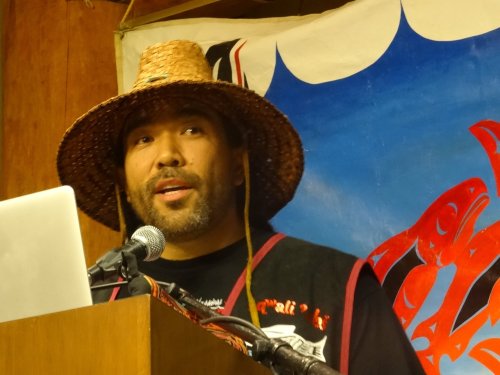
trudellIt is through my artistic endeavor, combined with my passion for poetry that I am able to express fearlessness of spirit on behalf of my family, people, community, commitment to social justice awareness, and most importantly my love of earth.  Incorporating the visuals with the power of words, it is my goal to create work with a poetic sense of thought and action to produce art that encourages dialogue and strengthens community.

http://taratrudell.tumblr.com/


Cody Blackbird on “Make No Bones About It.” Jan 17th, 2016 at 4pm

“Not only is Cody Blackbird an incredible Native Flute player, but I love how he blends the Native sound with blues and classic rock. He and his band definitely know how to bring the heart and soul.” Bibi McGill, Musical Director/Lead Guitarist for Beyonce

“Cody’s music, which he terms “AlterNative Fusion,” sits in a class by itself in the music world” Buffalo ArtVoice

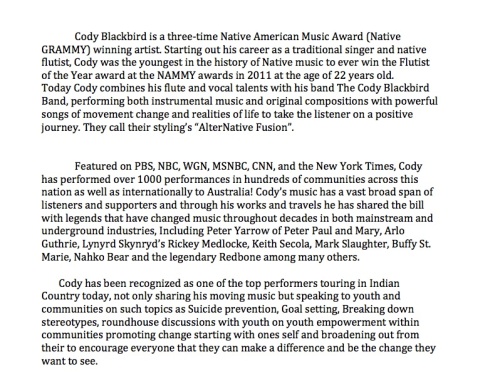
Cody Blackbird has been widely recognized as one of the worlds top Native American musicians touring today. Blending the old with the new, Cody merges the Native American flute with powerful vocals into contemporary blues rock sounds with The Cody Blackbird Band. The band has been compared to a hybrid Native version of the famous Blues rock band “Blues Traveler”
Featured on NBC, PBS, WGN, MSNBC, CNN and The NY Times Cody has performed over 1500 shows both nationally and internationally and with the band they plan on taking it to the next level. The Cody Blackbird Band has shared the bill with such artists as Arlo Guthrie, Lynyrd Skinard’s Rickey Medlocke, Peter, Paul and Mary’s Peter Yarrow, Nahko Bear, Xavier Rudd, and Reggae legends “Big Mountain”

Most recently Cody returned from a 7 day solo Japan Tour, playing Yamaha Corporate Headquarters “Yamaha Ginza” as well as Nagoya Yamaha and KIWA Hall in Tokyo in celebration of High Spirits Flutes 25th anniversary

The band is gearing up for their 2016 “All In” tour which will take them to over 25 different states, Australia, and Japan

They are currently recording their full length album to be released early new year of 2016

The Cody Blackbird Band is:
Xavier Torres on guitar, bass, vocals
Lewis Schwenk on guitar
Caleb Blackbird on Flute, Trumpet and vocals
Cody Blackbird, NA Flute, Lead Vocals

Anchorage Press

http://www.anchoragepress.com/music/alter-native

KTUU, NBC Affiliate
Buffalo ArtVoice
More on Cody Blackbird:
CBBIO15