Category Archives: Make No Bones Shows

Chairman Brian Cladoosby of the Swinomish Tribe on KAOS 89.3 FM

Brian Cladoosby shares with us on KAOS 89.3 FM

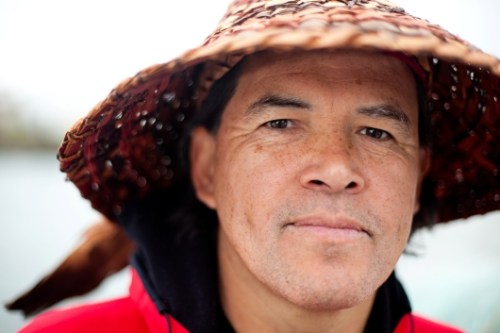
Swinomish Tribal Chairman, Brian Cladoosby

Chairman Brian Cladoosby of the Swinomish Tribe from coastal Washington is honored as a finalist for the 2012 Ecotrust Indigenous Leadership Award for his exceptional skill in strengthening economic and environmental conditions among Coast Salish tribal communities. His dedication to developing a holistic voice for all members of 66 Coast Salish tribes and nations has bridged tribal boundaries, strengthening efforts to protect indigenous human rights and to restore the region from ecological degradation. He has served the Swinomish Tribal Senate for 28 years and has been elected chairman for the past sixteen consecutive years.

As a fisherman, Cladoosby has a strong connection to the salmon from which Coast Salish tribes draw their livelihood. Of his own tribe, he says, “Swinomish always has been and always will be a fishing tribe.” Echoed in this statement is the Chairman’s commitment to protect the environment and natural resources, while ensuring the prosperity of an age-old traditional industry for future generations. The sustenance of these resources for tribal culture and health is of utmost importance.

Chairman Cladoosby and the Swinomish Indian Tribal Community share a common goal: to develop a strong economic development plan that supports members’ way of life. The tribe committed to this plan when they purchased the formerly leased Swinomish Fish Company in 2009. The Swinomish Fish Company, one of two remaining canneries in western Washington, represents a tribal investment that ensures that all fishermen, tribal and non-tribal, have the ability to maintain their livelihood.

Brian’s vision and hard work, along with the help of tribal elders and the community, have increased the Swinomish Fish Company’s annual revenue from $3 million in 2009 to $14 million in 2011, bringing economic development back into the hands of tribal communities. Swinomish Fish Company has also increased inter-tribal cooperation in the Pacific Northwest, Canada and Alaska through its purchases of nearly 22 tribes’ fish and seafood resources. By creating the Native Catch seafood brand, Cladoosby has added value to all tribal fishing communities and created a positive image of Indian country seafood processing.

Under the Chairman’s leadership, economic activity has thrived in the Swinomish community with nearly 750 people involved in tribal enterprise. In 2011, Cladoosby was honored with the American Indian Tribal Leader Award at the Reservation Economic Summit & American Indian Business Trade Fair for his exceptional achievements.

Cladoosby has been a strong supporter of the Coast Salish Gathering, a platform that brings together tribal and non-tribal governing bodies to develop innovative policies to protect the environment and natural resources. In 2008, he helped organize the Tribal Journey Water Quality Project in collaboration with the Coast Salish Western Washington Tribes, British Columbia First Nations, and the U.S. Geological Survey to map 607 miles of coastline along the Salish Sea. The initiative coupled traditional tribal ecological knowledge with modern technological equipment, as participants towed state-of-the-art water quality probes and global positioning systems (GPS) in canoes. These efforts were honored in 2009 by the U.S. Secretary of the Interior and earned the Coast Salish Gathering the Partners in Conservation Award. The Coast Salish Nation owns the data collected through this project, emphasizing the importance of indigenous autonomy in environmental protection efforts.

When President Obama held the first government-to-government meeting of his presidency in 2010, Brian Cladoosby was selected from a pool of 571 candidates as one of twelve tribal leaders to attend. His eminent career as a spokesman for the preservation of indigenous culture and the development of economic opportunity for Coast Salish tribes makes Cladoosby a distinguished choice for this honor. A visionary dedicated to serving the needs of his people, Brian brings together a strong focus on environmental stewardship, productive dialogue, and spiritual connectedness.

Brian and his wife of 33 years, Nina, live in La Conner, Washington. They have two daughters, LaVonne and Mary, granddaughter Isabella and new grandson, Nathanael.

http://www.ecotrust.org/indigenousleaders/2012/brian_cladoosby.html

Photo by Benjamin Drummond

Raven visits with Chief Phil Lane Jr. 12-23-2012 at 4pm

phil-lane-jr

Although an accomplished athlete and an acclaimed film producer, Phil Lane Jr.’s life has, first and foremost, been an exercise in fostering human relations and community development. Native American and a hereditary Chief – of the Yankton Dakota and Chickasaw tribes – Lane has dedicated himself for over four decades to the pursuit of equality for the indigenous peoples of four different continents, including Africa. Born at the Haskell Indian Residential School, Lane grew up understanding, firsthand, the economic, spiritual, and political struggles of native groups. With that understanding, Lane chose, as an adult, to begin his career as an educator, speaking to students of all levels and ages about the culture and history of Native American peoples. In 1982, he was a founding member of the organization for which he still works as International Coordinator: Four Worlds International, a non-profit that brings unites the peoples of multiple tribes in development efforts. Ten years after the founding of Four Worlds, Lane was named the recipient of the prestigious Windstar Award for his tireless dedication toward a sustainable future for indigenous people on a global level. Lane was the first and, to date, only Native American to have ever been distinguished with the elite honor. Several years of guiding native communities toward a more prosperous and holistic life experience inspired Lane to write a novel as well as produce multiple television programs and films, including the award-winning series “Walking with Grandfather.” With a keen sense of responsibility and an undying respect towards the tribes into which he was born, Lane is tirelessly focused on the well-being and sustainability of native peoples in North America and around the world.
Quotations

“In all of our actions, we must seek to be living examples of the changes we wish to see in the world. By walking the path, we make the path visible”

“The greater the difficulty in our path, the greater the opportunity for our growth and ultimate victory; we can always become more than we have ever been.”
References
http://www.architectsofpeace.org/architects-of-peace/phil-lane-jr-

Resume of Phil Lane, Jr.: http://www.4worlds.org/4w/resume/philresume.htm

Phil Lane Jr. Reflects on Working Toward Peace: http://www.scu.edu/ethics/architects-of-peace/Lane/essay.html
Swiss Foundation for Freedom and Human Rights: http://www.4worlds.org/4w/SWISS%20AWARD/laudatory.html

Roger Fernandes on Make No Bones About It. Dec 16th, 2012 @5:15 PM.

251350_10101153833665120_1134789773_n

Roger Fernandes, master storyteller, Lower Elwha S’Klallam.
Roger Fernandes, or Kawasa, is a member of the Lower Elwha Band of the S’Klallam Indians from the Port Angeles, Washington area. He describes himself as an urban Indian as his mother, Violet Charles, moved to the city of Seattle where he was born in 1951. English surnames are common in the Puget Sound region and his family name is Charles. His great-grandmother was Annie Ned from Sequim, who married into the Makah tribe and moved to Neah Bay, the h
ome of the Makah people on the northern Olympia Peninsula. He is from a family of four brothers who are all active doing various cultural things like singing, basket making, artwork and storytelling.

Today the Lower S’Klallam are at the north end of the Olympic Peninsula in Washington just north of the Olympic Mountains foothills and the shores of the Straits of San Juan De Fuca. The reservation is about ten miles outside of Port Angeles, Washington.

Roger has been storytelling for about seven or eight years. The stories he started with were simple legends. Through his own interest and doors being opened by understanding those stories he moved into telling myths, creation stories, flood stories, and hero stories. In sharing these types of stories Native people can teach non-Natives about the aspects of their culture that go beyond food, shelter, and clothing. These stories actually define the culture of the tellers.

A story he shares of his tribe is how the S’Klallam people got their name. Stories incorporate songs and dances as an integral part when being told and are included in several stories that he tells. In the course of learning Native American stories, Roger has integrated stories he has learned from other cultures around the world like Mexico, Africa and Asia. All stories speak the same human language and teach same lessons.

Also a tribal historian, Roger gives a comprehensive multimedia presentation on the art of the Coast Salish people, including slides showing that the art of the Salish people. Their art is quite a bit different than that of the stereotypical northwest coastal Indian art like totem poles, masks and button blankets. He’s accumulated artifacts and artwork to show how the native people of this area created their designs, art, basketry and carving. A couple of other topics Roger uses is the environment and health and healing. He believes art, music and stories reflect the culture and the culture reflects the environment. Spiritual health that people need is told in stories that convey how a human being is to live in balance with family, community, and nature. Stories lead to a spiritual and emotional understanding on how to live in the world.

Roger is involved in art organizations and initiatives by and for Native American artists. He’s the Executive Director of South Wind Native Arts and Education Foundation a small grass roots non-profit and he’s on the arts advisory committee for the Potlatch Fund. He has recorded a CD ‘Teachings of the First People’ that shares several of the stories he tells in his performances. He won a folk life award from the Washington Arts Commission for his work in teaching about Coast Salish art. He also has a degree in Native American Studies from the Evergreen State College.

Roger does a lot of work in schools and tailors his presentations to young people. Children understand stories at one level and so he gives them access to stories that are easy to interpret. Native people call their stories “the teachings” as they are the fundamental way of teaching children. He likes them to be involved in the interpretive process. Elders have another level of understanding and bring a lot of wisdom and knowledge to any discussion so a strength that should be built on is the cross generational experience in storytelling. His audiences include community groups such as schools, libraries, parks departments, senior centers and open forum presentations that are geared towards a general audience.

Roger Fernandes
821 209 th Ave NE
Sammamish, WA 98074
425-868-7503
rbfernandes@juno.com

PHOTO BY Alex Garla

Raven visits with Jana Mashonee 5pm Sunday December 2, 2012

jana

With her new album, New Moon Born, poised to burst onto the mainstream music scene, it’s no wonder Jana Mashonee is all smiles these days. The album represents a significant departure from her previous endeavors, taking on a decidedly more upbeat rhythm and blues flavor. “The album is about rebirth and new beginnings; it reflects a phase in my life that has taken on a different shape and direction from anything I’ve done before,” she says. “This music conveys my personal truths and beliefs.” In addition to

providing all the vocals and piano, Jana wrote and co-produced the album.Since the 2006 release of her GRAMMY-nominated concept album, American Indian Story, the Lumbee Indian singer-songwriter has not had a moment’s rest. Amidst her demanding touring schedule which has taken her to 48 states as well as Europe and Canada, she found time in 2007 to shoot a video for American Indian Story’s first single, “The Enlightened Time.” Met with critical acclaim and enthusiastic fan response, the video has won numerous film festival awards, as well as a NAMMY for Best Short Form Music Video, Jana’s seventh Native American Music Award.

Jana also recorded American Indian Christmas, a unique album of ten traditional Christmas carols, each sung in a different Native American tongue. “I thought it would be special to do this album since many people have never heard, let alone heard sung, a Native language,” she says. Recorded with a full orchestra and traditional Native American instruments, this holiday album continues to receive rave reviews from press and fans alike.

At the start of the new millennium, Jana found success with chart-topping club hits like “More Than Life” and her cover of Led Zeppelin’s epic, “Stairway to Heaven,” earning her the honor of being the first Native American female to land on the Billboard dance charts. Her powerful voice, uplifting message, and exotic beauty and style garnered widespread press attention.

Despite her fast-paced career, Jana has still found time to give back by establishing her non-profit organization, Jana’s Kids, in 2002. Through the foundation, she helps Native American youth achieve their dreams. Starting in 2007, Jana’s Kids began awarding the David L. Boyle Family Scholarship to Native students. “I hope to raise more money so that I can fund a full two to four years of schooling for each person receiving a scholarship. That’s my current goal.”

This is indeed an exciting time for Jana with New Moon Born set to take her career to new heights. Despite this, she is decidedly peaceful. “Find the inspiration within yourself first and then you can help others,” she says. “I believe everyone has the responsibility in their lives to influence other people positively.” Jana Mashonee is truly the embodiment of the ancient Lumbee proverb: “She walks in beauty in two worlds.”
http://www.janamashonee.com/

Raven visits with Denise Bellecourt Levy- November 18th, 2012 5pm

Denise Bellecourt is the first born child of Vernon and Carol Ann (Holmgren) Bellecourt in Saint Paul Minnesota in July of 1960. Vernon and Carol Ann were the owners and operators of two beauty salons in St. Paul. When Denise was four years old the Bellecourt family, including brothers Marcus and Bret, moved to Denver, Colorado. Denise was raised in Denver until she was 15 years old, when she move d back home with her dad Vernon to the White Earth Reservation in northern Minnesota where her dad is from.

Denise’s dad, Vernon Bellecourt became a major leader in the American Indian Movement in 1968, which caused the breakup of her parents marriage in 1970. Denise became a major helper in her Dad’s home with many responsibilities at a young age. Denise was in charge of helping to raise her brothers and sister. Denise also was totally in charge of keeping her Dad’s children and home when he was gone on his work for AIM. Denise also has two younger siblings, Raven and Blackwolf, from her Dad’s second family with her stepmother Lyna Hart. Denise was brought up in the American Indian Movement from age 10. Denise is an AIM baby who is now a mother of two grown children and two grandsons.

Denise’s son John Clark, was born in 1979. Denise’s son’s father was killed in a tragic car accident in 1979 two months after her son was born. Denise started attending Bemidji State University in 1980 as a single parent. While in college Denise had another child, Adrianne Levy, who was born in 1980. Denise graduated from Bemidji State University in 1986 with a double major in Criminal Justice and Indian Studies. After a brief one year stint at University of North Dakota Law School, Denise quit law school to be home with her young children and work full time.

Denise worked for the White Earth Reservation in many capacities from Receptionist to Adoption Social Worker for nearly 25 years. Denise also worked for Anishinabe Legal Service as a Paralegal after she left employment with the White Earth Reservation Tribal Council. Denise also did a lot of volunteer work her community over the years including Chairwoman of the Local Indian Education Committee where her children and now grandchildren go to school. Denise was instrumental in the coordination of many cultural events and pow-wows in the local school district, at Headstart where she worked as a Multi-Cultural Coordinator with 3 and 4 year olds, and at the Reservation Tribal College where she worked as a Grant Writer for the submission of a grant for a tribal college language program. Denise also was on the White Earth Land Recovery Project Board of Directors where she served in numerous capacities including Chairwoman of the board. Denise also served on the Curriculum Advisory Committee and was the President of the local Parent Teacher Student Organization for the Ogema, White Earth, Waubun School District when her children were attending school there. Denise was the Chairwoman/Coordinator for the White Earth Reservation Annual June Celebration in 2000 and 2001, and was presented an award from the Tribal Council for best celebration ever.

Denise resides on the White Earth Indian Reservation with her husband, Michael Levy. Currently Denise is working on an autobiography of her life, tentatively titled American Indian Movement Daughter regarding her life as a child of AIM leader Vernon Bellecourt. Denise is also working on culturally appropriate books for children.

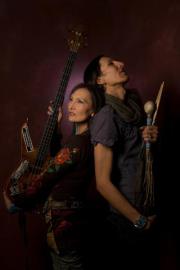
Raven visits with “Sihasin” November 18, 2012 4pm

Clayson Benally and Jeneda Benally of Blackfire are excited to announce their new musical side project “Sihasin”! A Navajo word that means Hope and Assurance is the basis for the duo’s new sound. Bass and Drums with vocal harmonies giving way to Navajo singing and melody creates a duophonic energy that leaves you with a feeling of Get Up, Stand up, use your voice and DO! Their unique new sound continues the power and energy of resistance for environmental and social injustices.
Biography
Brother and sister originally from Black Mesa on the Navajo Reservation in Arizona, were born into the heart of a political land dispute separating them by a fence from traditional homeland and family. They grew up protesting the environmental degradation and inhumane acts of cultural genocide against their traditional way of life.Their musical style encompasses many genres of music including rock, punk, folk, world. Jeneda and Clayson are at home on any stage.

Current Location
Navajo Nation, Arizona
Press Contact
bertabenally@gmail.com
Booking Agent
bertabenally@gmail.comBIO:
SIHASIN

(See-ha-szin)

Dine’ word- to think with hope and assurance. The process of making critical affirmative action of thinking, planning, learning, becoming experienced and confident to adapt.

Brother and sister, Jeneda and Clayson Benally of Blackfire from the Navajo (Dine’) Nation in Northern Arizona have created their own unique brand of music with bass and drums. They grew up protesting the environmental degradation and inhumane acts of cultural genocide against their traditional way of life. Their music reflects hope for equality, healthy and respectful communities and social and environmental justice.
http://sihasin.com/

Raven visits with Evan Pritchard this Sunday 11-4-2012 at 4pm KAOS radio


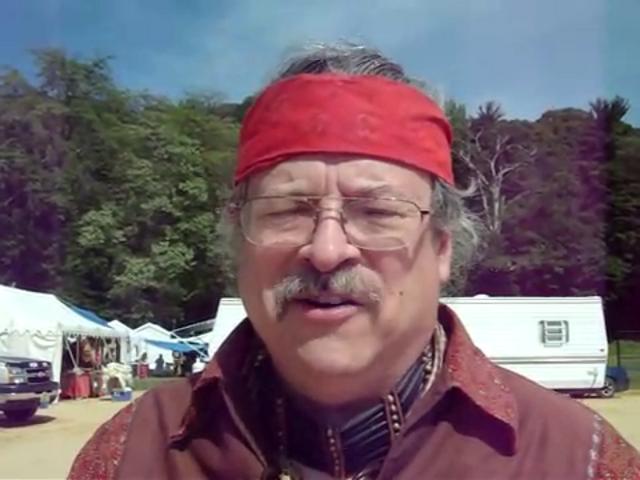
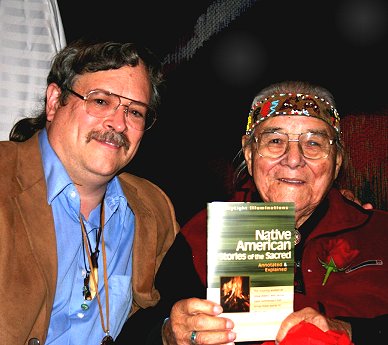
Evan Pritchard, a descendant of the Micmac people (part of the Algonquin nations) is the founder of The Center for Algonquin Culture, and is currently Professor of Native American history at Marist College in Poughkeepsie, New York, where he also teaches ethics and philosophy.

He is the author of Native New Yorkers, The Legacy of the Algonquin People of New York.

He is also the author of the widely praised No Word For Time, the Way of the Algonquin People, and many other books, including an Algonkian language series.

Professor Pritchard has given “Native New Yorker” walking tours of lower Manhattan for the Smithsonian Institute, The Open Center, South Street Seaport, and other institutions. He has recently shared his findings on Native American life in Manhattan on Leonard Lopate’s New York And Company show, on WBAI/ Pacifica Radio, ABC news, several NPR shows, New Dimensions, Maryknoll Productions and on other stations around the country. Native Peoples Magazine published a feature article on Native New Yorkers in the November/December 2002 issue, and a recent Village Voice cover article by Erik Baard was based, in part, on Pritchard’s book.

In 2003 he premiered two historical monologues, one “The 11,000 Year Old Man” at The Deep Listening Space in Kingston, and another “The Last Sachem Out of Manhattan” at the Ryan Center near Times Square.

Named Abachbahamedtch (or chipmunk) by Micmac people, he is assistant to several Algonquin elders.

Pritchard’s newly released hardback, “Native New Yorkers, The Legacy of the Algonquin People of New York” promises to fill a huge gap in the publics general understanding of New Yorks history, and in the state public school system as well. Pritchards book “No Word For Time: The Way of the Algonquin People” lays a foundation for people of all nationalities to absorb the ancient wisdom of the Algonquin Indians through an understanding of the language.

Since 1990, his work helping Algonquin elders and bringing their message to the media has helped thousands of people gain a better understanding of this great civilization and its teachings. He lectures frequently around the United States, sharing storytelling, traditional and contemporary songs, and bi-lingual poetry.

His first lecture at The Open Center in New York City, September 17th, 1999, drew a standing room only crowd. The topic was the Algonquin history of the five boroughs, and Munsee Chief Mark Peters was one of several distinguished guests who shared the podium. He is currently taping a 24 part series for RFPI radio on The Algonquin Civilization.

He was the organizer of the North American Friendship Circle gathering on Columbus Day, 1992. He is also the founder of the Red Willow Society, Resonance Communications, and Roads To Awareness Seminars.

Relevant works compiled or authored by Evan Pritchard include:

Native New Yorkers, the Legacy of the Algonquin People of New York

No Word For Time, The Way of the Algonquin People

Introductory Guide to Micmac Words and Phrases

Aunt Helens Little Herb Book
(A Miramichi Indian Womans World of Herbs)

Secrets of Wholehearted Thinking

Take The Red Road (Poetry)

Eagle Song: An Honor Roll of Great Algonquins

A Lenape Phrase Book is nearing completion, and Penobscot and Shinnecock language projects are being planned. All three languages are considered highly endangered.

STEVEN NEWCOMB: On the next ” Make No Bones About It’ 9-30-2012 -PAGANS IN THE PROMISED LAND

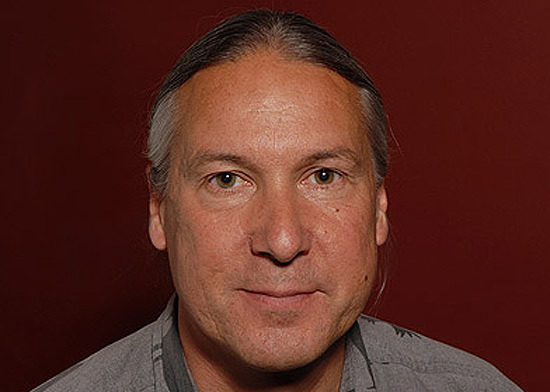
Steven T. Newcomb (Shawnee/Lenape) is the indigenous law research coordinator at the Sycuan education department of the Sycuan Band of the Kumeyaay Nation in San Diego County, California. He is cofounder and codirector of the Indigenous Law Institute, a fellow with the American Indian Policy and Media Initiative at Buffalo State College in New York, and a columnist with the newspaper Indian Country Today. He has taught in the legal studies department at the University of Massachusetts at Amherst, and as a guest lecturer in the political science department at the University of Colorado at Denver. In 2004, Newcomb was named Writer of the Year in Journalism by the Wordcraft Circle of Native Writers and Storytellers for his Indian Country Today column “Bush Lets Freedom Reign.” Newcomb lives with his wife, Paige, in Alpine, California.

http://ili.nativeweb.org/


September 16th, 2012 at 5pm Tara Evonne Trudell shares her poetry

Tara Evonne Trudell will share with us her poetry, art, and love of the spoken word. “I started writing poetry again after a 10-year break and was intrigued by the healing process the words brought to the surface. Writing poetry can be like catching butterflies: the words flutter so quickly from deep within and I capture them as quickly as I can on paper. Then I go back and shape the poem, looking at how the words interact,” Trudell said. Trudell, 44, is earning her bachelor of fine arts in media arts with and emphasis in filmmaking. Her films have already garnered awards. The Las Vegas single mother of four returned to Highlands in 2010. Trudell’s roots run deep in Northern New Mexico on her mother’s side, dating back seven generations. Villanueva was named for Trudell’s great-great grandmother, Manuela Villanueva. The poetry reading with her father will be filmed as the culmination of a documentary Trudell is producing from her summer poetry reading series called “Poetry in Random Places.” She is collaborating with fellow media arts student Faith Toledo on the project. Toledo helped film Trudell’s poetry readings this summer at northern New Mexico venues ranging from the Axle Contemporary Gallery and Lucky Bean Café in Santa Fe to the Las Vegas Farmer’s Market. Trudell also filmed herself reading poetry in natural settings such as cornfields and scenic canyons. Trudell’s films are rich in what she calls her earth shots: a flowing river, threes thrashing in the wind, a hawk soaring overhead, clouds filling a leaden sky, a lingering sunset. Earth images also infuse her poetry. “I want people to recognize the beauty of the land and nature and be moved in some way. The more we cultivate our connection to the earth, the stronger we become,” Trudell said.  Trudell is also a human rights activist, with a particular passion for immigration issues. Her poetry was selected for inclusion in the anthology, Poetry of Resistance: A Multicultural Response to Arizona SB 1070 and Other Xenophobic Laws, slated for publication through the University of Arizona Press. The Aug. 19 poetry reading is free but donations are accepted. Proceeds will help with the production expenses for Trudell’s documentary, “Poetry in Random Places.”