Category Archives: Make No Bones Shows

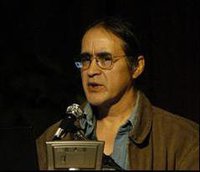
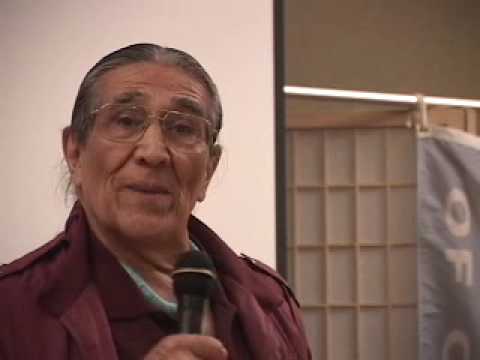
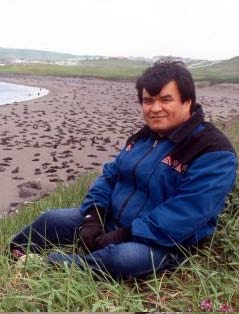
Raven speaks with Larry Merculieff of the Seven Generations Consulting: Sunday, May 15 · 5:00pm – 6:00pm

Bio:
…Larry Merculieff has almost four decades of experience serving his people, the Aleuts of the Pribilof Islands and other Alaska Native and indigenous peoples in a number of capacities locally, statewide, nationally and internationally. His reach has been broad and varied—a few of the positions he’s held include: City Manager of St. Paul Island, Commissioner of the Alaska Department of Commerce and Economic Development, President and CEO of Tanadgusix Corporation, Chairman of the Board of The Aleut Corporation, and General Manager of the Central Bering Sea Fishermen’s Association (one of the six Community Development Quota groups created by Congress to receive fish allocations in Alaska). Most importantly, Merculieff was a community leader on St. Paul Island, his home, for almost 35 years.

Close to Merculieff’s heart are issues related to cultural/individual/ community wellness, traditional ways of living, Indigenous Elder wisdom, and the environment. Having had a traditional upbringing, Merculieff has been, and continues to be, a strong voice advocating the meaningful application of traditional knowledge and wisdom obtained from Elders in Alaska and throughout the world when dealing with modern day challenges

Merculieff’s first opportunity to share what he learned came from an invitation to help facilitate a healing conference in Cordova in the late 1980s. He presented at the Healing from the Four Directions conference, facilitated the Healing from the Center conference in 2008 and conducted traditional talking circles at a substance abuse recovery center over the past two years. He also helped facilitate a statewide training for rural behavioral health aides in 2009. Additionally, he has and continues to lecture about traditional ways of healing at conferences and universities, including UAA. He presented at the first Anchorage conference on grieving to help parents who lost children. Merculieff also facilitated a community-wide grieving ceremony in Nondalton when their elders called him to assist because they were concerned that the community was not grieving the tragic loss of two local teenagers. Merculieff has presented numerous times at RANN, the UAA program for minority peoples seeking a degree in nursing, discussing traditional ways of knowing and healing, and the ways culture heals. Recently, Merculieff conducted a dialogue with youth in a program he created that was called Healing the Wounded Warrior.

From 2000–2003, Merculieff served as the Director of the Department of Public Policy and Advocacy in the Rural Alaska Community Action Program. As Director, Merculieff co-chaired the planning committee and led the largest subsistence rights march in Alaska’s history. He emceed the subsistence rally after the march. The march was instrumental in protecting Alaska Native subsistence rights, which were legally contested by the State of Alaska, to fish for salmon along Alaska’s rivers. He also successfully led a four-year effort to gain federal and state recognition of Alaska Native subsistence rights to catch and eat halibut throughout coastal Alaska.

Merculieff is co-founder and former chairman of the Alaska Indigenous Council on Marine Mammals; former chairman of the Nature Conservancy, Alaska chapter; former co-director of the Native American Fish and Wildlife Society, Alaska chapter; as well as co-founder of the International Bering Sea Forum, the Alaska Forum on the Environment, and the Alaska Oceans Network. He served as chairperson for the Alaska Sanitation Taskforce and co-chair of the Federal/State Taskforce on Rural Sanitation to bring support for running water and flush toilets to over one hundred Alaska Native communities. Merculieff served on the National Research Council Committee on the Bering Sea Ecosystem and was one of four Native Americans to present at the White House Conference on the Oceans during the Clinton administration. Merculieff was selected by Aleut leaders to be part of a one-hour Discovery Channel documentary about the history and spiritual aspects of Aleuts, which aired in 2001 and was viewed by an estimated 60 million people worldwide.

In 2004, Merculieff received the Alaska Native Writers on the Environment Award from the Alaska Conservation Foundation, the Rasmuson Foundation Award for Creative Nonfiction in 2006, the Buffet Finalist Award for Indigenous Leadership and the Alaska Forum on the Environment- Environmental Excellence Award for lifetime achievement in 2007. Merculieff was featured in the National Wildlife magazine as an “American Hero,” having called national and international attention to major adverse changes in the Bering Sea ecosystem.

Merculieff’s writings and interviews have appeared in such publications as the Winds of Change, Cultural Survival, YES, Red Ink, Alaska Geographic, Smithsonian, National Geographic, and Kindred Spirits. In 2008, Merculieff was one of ten Native American men in the U.S. featured in a book published by Second Story Press, entitled “Native American Men of Courage.” He was featured in this book because of his pivotal role during a time where many of his Aleut people on St. Paul Island experienced community-wide depression, suicides and suicide attempts, and murders. On November 18, 2009, Les Intouchables Publishing Company of Montreal released a book that he co-authored, entitled “Aleut Wisdom: Voice of an Aleut Messenger”. The book, published in the French language, is based on the wisdom Merculieff learned from his Aleut people and indigenous elders from around the world.

Merculieff works as an independent consultant. Currently he just completed five interactive forums for Alaska Native youth and emerging leaders on what they need to know to survive and thrive in the 21st century. The unprecedented forums were sponsored by the University of Alaska-Anchorage and the Alaska Humanities Forum. Merculieff is also contracted by the College of the Menominee Nation to guide the College in its efforts to help the Menominee Nation develop climate change adaptation strategies, and the Eyak Preservation Council to assist in unifying all the tribes of the Copper River for stewardship of the river.

In the Alaska Tribal Leaders Summit held August 24 through 26 of this year, Merculieff facilitated use of traditional ways of dialogue, discourse, decision-making and consensus building throughout the conference. For the first time in memory, leaders from over 100 tribes talked without conflict and reached unanimous decisions on courses of action dealing with the human rights challenges to Alaska Native traditional hunting, fishing and gathering.

Share:PostPostLinkLinkPhotoPhoto

Join Raven and his guest Chief Arvol Looking Horse on May 1, 2011. Tune in at 5pm. -International World Peace and Prayer Day 2011

Join Raven and his guest Chief Arvol Looking Horse on May 1, 2011.  Tune in at 5pm.

“All Nations, All Faiths, One Prayer” is respecting each other’s traditions, culture and religions.

There is one Creator and one grandmother earth that we all share. We have gone all over the world once a year to pray with other Indigenous nations at their Sacred Sites and to the United Nations to talk about prophecies. We as the First Nations have committed ourselves to maintaining our sacred way of life. -Chief Arvol Looking Horse

Pilamaya (thank you) for supporting this effort for Peace and the protection of our Grandmother Earth and her Sacred Sites. We will be united in prayer with Chief Arvol Looking Horse message of peace. I have contacted Wolakota to let them know we will be hosting and event and following the prayer and join in the sacred fire, offering tobacco to united all our prayers.

All Nations, All Faiths, One Prayer!

http://www.wolakota.org/wppd.html

page of the event:
http://www.worldpeaceandprayerday2011.org/Home_Page.php

poster:
Submitted by:

Sheldon Peters Wolfchild

Join Raven and his guest Deborah Guerrero

Join Raven and his guest Deborah Guerrero when they talk about Stand For Peace in Olympia Washington–Sunrise October 7th to October 11th, 2011

Deborah J. Guerrero MSW (Tlingit, Snohomish, & Cowlitz) is a social worker at Muckleshoot Indian Child Welfare in Auburn Washington. She is an activist and community organizer. She serves as a Board of Director for several Indian Organizations in Seattle.

She is a ceremonialist and has a deep passion for Traditional Indigenous Healing ways. She is an active member in the Native American Church, and is the proud parent of three grown children. She is a co-founder of Turtle Women Rising.

Turtle Women Rising invites you to support this Stand For Peace in Olympia.
http://www.turtlewomenrising.com/about-us.php

A Visit with Chief Phil Lane Jr. -Sunday, April 17 · 5:00pm – 6:00pm

About Phil

BRIEF RESUME- PHIL LANE JR.
Phil Lane Jr. is an enrolled member of the Yankton Dakota and Chickasaw First Nations and is an internationally recognized leader in human and community development. He was born at the Haskell Indian Residential School in Lawrence, Kansas in 1944, where his mother and father met and attended school. He is a citizen of both Canada and the USA.

…During the past 43 years, he has worked with Indigenous peoples in North, Central and South America, Micronesia, South East Asia, India, Hawaii and Africa. He served 16 years as Associate Professor and Founder and Coordinator of the Four Worlds International Institute at the University of Lethbridge, Alberta, Canada. Four Worlds became an independent Institute in 1995. As well, Phil is Chairman of Four Directions International, an Aboriginal company, which was incorporated in 1996 as Four Worlds’ Economic Development Arm.

With Phil’s guidance and applied experience, Four Worlds has become an internationally recognized leader in human, community and organizational development because of the Institute’s unique focus on the importance of culture and spirituality in all elements of development. Four Directions International, the Institute’s economic development arm, is lead by its President Deloria Many Grey Horses, and is dedicated to the development of sustainable economic enterprises that support wholistic, political, social, cultural, environmental, spiritual and educational development.

In 1977, Phil was named a Modern Indian Sports Great by the National Indian Magazine, Wassaja, for his record-breaking accomplishments in Track and Wrestling. He has extensive experience in his own cultural traditions, is an award winning author and film producer and holds Master’s Degrees in Education and Public Administration. His film credits include the National Public Television series “Images of Indians” with the late Will Sampson, “Walking With Grandfather”, “The Honor of All: The Story of Alkali Lake” and “Healing the Hurts”.

In August, 1992, Phil was the first Indigenous person to win the prestigious Windstar Award, presented annually by the late John Denver and the Windstar Foundation to a global citizen whose personal and professional life exemplifies commitment to a global perspective, operates with awareness of the spiritual dimension of human existence and demonstrates concrete actions of the benefit for humans and all living systems of the Earth. At this International event, in recognition of his lineage and long time service to Indigenous peoples and the human family, Indigenous Elders from across North America recognized Phil as a Hereditary Chief through a Sacred Headdress Ceremony. Other Windstar winners include: Oceanologist Jacques-Yves Cousteau, David Brower, Founder of the Earth Island Institute, Yevgeni Velikhov, Vice President of the Soviet Academy of Sciences, Wangari Maathai, Nobel Peace Prize Winner and founder of Kenya’s Greenbelt Movement; Akio Matsumura, Executive Director of The Global Forum, and Lester Brown, President of the World Watch Institute.

On November 11, 2000, Phil received the Year 2000 award from the Foundation for Freedom and Human Rights in Berne, Switzerland. Phil is the first North or South American person to receive the award, and he joins a select international group: the Dalai Lama of Tibet, Dr. Boutro Boutros Ghali, former Secretary General of the United Nations, and British Lord Yehudi Menuhin, musician and philosopher, have, also, received the award. The foundation says the award is in recognition of Phil’s “unique contributions to improve the lives and future hopes of native populations. It is primarily based on his most special merits of promoting freedom and justice for indigenous people by building human and spiritual capacity rather than opposing oppression directly and also on his international visionary initiatives among Native populations by healing the root causes of hopelessness and despair.”

On June 21, 2008, Phil was awarded the 14th Annual Ally Award by the Center for Healing Racism in Houston, Texas. Phil received the Ally Award for his national and international work in promoting freedom and justice for Indigenous Peoples by building human and spiritual capacity that focuses on healing the root causes of racism and oppression rather than focusing on conflict. The Ally Award is an annual award presented by the Houston-based Center for the Healing of Racism to honor the achievements of those who have worked hard to achieve harmony of all ethnic and cultural groups. Special emphasis on this award is for Lane’s dedicated work as one of the primary leaders in the resolution of Canada’s Residential School issue, which involved the sexual, physical, cultural, psychological, and emotional abuse of thousands of Aboriginal Peoples in Canada.

In 2008, Phil completed his three-year tenure as Chief Executive Officer of the United Indians of All Tribes Foundation (UIATF) in Seattle, Washington. The Foundation’s achievements include the launching of the first-ever Native American Film Festival, the development of a host of innovative education programs ranging from elementary and high school curriculum design and development, to adult education, early childhood education, and the recent launching of a $3.5 million holistic poverty-alleviation program model for urban Indigenous Peoples in Seattle.

Phil has now stepped into global leadership as Chairman of the Four Worlds International Institute (FWII) and Four Directions International. The Institute’s central program initiative is the promotion of The Fourth Way. The primary focus of The Fourth Way is to unify the human family by taking a culturally based, principal-centered path that transcends assimilation, resignation, and conflict. FWII has been working to develop a comprehensive, community-based development strategy that offers educational opportunity, IC3 Global Digital Literacy Certification, Digital Social Networking Capacity, and Participatory Media Training through a global networking initiative called “Indig.e.Net.” This digitally-based, globally unifying Indigenous communications and educational initiative, to be established at the Ciudad del Saber in Panama City, Panama in 2010, will serve as one of the key components for implementing The Fourth Way.

Orville H. Huntington on Perspectives from the Arctic-Climate Change and Tribal Perspectives

Orville H. Huntington on Perspectives from the Arctic-Climate Change and Tribal Perspectives 4-3-2011

Dr. Orville Huntington
Orville Huntington is a wildlife biologist, hunter, and community leader, living in the remote Athabascan community of Huslia. While preferring to stay home with “my girls” (his two daughters) he has served on the Alaskan Native Science Commission.

…Orville Huntington is presently the Chair of the Interior Athabascan Tribal College. He also currently is serving as the Interior Villages Representative on the Alaska Federation of Natives Board for the 43 villages in the Doyon area, and makes his home in the Athabascan community of Huslia, a village in the Yukon-Koyukuk region of Alaska.

Orville works exclusively with professors, non-profit organizations, and colleges regarding the issue of “Climate Change Impacts and the Sustainability of Rural Communities.” He also uses and continues to develop the Native American Traditional Ecological Knowledge database.

His research interests are the direct and indirect impacts of subsistence use on fish, animals, and plants of northern ecosystems; the evaluation of currently policy and regulations and their affects on the subsistence methods and means of harvesting fish, wildlife, and plants. Orville is also committed to education and outreach projects that help non-Alaskans understand the culture and subsistence lifestyle of his people.

Orville has extensive experience in presenting to the public. He has given keynotes at various ARCUS Arctic Forums and has spoken on panels at the Smithsonian National Museum of Natural History. In 2000, he participated in the Arctic Visiting Speakers’ program as a presenter at the Marine Science Institute at Port Aransas, Texas. He enjoys the Arctic Visiting Speakers’ program because it allows him to, “share and add to what little knowledge is out there on matching Native American Traditional Knowledge with contemporary western science.”

He is interested in presenting to school audiences (K-12), academic audiences, graduate seminars, and the general public. Orville is not available during mid-June through mid-July or September due to subsistence activities. See More

Orville H. Huntington on Perspectives from the Arctic Sunday, April 3 · 5:00pm – 6:00pm

Orville H. Huntington on Perspectives from the Arctic-Climate Change and Tribal Perspectives

Dr. Orville Huntington
Orville Huntington is a wildlife biologist, hunter, and community leader, living in the remote Athabascan community of Huslia. While preferring to stay home with “my girls” (his two daughters) he has served on the Alaskan Native Science Commission.

Orville Huntington is presently the Chair of the Interior Athabascan Tribal College. He also currently is serving as the Interior Villages Representative on the Alaska Federation of Natives Board for the 43 villages in the Doyon area, and makes his home in the Athabascan community of Huslia, a village in the Yukon-Koyukuk region of Alaska.

Orville works exclusively with professors, non-profit organizations, and colleges regarding the issue of “Climate Change Impacts and the Sustainability of Rural Communities.” He also uses and continues to develop the Native American Traditional Ecological Knowledge database.

His research interests are the direct and indirect impacts of subsistence use on fish, animals, and plants of northern ecosystems; the evaluation of currently policy and regulations and their affects on the subsistence methods and means of harvesting fish, wildlife, and plants. Orville is also committed to education and outreach projects that help non-Alaskans understand the culture and subsistence lifestyle of his people.

Orville has extensive experience in presenting to the public. He has given keynotes at various ARCUS Arctic Forums and has spoken on panels at the Smithsonian National Museum of Natural History. In 2000, he participated in the Arctic Visiting Speakers’ program as a presenter at the Marine Science Institute at Port Aransas, Texas. He enjoys the Arctic Visiting Speakers’ program because it allows him to, “share and add to what little knowledge is out there on matching Native American Traditional Knowledge with contemporary western science.”

He is interested in presenting to school audiences (K-12), academic audiences, graduate seminars, and the general public. Orville is not available during mid-June through mid-July or September due to subsistence activities

Raven speaks with Mary J. Pavel shares about American Indian Sovereignty and Law and more.

Raven speaks with Mary J. Pavel shares about American Indian Sovereignty and Law and more.

Mary J. Pavel is a member of the Skokomish Tribe of Washington. Mary joined the nationally recognized federally Indian law firm of Sonosky, Chambers, Sachse, Endreson & Perry in 1992 and became a partner in January 1999. Mary was one of the first Indian women to be made a partner in a National Law Firm. Ms. Pavel graduated from the University of Washington School of Law and received her Bachelor of Arts degree in Sociology from Dartmouth College. Mary works in all phases of the Firm’s practice, with a special emphasis in legislative matters pending before Congress. Mary has been noted in the Hill Newspaper as one of the Nation’s top tribal advocates in Washington, D.C. She is the Founding President of the Native American Bar Association of Washington, D.C. She is a member of both the Washington State Bar Association and the District of Columbia Bar Association.

Raven visits with his guest Linley B. Logan 3-13-2011 at 5pm

My home is the Tonawanda Seneca Nation. I interact as a multidisciplinary artist ranging from the traditional arts to contemporary artistic expression. My artistic educational background includes industrial and graphic design, and multidisciplinary fine arts. The wealth of my employment experience encompasses cultural artistic consulting, and presentation. I have curated and cocurated two contemporary Haudenosaunee (Six Nations …Iroquois Confederacy) art exhibits. I have authored articles published by the Smithsonian Institution. I have presented cultural program presentations for the Smithsonian Institution. I have served on numerous grant review panels. I participated by invitation in two International Indigenous Visual Artists’ Gatherings in Hawaii 2007, and Rotorua, New Zealand 2010. I serve on local, and regional arts boards.

I interact as a multidisciplinary artist with my foundation in the traditional arts and my applied artistic statement conveyed through contemporary artistic expression. I have engaged a broad range of the two-dimensional arts from printmaking to painting, and in the three dimensional arts worked in carving, silver jewelry, pottery and three-dimensional lost and found art creations.

I attended the Institute of American Indian Arts, Santa Fe, New Mexico. I received an AFA in Two Dimensional Arts, and AFA in Three Dimensional Arts, and engaged Museum studies, 1985.

I attended a session in ceramics at the Haystack Mountain School of Crafts, Deer Isle Main, 1985.

I attended the Rochester Institute of Technology for a BFA in Industrial Design, 1987. I have co-curated contemporary Haudenosaunee art exhibits, reviewed arts grants, and authored cultural articles on traditional dance and indigenous internet implications.

I have co-curated contemporary Haudenosaunee art exhibits. I co-curated “Iroquois Art in the Age of Casino’s”, Iroquois Indian Museum, 1995. I served on the curatorial committee representing Seneca artists for the “Where We Stand” Contemporary Haudenosaunee art, Fenimore House Museum, 1997.

I authored “Native American Dance, Ceremonies and Social Dance Traditions” published by the National Museum of the American Indian, Smithsonian Institution, 1994. A similar article titled “Dancing the Cycles of Life” is published in the 1993 Festival of American Folklife program catalog. The article was part of the social dance in the America’s program for the Festival of American Folklife. for the Center for Folklife programs and Cultural Studies, Smithsonian Institution, 1993.

I organized and presented a number of Haudenosaunee social dance programs for the Folklife Festival, and the National Museum of the American Indian, Smithsonian Institution

Linley B. L o g a n – Seneca, Deer clan As an artists I attended the International Gathering of Indigenous Visual Arts in Hawaii, 2007. I accepted the invitation to participate in “Creation, Migration, and Change” an indigenous arts forum, co-organized by the Seventh Generation Fund and
sponsored by the Ford Foundation. I accepted the invitation to participate in the Te Tihi International Gathering of Indigenous Visual Arts hosted by the Maori people in Roturura (New Zealand) in 2010.

In the mid 90’s I authored the grants, developed and directed a Cultural Retention Program in the Tonawanda Seneca Nation. The Cultural Retention Program focused on researching documentation of our social and ceremonial song & dance traditions. As founder and director of the Cultural Retention Program, I published the Cultural Retention Program Newsletter (vol. 1, issue 1) for the Tonawanda Seneca Nation. My employment experience includes the Center for Folklife and Cultural Heritage Office and the National Museum of the American Indian, Smithsonian Institution. I have served on numerous grant review panels from the NEA Folk and Traditional Arts grant review panel, All Roads Seed Film program for the National Geographic Society,
“ARTOGRAPHY” the Ford Foundation/Leveraging Investments in Creativity, Michigan Council for the Arts, and the Longhouse Education and Cultural Center @ the Evergreen State College. I have reviewed Community Spirit Award nominations for the First Peoples Fund for seven years, as well as their Cultural Capitol grants. I have served on National Initiative to Preserve American Dance forums.

I have authored articles on Haudenosaunee social dances, “Dancing the Cycles of Life” Native American Dance, Ceremonies and Social Dance Traditions, published by the National Museum of the American Indian, Smithsonian Institution.

I have authored articles, co-curated contemporary Native Art exhibits, founded and directed a Cultural Retention Program in Tonawanda.

I live in Bremerton, Washington and serve on local, county, and regional arts boards. I currently serve as the Chairman of the Kitsap County Arts Board.

I served in many capacities for the Tonawanda Seneca’s Traditional Chiefs Council from education to health issues. I also served the Six Nations Confederacy’s Traditional governement concerns such as repatriation and environmental issues. There are many aspects of Cultural identity that shape my art that I engage. I servedon the Haudenosaune Repatriation Committee for the Tonawanda Band of Senecas.This experience defines relevance of repatriation issues reflective of our sacred ceremonial, and medicine society values. I fulfill a role within our religious way of life which obligates my participation to ensuring our ceremonial way of life.

I aso served on the Haudeosaune Environmental Task Force representing the Tonawanda Seneca Chief’s Council. The HETF developed a Environmental Strategic Plan which addressed our Environmental concerns for presentation to the United Nations Environemental Protection Agency. Our environmental values assert our Linley B. L o g a n – Seneca, Deer clan relationship and stewartship of balance within the natural world. My ability to articulatea cultural perspective of values has lead to my being invited as an Elder for the Traditional Ecological Knowledge Sumit, hosted by the National Oceanic and Atmospheric Association, in Hawaii. The repatriation and Environmental experiences enhance articulation of a cultural identity which benefits artistic perspective and articulation for me as a Seneca. I currently live in Bremerton, Washington and serve on local, county, and regional arts Boards Linley B. L o g a n – Seneca, Deer clan

Professor Lehman L. Brightman-President of United Native Americans on KAOS

Professor Lehman L. Brightman-United Native Americans

Lehman L. Brightman is a Sioux and Creek Indian who was born on the Cheyenne River Sioux Reservation in South Dakota. He is the father of three boys — Lehman Jr., Gall and Quanah — and currently lives in Pinole, California.

Professor Brightman is the founder and National President of United Native Americans, Inc. a non-profit Indian organization formed in 1968, to promote th…e progress and general welfare of American Indians. In his capacity as President of UNA Mr. Brightman has testified in two U.S Senate Hearings on the deplorable conditions of Indian boarding schools and hospitals on reservations. And led investigations of seven Indian boarding schools and three Indian hospitals due to the poor service and abusive treatment of Indian people.

He is a former football and track star at Oklahoma State University where is earned a B.A. Degree, he has an M.A. Degree from the University of California at Berkeley. Mr. Brightman is an ex-Marine and served one year in the Korean conflict where he was wounded in action. He was a disinterested student going through the motions during high school and college in order to play football. However, when be joined the Marines, he found a renewed sense of purpose. “When I came back from the Marine Corps, I had straightened up,” he says. “It taught me to be responsible.

Most people who served in the Marines are proud of it. Before the Marines, my life wasn’t structured. I’ve lived my whole life since structured, and I learned that from the Corps.” USMC, Korea 1951 He established and coordinated the FIRST Native American Studies Program in the United States at UC Berkeley in 1969, and has since taught at the University of California in San Diego, Sacramento State University, and Contra Costa College in San Pablo, California. Brightman is the author of numerous articles on the history of Indian Education and federal boarding schools.

An Evening Eddy Lawrence on “Make No Bones About It

Born and raised in Birmingham, Alabama, Eddy Lawrence spent a decade in New York City before settling in the North Country of New York State in 1992. His songs and recordings have garnered critical praise in many publications, including Dirty Linen, Acoustic Guitar, The Village Voice, CMJ, Folk-Roots, Performing Songwriter, New Country, and Sing Out!.

Eddy has appeared at clubs, coffeehouses, and festivals across North America, both as a headliner and as an opening act for many well-known artists. These days, he performs in concert with his wife, Kim, who accompanies him on upright bass. The duo has recently released a new all acoustic CD called “My Second Wife’s First Album”. The recording is their first together and the ninth album of Eddy’s original songs.

Eddy first gained attention in New York City’s thriving East Village music scene of the early 1980s. He got his start with the seminal NYC roots-rock band, LESR, before releasing his first solo album, “Walker County” in 1986. That LP was an acoustic homage to his home state of Alabama, recorded in his Lower East Side walk-up apartment, using sparse instrumentation: acoustic guitar, mandolin, and bass. For the next 15 years, Eddy worked the folk music circuit, playing coffeehouses, festivals, and clubs in support of the acoustic albums he was releasing. He mainly toured in the Northeastern US, but sometimes traveled farther afield and crisscrossed the US several times. “Going to Water”, released in 2001, harked back to his rock and roll days, featuring electric guitars, bass, and drums. In 2004 he released “Inside My Secret Pocket”, an album that featured both acoustic and electric material.

Shortly after the release of “Secret Pocket”, Eddy scaled back promotion of his own albums and songwriting in order to focus on producing recordings by Native American artists, several of which were released on his own Snowplow label. These CDs, which he produced, arranged, recorded, and played on, were well-received in Indian Country and two of them were nominated for Native American Music Awards (NAMMYs).

With “My Second Wife’s First Album”, Eddy has reentered the world of the singer-songwriter, returning to the acoustic sounds that first brought attention to his music back in the 1980s. Growing up in Alabama, with deep roots in the red clay of then-rural Walker County, Eddy was immersed in the old-time folk, country, blues, and bluegrass traditions that flourished there. He has called the area where he came from “the place where the Appalachians meet the Delta”, in reference to the musical melting pot that fused traditional European and African elements, spawning the folk, blues, gospel, rock, and soul music that heavily influenced popular music worldwide in the latter half of the twentieth century.

Eddy’s songs have appeared on many compilation albums, including NPR’s “Car Talk Car Tunes” and nine Fast Folk albums, which have been acquired by the Folkways division of the Smithsonian.

Venues where Eddy has performed include: The Birchmere, the Bluebird Café, The Bottom Line, Bound for Glory, Caffe Lena, Johnny D’s, Middle East Nightclub, Minstrel Coffeehouse, Ram’s Head Tavern, Roaring Brook Concerts, Vancouver Folk Music Festival (main stage) and many others.


http://www.snowplowrecords.com/eddy.html