Feds weigh in on DC NFL team’s name – President Brian Cladoosby

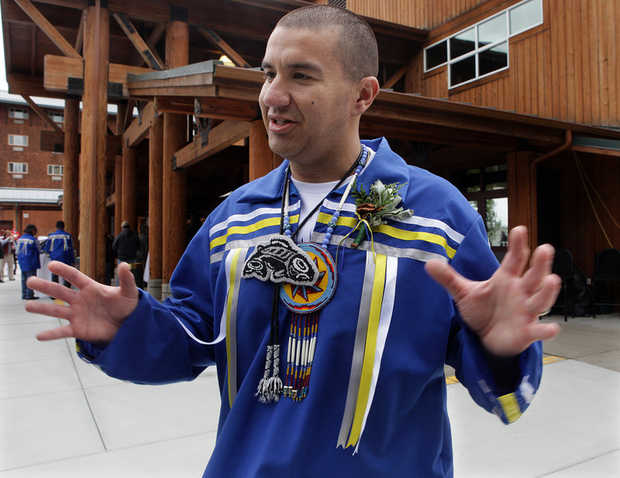
Federal officials canceled trademarks protecting the DC NFL team name. National Congress of American Indians president Brian Cladoosby joins Ari Melber.

WASHINGTON_ Tribes want Congress to ban Redskins’ trademark _ National _ McC

The team and NFL should change the Redskins name, not the federal government

Sen. Maria Cantwell tells NFL_ Redskins’ name ‘insult,’ ‘racial slur,’ must

Original Pechanga’s Blog_ NCAI’s CLADOOSBY on WASHINGTON REDSKINS_SNYDER FOU


Swil Kanim on Make No Bones About It. – June 22, 2014 at 4pm

Official_HonorWorks_Logo_with_white_background

10295759_10151961637006887_8294471521863450225_n

Swil Kanim, a classically trained violinist, native storyteller and actor, is a member of the Lummi Nation. He was born on November 11, 1961 in Seattle, Washington and grew up in the Bellingham, Washington area.

As a young boy, he was separated from his parents and spent the remainder of his childhood in foster homes. One of his teachers encouraged him to enroll in a music program, and the violin became his music instrument of choice. Through music, he found his path to healing childhood wounds and reconnect to his native roots.

Because of his unique ability to inspire audiences to express themselves honorably, Swil Kanim is a sought-after keynote speaker for conferences, workshops, school assemblies, and rehabilitation centers.

He travels extensively throughout the United States, enchanting audiences with his original composition music and native storytelling. His workshops, The Elements of Honor, are attended by people from all walks of life.

Swil Kanim’s compositions incorporate classical influences as well as musical interpretations of his journey from depression and despair to spiritual and emotional freedom. The music and stories that emerge from his experiences have been transforming people’s lives for decades.

During a recent interview, Swil Kanim said the following about the “Works for the People” CD: “I played each piece of the album as if it was the only chance I had to record it. I was striving for the perfection in the moment rather than perfection in the eternal recording. I wanted to create that feeling that I was playing for the individual listener. Rather than have an album of individual pieces, I would try to tie each track together considering the energy level of the preceding and following piece and the last piece with the first piece.”

http://www.swilkanim.com/bio/

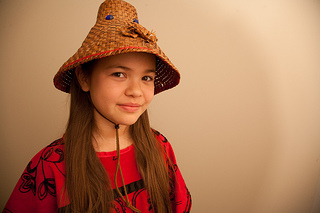
Ta’Kaiya Blaney shares her heart on “Make No Bones About It.” at 5:30pm on 6/15/2014

7398999006_3af404668c_n

12 year old Ta’Kaiya Blaney is Sliammon First Nation from B.C., Canada. Along with singing, songwriting, and acting, she is concerned about the environment, especially the preservation of marine and coastal wildlife. She travels and speaks on protecting indigenous lands worldwide from unsustainable development.


More about Ta’Kaiya Blaney

Chief Phil Lane Jr. visits with Raven at 5pm on 6/15/2014

maxresdefault

Phil Lane Jr. is an enrolled member of the Yankton Dakota and Chickasaw First Nations and is an internationally recognized leader in human and community development. He was born at the Haskell Indian School in Lawrence, Kansas in 1944, where his mother and father met and attended school.
During the past 45 years, he has worked with Indigenous peoples in North, Central and South America, Micronesia, South East Asia, India, Hawaii and Africa. He served 16 years as an Associate Professor at the Faculty of Education at the University of Lethbridge, Alberta, Canada (1980-1996). With Elder’s from across North America Phil co-founded the Four Worlds International Institute (FWII) in 1982. FWII became an independent Institute in 1995. As well, Phil is a Director of the Four Directions Corporation, an Indigenous owned company, incorporated in 1996’ as Four World’s economic development arm.
With Phil’s guidance and applied experience, FWII has become an internationally recognized leader in human, community and organizational development because of the Institute’s unique focus on the importance of culture and spirituality in all elements of development. Four Directions’ is the Institute’s economic development arm. It is dedicated to the development of sustainable economic enterprises that support holistic, political, social, cultural, environmental, and educational development.

In 1977, Phil was named a Modern Indian Sports Great by the National Indian Magazine, Wassaja, for his record-breaking accomplishments in Track and Wrestling. He has extensive experience in his own cultural traditions, is an award winning author and film producer and holds Master’s Degrees in Education and Public Administration. His film credits include the National Public Television series “Images of Indians” with the late Will Sampson, “Walking With Grandfather”, “The Honor of All: The Story of Alkali Lake” and “Healing the Hurts” and “Shift of the Ages (SOTA)” released in December, 2012. In January, 2013 SOTA won the Jury Prize for Best Documentary at the World Interfaith Harmony Film Festival, in April, 2013 SOTA won the Audience Choice for Best Documentary at the Riverside International Film Festival and was the Official Selection at the Sedona International Film Festival in February, 2013 and the Black Hills International Film Festival in May, 2013.

In August, 1992, Phil was the first Indigenous person to win the prestigious Windstar Award, presented annually by the late John Denver and the Windstar Foundation to a global citizen whose personal and professional life exemplifies commitment to a global perspective, operates with awareness of the spiritual dimension of human existence and demonstrates concrete actions of the benefit for humans and all living systems of the Earth. At this International event, in recognition of his lineage and long time service to Indigenous peoples and the human family, Indigenous Elders from across North America recognized Phil as a Hereditary Chief through a Traditional Headdress Ceremony.

On November 11, 2000, Phil received the Year 2000 award from the Foundation for Freedom and Human Rights in Berne, Switzerland. Phil is the first North or South American person to receive the award. This award was given in recognition of Phil’s “unique contributions to improve the lives and future hopes of Indigenous populations. It is primarily based on his most special merits of promoting freedom and justice for Indigenous Peoples by building human and spiritual capacity rather than opposing oppression directly and, as well, for his international visionary initiatives among Indigenous populations by healing the root causes of hopelessness and despair.”

Other winners of these prestigious awards include, Oceanologist Jacques-Yves Cousteau, David Brower, Yevgeni Velikhov, Vice President of the Soviet Academy of Sciences, Wangari Maathai, Nobel Peace Prize Winner and founder of Kenya’s Greenbelt Movement, Lester Brown, President of the World Watch Institute, the Dalai Lama of Tibet, Dr. Boutros Boutros Ghali, former Secretary General of the United Nations, and British Lord Yehudi Menuhin, musician and philosopher.

On June 21, 2008, Phil was awarded the 14th Annual Ally Award by the Center for Healing Racism in Houston, Texas. The Ally Award is an annual award presented by the Houston-based Center for the Healing of Racism to honor the achievements of those who have worked hard to achieve harmony of all ethnic and cultural groups. Phil received the Ally Award for his national and international work in promoting freedom and justice for Indigenous Peoples by building human and spiritual capacity that focuses on healing the root causes of racism and oppression rather than focusing on conflict. Special emphasis on this award is for Lane’s dedicated work, for more than nineteen years, as one of the primary leaders in the resolution of Canada’s Residential School issue, which involved the sexual, physical, cultural, psychological, and emotional abuse of thousands of Aboriginal Peoples in Canada.

This effort resulted in a $3.5 Billion settlement for Residential School survivors, a full public apology by the Prime Minister of Canada and all Political Party Leaders on the floor of the Canadian Parliament, the establishment of a $500 million Aboriginal Healing Foundation and a formal, five year, Truth and Reconciliation Commission that is currently holding public hearings across Canada on the impact of the Residential Schools on the Aboriginal Peoples of Canada.
In 2008, Phil completed a three-year tenure as CEO of the United Indians of All Tribes Foundation (UIATF) in Seattle, Washington. The Foundation’s achievements include the launching of the first-ever Native American Film Festival, the development of a host of innovative education programs ranging from elementary and high school curriculum design and development, to adult education, early childhood education, and the recent launching of a $3.5 million holistic poverty-alleviation program model for urban Indigenous Peoples in Seattle.

Phil has now stepped into further global leadership as Chairman of the Four Worlds International Institute (FWII) and Four Directions International. The Institute’s central initiative since 2009 is the promotion of Deep Social Networks and The Digital Fourth Way. The focus of The Fourth Way is contributing to the unification of the Human Family by co-creating community-based, culturally-respectful, principal-centered strategies and programming that transcends assimilation, resignation, and conflict. This work uses digital communications technologies for local, regional and large scale change by collectively addressing related challenges such as the Alberta Tars Sands and other issues impacting the health and well-being of the Human Family, Mother Earth and the future of our younger generations.

Deep Social Networks (DSN) are principle-centered, collaboratively created and community-based digital networks with purpose for uplifting education, harmonious development, child protection, social and environmental justice, such as the Alberta Tar Sands and unifying Indigenous Peoples and marginalized, underserved communities in the Americas in harmony with the Reunion of the Condor and Eagle.

On June 9, 2013 the Four Worlds Foundation has been officially opened at the City of Knowledge located at the former Clayton Military Base in the Panama Canal Zone, Panama. The Four Worlds Foundation in Panama will be the International Training Center and Digital DSN Hub for actualizing the Reunion of the Condor and Eagle via the Fourth Way across the Americas and beyond!

Bio of Phil Lnae Jr

World Wisdom- Chief Arvol Looking Horse

Focused on collaboration

Ongoing collaboration between stakeholders is essential to creating meaningful dialogue on environmental protections and sustainable forestry.

Private forest landowners are committed to working in partnership with stakeholders, including tribes and conservation groups, to uphold and exceed the objectives of the Forests & Fish Law. Ongoing collaboration between stakeholders is essential to creating meaningful dialogue on environmental protections and sustainable forestry.

Here is an example of the collaboration and partnerships taking place between the private forest industry, tribes and conservationists in extension of the Forests & Fish Law.

Forest and Fish

Washington Forest Protection Association — One Voice Blog


Willie Frank III shares on “Make No Bones About It.”

Listen to the visit with Willie Frank Jr. Click the link below

384-1diRX9_AuSt_38

Image by Steve Boom

Listen in: Click the link below

Willie Frank III shares on “Make No Bones About It.”


Chief Arvol Looking Horse on “Make No Bones About It.” – June 8, 2014 4:00pm

10392304_10151994393526887_5679501882852857733_n

World Peace and Prayer Day—also known as, Honoring Sacred Sites Day, was envisioned and brought forth by Chief Looking Horse as a day to join worldwide communities and people of all races, ages, genders, and faiths, who share concern for the welfare of the Earth and humanity. Honoring-ceremonies, invocation and prayer are observed in collaboration with local indigenous representatives. Special guest speakers, wisdom keepers and activists of all denominations share spiritual insight and discuss important environmental concerns and cures—on both a local and global level. This profoundly auspicious time is elevated by a cross-cultural celebration of music, dance, and storytelling.

http://worldpeaceandprayerday.com/

Remembering Billy Frank Jr. _ Northwest Indian Fisheries Commission

“We’re all going to miss this great man,” Squaxin Island tribal chairman David Lopeman said. “I always considered him chief — chief of all of us.”

Remembering Billy Frank Jr. _ Northwest Indian Fisheries Commission#more-906

 
Friends and family members recalled those quotes during the late Nisqually leader’s funeral service Sunday at the Little Creek Casino Resort’s Event Center near Shelton.

Funeral services for Billy Frank Jr.

Thousands pay tribute to Billy Frank Jr. — activist, environmental giant, leader, friend

 384-1diRX9_AuSt_38

Saying,”His legacy is going to live on until the end of time,” Willie Frank recalls his father, Billy Frank Jr. at a May 11th public memorial at the Little Creek Casino honoring the environmental and native fishing rights champion who passed away May 5th. An overflow audience estimated at 6,000 filled the Squaxin Island Events Center along with adjacent portable tents and nearby hotel rooms to honor the 83 year-old Nisqually tribal elder and chairman of the Northwest Indian Fisheries Commission. Speakers included Gov. Jay Inslee. U.S. Senators Patty Murray and Maria Cantwell and Squaxin Island Tribe Chairman David Lopeman. STEVE BLOOM — The Olympian

By Lisa Pemberton
Shelton — There were stories, prayers and songs. And there were a few cuss words sprinkled in — largely for effect — because it’s hard to talk about the legacy and life of Billy Frank Jr. without mentioning his famous “Jesus Christ!” greeting, or “Who the hell is in charge here?” Friends and family members recalled those quotes during the late Nisqually leader’s funeral service Sunday at the Little Creek Casino Resort’s Event Center near Shelton. “We’re all going to miss this great man,” Squaxin Island tribal chairman David Lopeman said. “I always considered him chief — chief of all of us.”Frank, longtime chairman of the Northwest Indian Fisheries Commission, died May 5 at age 83. He was a central figure in the Indian fish-ins during the 1960s and ’70s that led to the court ruling known as the Boldt decision. The case affirmed 20 coastal and Western Washington treaty tribes’ rights to 50 percent of harvestable salmon.“His legacy is going to live on until the end of time,” Frank’s son Willie Frank told The Olympian just before the service. “He wouldn’t want the tears and all of that. He’d want us looking for the future.”An estimated 6,000 people attended the service — the largest turnout for an event in the resort’s history, according to Little Creek spokesman Greg Fritz. In addition to filling the event center, crowds also watched the service on jumbo screens from a large tent and other areas of the resort. The service featured traditional Indian Shaker Church prayers, a presentation of a folded U.S. flag for the family — Frank had served in the Marine Corps — and remarks from more than 20 tribal leaders and elected officials. “I often said that no one cared more about salmon and the planet Earth than our friend Billy,” said former U.S. Rep. Norm Dicks. Gov. Jay Inslee described Frank as a state and national leader. “When Billy Frank spoke, people listened,” he said. Frank was born and raised on the Nisqually River. “That river flowed through his veins and gave him strength,” said Swinomish tribal chairman Brian Cladoosby, who is president of the National Congress of American Indians. Frank was arrested more than 50 times during the fish wars. “He taught us that we have to take care of the salmon; they are a tribe too,” Lopeman said in an interview with The Olympian prior to the service. “Each run is a tribe. He taught a lot of us that.” U.S. Sen. Patty Murray said she’ll remember Frank being “full of fight, full of joy and full of life.” U.S. Sen. Maria Cantwell described him as “a legend that has walked among us,” and she compared his legacy to those of Cesar Chavez, Martin Luther King Jr. and Nelson Mandela. Cantwell recalled inviting Frank to conduct a blessing ceremony of her office when she was newly elected. After learning the cleansing would involve burning ceremonial sage, she told him she was nervous about security issues on the nation’s capitol. “He said, ‘Getting arrested? That’s something I know how to do well,’ ” Cantwell said with a laugh. Cladoosby described Frank as a teacher, a truth teller and a rebel rouser. He said Frank also was a mentor for many tribal leaders, and a family man who spent his life fighting to protect the Nisqually River.“Billy treated everyone with respect, even when we failed to live up to his expectations,” Cladoosby said. “Billy also showed us how to cuss with class. You can’t really talk about Billy without mentioning cussing. He’s the only one who could swear and make it sound like a Hallmark card.”Quinault Indian Nation President Fawn Sharp referred to Frank as “a historic visionary.”Over the years, they attended many meetings together. Frank knew the treaty language by heart and often said their work was about preserving the way of their ancestors while protecting tribal rights and natural resources for the next seven generations, she said.When Frank spoke, “it was something that ignited your heart, and your mind,” Sharp said. “You wanted to go out to battle that day.”

Read more here: http://www.thenewstribune.com/2014/05/11/3191155/remembering-billy-frank-jr-activist.html?sp=/99/289/&ihp=1#storylink=cpy