Raven visits with Frank Wise on “Make No Bones About It.”

Raven visits with Frank Wise on Make No Bones About It

Sunday at 4-pm July 10th, 2011 only on Kaos 89.3 Fm – Olympia

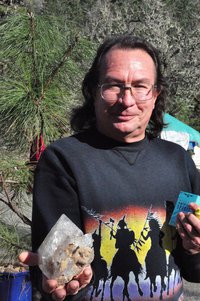
Bio: Frank Wise is a Member of the: Cheynne River Sioux Tribe. His Spirit name is: Buffalo Horn Cloud. Frank Lives in: Casper Wy. He has a BSW degree from the University of Wyoming minored in Addiction Counseling. Frank mostly attends and supports Lakota Spirtual Practices but he has worked with spitual leaders of most faiths and religions. He speaks with Rave about his message: Time to come together and put aside our differance for the fhuter of our childen and our mother the Earth.

Grateful

Deschutes Estuary restoration interview on “Make No Bones About It.”

Deschutes Estuary restoration interview on KAOS Part 1

Deschutes Estuary restoration interview on KAOS Part 2

Jeff Dickison from Squaxin Island Tribe talks about Restoring the estuary.


Join Raven and his guest Jeff Dickison from Squaxin as they visit about Restoring the estuary and helping heal the water ways. Sunday, June 26 · 4:00pm – 6:00pm

“The Deschutes River has the potential to be a much more ecologically rich place than it is today,” said Dickison. “Wilder and White clearly had more respect for salmon than the people that dammed the Deschutes River, creating Capitol Lake. The original designers obviously designed the original reflecting pool in the context of the natural environment.”

Questions & Answers

What is the difference between a lake and an estuary?
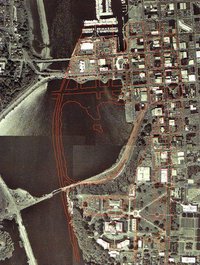
Actually, Capitol Lake isn’t really a lake at all, but a shallow reservoir created by damming the Deschutes River. In 1951, the state government built the 5th Avenue dam, blocking the Deschutes River and creating Capitol Lake.

An estuary is a biologically rich environment where a river reaches salt water. Estuaries play an important role in the lives of several species, including birds and fish. Salmon depend on estuaries for vital rearing and feeding habitat. Salmon are born in freshwater, and as they move downstream they undergo a physiological change which enables them to live in saltwater. Estuaries are the first place salmon encounter saltwater and it is important that there be enough food and habitat.

Currently, the Deschutes estuary does not exist. It has been inundated by the impoundment created in the 50s. The 5th Avenue dam blocks off any meaningful interaction between salt and freshwater that defines an estuary.

Won’t draining Capitol Lake leave a big mud hole?
Restoring the Deschutes estuary won’t really “drain” Capitol Lake. Actually, most people won’t notice a difference. Most of the time, the northern basin, or the “reflecting pool,” will not look any different than it does today. Natural tidal movement will fill the lower basin “reflecting pool” almost 80 percent of the time.

Only the southern two basins will see significant drainage, but even those will be filled as they are now during high tide. By restoring the Deschutes estuary, it is possible to retain the reflecting pool aspects of Capitol Lake.

Won’t an estuary be smelly?
No, the historic smell of the former estuary was caused by untreated sewage that was dumped directly into the Deschutes estuary. Raw sewage, not the periodic exposure of mudflats by the tides, caused an intense aroma that some still associate with the original estuary. Wastewater is now treated in Olympia before it is dumped into Budd Inlet.

Isn’t it possible to have clean water and a lake?
Virtually all of the water quality issues associated with Capitol Lake exist because it is an impounded river. Invasive species, drawn to Capitol Lake’s warm, shallow and stagnant environment are taking over the lake.

During the summer, nitrogen and phosphorous build up in the lake, depriving it of oxygen, which is vital to a healthy ecosystem. A recent report by the Washington Department of Ecology states that restoring the Deschutes Estuary would solve many of the water quality problems associated with Capitol Lake (link: http://www.scribd.com/doc/11615221/CLAMP-110608-Deschutes-Handouts).

Choosing to continue maintaining Capitol Lake is choosing to live with future water quality problems.

What will restoring the estuary do to wildlife?
Restoring the estuary will benefit native species while removing many invasive species. Capitol Lake already supports a large community of wildlife and plants, but these are not species native to our area, and have gained a foothold in Capitol Lake because it is an artificial landscape (link: http://www.scribd.com/doc/5528143/CLAMPSC090408A2).

The Puget Sound Partnership has identified eradicating invasive species like the ones that live in Capitol Lake as a high priority to restoring the entire Puget Sound ecosystem (link: http://www.psparchives.com/our_work/protect_habitat/ans.htm). As it is now, Capitol Lake is a haven for invasive species.

Isn’t Capitol Lake part of the “vision” of the Capitol Campus?
No. When the architects Walter Wilder and Harry White designed the Capitol Campus, the lake was more than forty years off and their plan specifically called for a free flowing Deschutes River (link). Their vision of a reflecting pool would have entailed diking off a portion of what is now the eastern part of Capitol Lake’s north basin to create a saltwater reflecting pool. Rather than being a shallow and warm freshwater impoundment, that reflecting pool would have been routinely flushed by the tides.

The real reason behind the creation of Capitol Lake wasn’t to complete the original “Wilder and White” vision, but rather to change the image of the nearby neighborhood. Up until the early 1940s, what is now Capitol Lake was home to a shanty town called “Little Hollywood.” In 1941 Little Hollywood was dismantled and burned, and ten years later the state completed the permanent flooding of the site.

Will we be cut off from the shoreline
because of concerns of protecting the estuary?
No, while the landscape of the shoreline and uses will change, access will not be impacted. Some uses, such as recreational fishing, could improve. For example, many other local estuaries – like Kennedy Creek at Totten Inlet – are popular sport fishing sites at low tide.

Can we cheaply dredge the lake?
Dredging Capitol Lake is an expensive solution to a problem that will never be solved without allowing the original estuary to be restored. All of the sediment carried by the Deschutes River is now deposited into Capitol Lake, slowing filling it up. Estuaries, because of their tidal influence, naturally disperse sediment into the marine environment. But, because the Deschutes River is dammed, the sediment has nowhere to go.

Dredging will be a multi-million dollar undertaking each time and it only solves one problem associated with the damning of the Deschutes. Water quality, invasive species, and other problems will continue to exist even with an expensive, aggressive dredging plan.

Is this part of a radical plan to return the entire area to a pristine state?Absolutely not. One of the important things to remember that restoring the Deschutes River estuary won’t and can’t be a total restoration of the local ecosystem. Too many things – from filling in nearby tidelands to urban development – have happened and there is no reasonable way to turn back the clock.

Restoring the estuary is a simple, sensible step to restoring as much of function of the local eco-system as we can.

Jeff Dickison, Policy Analyst, Squaxin Island Tribe, (360) 432-3815, jdickison@squaxin.nsn.us

LINKS:
http://www.squaxinisland.org/deschutes/milfoil.html
http://www.squaxinisland.org/deschutes/free_flowing.html

The Signs Are Clear and Everywhere! The Time of Fulfillment and Unified Action is Now!

Raven visits with Chief Phil Lane Jr. -The Signs Are Clear and Everywhere! The Time of Fulfillment and Unified Action is Now! June 19th, 2011 from 4pm-6pm

Bio:
Chief Phil Lane Jr
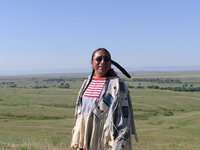
Hereditary Chief Phil Lane Jr. is an enrolled member of the Yankton Dakota and Chickasaw First Nations and is an internationally recognized leader in human and community development. He was born at the Haskell Indian Residential School in Lawrence, Kansas in 1944. He is a citizen of both Canada and the USA and was on the IILG agenda in both 2009 and 2010.

Sunday’s from 4-6 pm only on KAOS 89.3 FM

Sunday’s from 4-6 pm only on KAOS 89.3 FM

Tune in each week………..

New format coming…..

Wisdom Quote:
“So let us unite spiritually, All Nations, All Faiths, One Prayer. ”

– Chief Arvol Looking Horse

American Holocaust: When It’s All Over I’ll Still Be Indian

An Evening with Joanelle Romero on “Make No Bones About It.”

Join Raven has he visits with his guest Joanelle Romero. June 5th, 2011 at 5pm only on KAOS 89.3 FM

Joanelle Romero bio:
Actor – Humanitarian/Singer/Songwriter/Director/Producer (SAG, BMI)

…Red Nation Celebration – Owner/Founder/President/Excutive Director~ Where Culture Meets Community ~ Red Nation at the forefront … In Vision, Creativity, Leadership, Inspiration & Sustainability for American Indian & Indigenous Nations in Media & Arts. ABOUT RED NATION CELEBRATION Heritage, Culture, History, Tradition Red Nation Celebration (RNC) ~ Where Culture Meets Community is a 501 (c) (3) non-profit American Indian arts organization established to present contemporary and traditional American Indian performing arts of diverse artistic disciplines. To encourage understanding of cultural traditions, performing arts, preservation, and the advancement of American Indian, Alaska Native and Indigenous Nations. Red Nation Celebration (RNC) MISSION is dedicated to bringing Native American content and the arts to the mainstream media, new audiences, American Indian & Indigenous communities, and the world by developing partnerships with leaders of the entertainment industries and Tribal Nations.

Check out

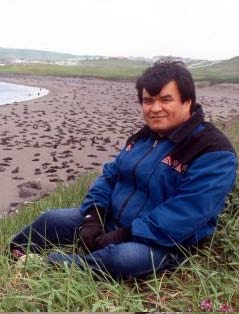
Raven speaks with Larry Merculieff of the Seven Generations Consulting: Sunday, May 15 · 5:00pm – 6:00pm

Bio:
…Larry Merculieff has almost four decades of experience serving his people, the Aleuts of the Pribilof Islands and other Alaska Native and indigenous peoples in a number of capacities locally, statewide, nationally and internationally. His reach has been broad and varied—a few of the positions he’s held include: City Manager of St. Paul Island, Commissioner of the Alaska Department of Commerce and Economic Development, President and CEO of Tanadgusix Corporation, Chairman of the Board of The Aleut Corporation, and General Manager of the Central Bering Sea Fishermen’s Association (one of the six Community Development Quota groups created by Congress to receive fish allocations in Alaska). Most importantly, Merculieff was a community leader on St. Paul Island, his home, for almost 35 years.

Close to Merculieff’s heart are issues related to cultural/individual/ community wellness, traditional ways of living, Indigenous Elder wisdom, and the environment. Having had a traditional upbringing, Merculieff has been, and continues to be, a strong voice advocating the meaningful application of traditional knowledge and wisdom obtained from Elders in Alaska and throughout the world when dealing with modern day challenges

Merculieff’s first opportunity to share what he learned came from an invitation to help facilitate a healing conference in Cordova in the late 1980s. He presented at the Healing from the Four Directions conference, facilitated the Healing from the Center conference in 2008 and conducted traditional talking circles at a substance abuse recovery center over the past two years. He also helped facilitate a statewide training for rural behavioral health aides in 2009. Additionally, he has and continues to lecture about traditional ways of healing at conferences and universities, including UAA. He presented at the first Anchorage conference on grieving to help parents who lost children. Merculieff also facilitated a community-wide grieving ceremony in Nondalton when their elders called him to assist because they were concerned that the community was not grieving the tragic loss of two local teenagers. Merculieff has presented numerous times at RANN, the UAA program for minority peoples seeking a degree in nursing, discussing traditional ways of knowing and healing, and the ways culture heals. Recently, Merculieff conducted a dialogue with youth in a program he created that was called Healing the Wounded Warrior.

From 2000–2003, Merculieff served as the Director of the Department of Public Policy and Advocacy in the Rural Alaska Community Action Program. As Director, Merculieff co-chaired the planning committee and led the largest subsistence rights march in Alaska’s history. He emceed the subsistence rally after the march. The march was instrumental in protecting Alaska Native subsistence rights, which were legally contested by the State of Alaska, to fish for salmon along Alaska’s rivers. He also successfully led a four-year effort to gain federal and state recognition of Alaska Native subsistence rights to catch and eat halibut throughout coastal Alaska.

Merculieff is co-founder and former chairman of the Alaska Indigenous Council on Marine Mammals; former chairman of the Nature Conservancy, Alaska chapter; former co-director of the Native American Fish and Wildlife Society, Alaska chapter; as well as co-founder of the International Bering Sea Forum, the Alaska Forum on the Environment, and the Alaska Oceans Network. He served as chairperson for the Alaska Sanitation Taskforce and co-chair of the Federal/State Taskforce on Rural Sanitation to bring support for running water and flush toilets to over one hundred Alaska Native communities. Merculieff served on the National Research Council Committee on the Bering Sea Ecosystem and was one of four Native Americans to present at the White House Conference on the Oceans during the Clinton administration. Merculieff was selected by Aleut leaders to be part of a one-hour Discovery Channel documentary about the history and spiritual aspects of Aleuts, which aired in 2001 and was viewed by an estimated 60 million people worldwide.

In 2004, Merculieff received the Alaska Native Writers on the Environment Award from the Alaska Conservation Foundation, the Rasmuson Foundation Award for Creative Nonfiction in 2006, the Buffet Finalist Award for Indigenous Leadership and the Alaska Forum on the Environment- Environmental Excellence Award for lifetime achievement in 2007. Merculieff was featured in the National Wildlife magazine as an “American Hero,” having called national and international attention to major adverse changes in the Bering Sea ecosystem.

Merculieff’s writings and interviews have appeared in such publications as the Winds of Change, Cultural Survival, YES, Red Ink, Alaska Geographic, Smithsonian, National Geographic, and Kindred Spirits. In 2008, Merculieff was one of ten Native American men in the U.S. featured in a book published by Second Story Press, entitled “Native American Men of Courage.” He was featured in this book because of his pivotal role during a time where many of his Aleut people on St. Paul Island experienced community-wide depression, suicides and suicide attempts, and murders. On November 18, 2009, Les Intouchables Publishing Company of Montreal released a book that he co-authored, entitled “Aleut Wisdom: Voice of an Aleut Messenger”. The book, published in the French language, is based on the wisdom Merculieff learned from his Aleut people and indigenous elders from around the world.

Merculieff works as an independent consultant. Currently he just completed five interactive forums for Alaska Native youth and emerging leaders on what they need to know to survive and thrive in the 21st century. The unprecedented forums were sponsored by the University of Alaska-Anchorage and the Alaska Humanities Forum. Merculieff is also contracted by the College of the Menominee Nation to guide the College in its efforts to help the Menominee Nation develop climate change adaptation strategies, and the Eyak Preservation Council to assist in unifying all the tribes of the Copper River for stewardship of the river.

In the Alaska Tribal Leaders Summit held August 24 through 26 of this year, Merculieff facilitated use of traditional ways of dialogue, discourse, decision-making and consensus building throughout the conference. For the first time in memory, leaders from over 100 tribes talked without conflict and reached unanimous decisions on courses of action dealing with the human rights challenges to Alaska Native traditional hunting, fishing and gathering.

Share:PostPostLinkLinkPhotoPhoto

An Evening with Ernie LaPointe May 8th, 2011 on KAOS 89.3 FM

Ernie LaPointe was born in 1948 on the Pine Ridge Reservation in South Dakota. He grew up in Rapid City, South Dakota with his half-sister Marlene Little Spotted Horse. Their late mother Angelique LaPointe Spotted Horse was a housewife. His late father Claude LaPointe farmed in Pine Ridge and worked in a lumber yard in Rapid City.Ernie attended the public school system in Rapid City. When he was 10 years old, his mother died of cancer. At age 17 his father died of a heart attack. He lived with his (half) Sister Marlene until he was 18 and old enough to join the military. He was stationed in Korea, Turkey, and Germany, and all over the United States. Mr. LaPointe did one tour in Vietnam in 1970-71. He received an honorable discharge from the Army in 1972.

On his Mother’s side he is the Great Grandson of Sitting Bull and Seen By Her Nation Woman. Mr. LaPointe can point out a long line of chiefs on his Mother’s as well as on his Father’s side. His Grandfather, Spotted Horse was the son of Hunts Enemy and the Grandson of Chief Charging Bear. His Great Grandmother’s (Tokala Win LaPointe) brother was Chief Painted Horse.

Mr. LaPointe met his wife, Sonja, at a pow wow in Rapid City, SD; they will be married for 13 years in April 2008. Mr. LaPointe is a Sun Dancer and lives the traditional way of the Lakota and follows the rules of the sacred pipe.

http://finland.usembassy.gov/root/pdfs/native_american_history_and_culture3.pdf