Category Archives: Make No Bones Shows

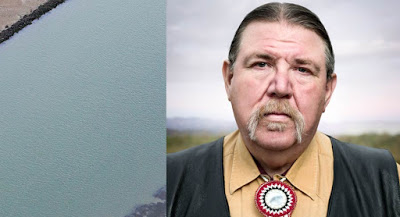
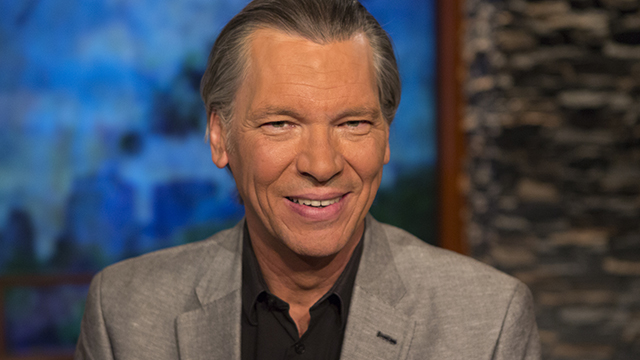
Robert A. Williams Jr. on “Make No Bones About It.” Another Perspective on American Indian Law. 1-11-15 at 4pm

Robert Williams

Robert A. Williams, Jr. is the E. Thomas Sullivan Professor of Law and Faculty Co-Chair of the University of Arizona Indigenous Peoples Law and Policy Program. Professor Williams received his B.A. from Loyola College (1977) and his J.D. from Harvard Law School (1980). He was named the first Oneida Indian Nation Visiting Professor of Law at Harvard Law School (2003-2004), having previously served there as Bennet Boskey Distinguished Visiting Lecturer of Law. He is the author of The American Indian in Western Legal Thought: The Discourses of Conquest (1990), which received the Gustavus Meyers Human Rights Center Award as one of the outstanding books published in 1990 on the subject of prejudice in the United States.  He has also written Linking Arms Together: American Indian Treaty Visions of Law and Peace, 1600-1800 (1997) and Like a Loaded Weapon: The Rehnquist Court, Indian Rights and the Legal History of Racism in America (2005). He is co-author of Federal Indian Law: Cases and Materials (6th ed., with David Getches, Charles Wilkinson, and Matthew Fletcher, 2011). His latest book is Savage Anxieties: The Invention of Western Civilization (Palgrave Macmillan 2012). The 2006 recipient of the University of Arizona Koffler Prize for Outstanding Accomplishments in Public Service, Professor Williams has received major grants and awards from the Soros Senior Justice Fellowship Program of the Open Society Institute, the John D. and Catherine T. MacArthur Foundation, the Ford Foundation, the National Endowment for the Humanities, the American Council of Learned Societies, the U.S. Department of Education, the U.S. Department of Justice, and the National Institute of Justice. He has represented tribal groups and members before the Inter-American Court of Human Rights, the Inter-American Commission on Human Rights, the United Nations Working Group on Indigenous Peoples, the United States Supreme Court, and the Supreme Court of Canada. Professor Williams has served as Chief Justice for the Court of Appeals, Pascua Yaqui Indian Reservation, and as Justice for the Court of Appeals and trial judge pro tem for the Tohono O’odham Nation. He was named one of 2011’s “Heroes on the Hill” by Indian Country Today for his human rights advocacy work as Lead Counsel for the Hul’qumi’num Treaty Group of Canada before the Inter-American Commission on Human Rights.

Biography

Roy Henry Vickers on the next “Make No Bones About It.” 12-14-2014 at 4:30pm

10866676_10205894356816909_1089419125_n

Canadian artist Roy Henry Vickers is best known around the world for his limited edition prints. He is also an accomplished carver, design advisor of prestigious public spaces, a sought-after keynote speaker, and publisher and author of several successful books.

In addition, he is a recognized leader in the First Nations community, and a tireless spokesperson for recovery from addictions and abuse.

Roy has received many awards and honours for his art and community involvement. Among them are a hereditary chieftainship and several hereditary names he has received from Northwest Coast First Nations.

In 1994, Maclean’s magazine included Roy as the first artist ever in its Annual Honour Roll of Extraordinary Canadian Achievers. In 1998, the Province of British Columbia appointed Roy to the prestigious Order of B.C. and in 2003, Roy received the Queen’s Golden Jubilee Medal. In 2003, a video featuring Roy was part of the successful Vancouver 2010 Olympic Bid.

In 1987, at the Commonwealth Summit in Vancouver, the original of Roy’s painting A Meeting of Chiefs was the official gift of the Province of British Columbia to Queen Elizabeth II. Limited edition prints of the painting were presented to the 48 Commonwealth Heads of State.

During their Vancouver Summit in 1993, former Soviet leader Boris Yeltsin and former U.S. president Bill Clinton received artist’s proofs of Roy’s print The Homecoming as the Province’s official gift.

roy candid bio picRoy’s work can be found in private and public collections and galleries around the world including the National Museum of Man (Ottawa, Ontario), University of British Columbia’s Museum of Anthropology (Vancouver), the McMichael Canadian Art Collection (Kleinburg, Ontario) and the National Museum of Japan (Osaka).
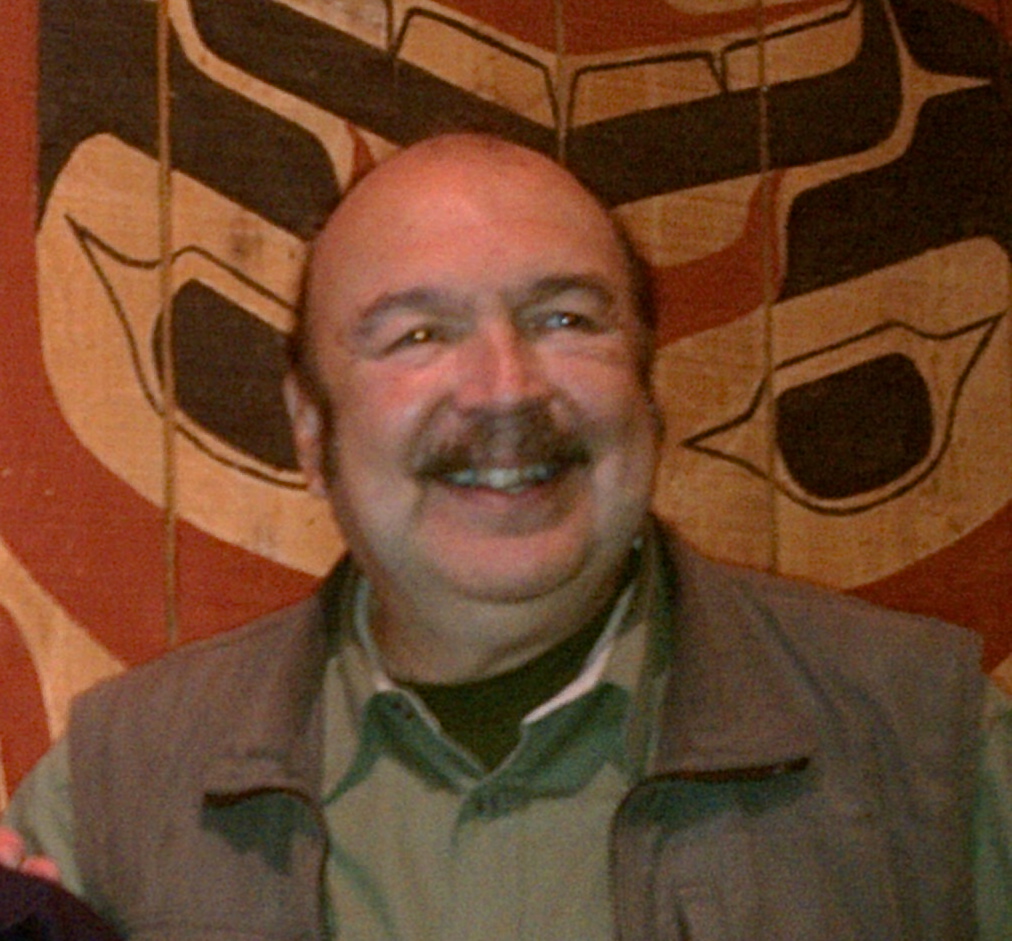
Roy Henry Vickers was born in June 1946 in the village of Greenville, in northern British Columbia. Roy has stayed on the northwest coast of British Columbia ever since, residing at various times in Hazelton, Kitkatla, Tofino and Victoria.

Roy’s love and respect of the magnificent natural beauty of this area is clearly evident in his art. His boldly colourful sunsets, subdued misty rivers and peaceful winter scenes reflect the essence of the west coast of Canada.

Roy’s father was a fisherman with the blood of three northwest coast First Nations’ Tsimshian, Haida and Heiltsuk flowing in his veins. Roy’s mother was a schoolteacher whose parents had immigrated to Canada from England. This unusual mixed heritage has had a strong influence on Roy’s art.

Roy studied traditional First Nations art and design at the Gitanmaax School of Northwest Coast Indian Art in Hazelton.

Using these building blocks Roy, through hard work and intensive research, created his authentic and personal style of expression – a harmonious fusion of traditional and contemporary, old and new, personal and universal.

In many of his pieces, Roy uses superimposed ‘shadow images’ that add another layer of depth, history and myth to his clear, clean images. His signature Eagle Moon and various suns appear on many pieces as well.

The resulting art touches deeply and is accessible to people all over the world regardless of their background, age, beliefs or traditions.

Roy Henry Vickers Bio

Terry Williams on the next “Make No Bones About It.” 12-14-14 at 5pm

IMAG0299

Terry Williams Bio

7/25/2013

Terry Williams has served since 1982 as a Fisheries, Natural Resources, and Treaty Rights Office Commissioner  for the Tulalip Tribes, in Marysville, Washington.

Since 1985, he has also served on the Northwest Indian Fisheries Commission (NWIFC) and the Pacific Fisheries Management Council, and since 1997 he has been a member of the Pacific Salmon Commission.

He was the director of the U.S. Environmental Protection Agency’s American Indian Environmental Office in 1995-96, and served as chair of the Tribal Committee of the National Environmental Justice Advisory Committee in 2003-04. In 1997, the Secretary for Policy and International Affairs Office of the U.S. Department of the Interior-appointed Williams to represent Indigenous peoples on the U.S. delegation to the United Nations Convention on Biological Diversity. He served in 1985-95 on the Puget Sound Water Quality Authority, Williams has received the Washington State Environmental Award and the Seventh Generation Legacy Award for his work, and he was a for the Buffett Award for Indigenous Leadership in 2004.

In 2011, he was appointed in 2009 to the Governor’s Cap and Trade Committee, he was appointed to a federal committee to develop the National Fish, Wildlife, and Plants Climate Adaptation Strategy. In 2012, he was appointed to the Governor’s Blue Ribbon Committee on Ocean Acidification, the Department of Agriculture National Genetic Resources Advisory Council, and the National Ocean Council Puget Sound Task Force. He has been active for the past 20 years on climate change and adaptation issues concerning Tribal trust resources.

Terry Williams Bio

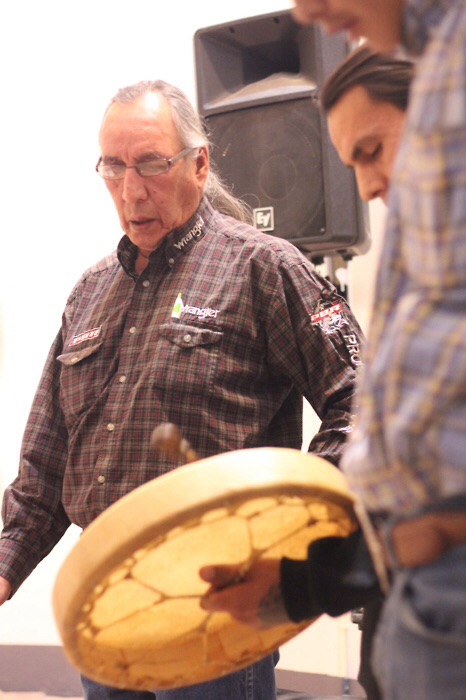
Raven visits with Jim Miller about Dakota 38 + 2 Memorial Ride. 12/7/2014 at 5pm

image

In Spring, 2005, Jim Miller, a Vietnam veteran, enrolled member of Cheyenne River, and a descendent of the Dakotas who where displaced after the event, dreamt of a series of horseback rides that would bring the Dakota people together, raise awareness to the significance impact still with us from the mass hanging and the surrounding events, and to bring reconciliation among all people of the region so that we may move forward and live in a good way.

Jim’s vision is for riders from all Dakota tribes to ride over 330 miles from Lower Brule Indian Reservation to the site of the mass hanging in Mankato, Minnesota. The ride is in December to honor the men, women, and children who were forced to march across the cold winter prairies either to the mass hanging in Mankato or to a large concentration camp of Dakota families at Fort Snelling, Minnesota. The riders finish at Reconciliation Park in Mankato on the anniversary of December 26.

We take the youth on the ride, so that they may connect with their culture in a more physical way. By being apart of the ride they are connecting themselves with their ancestors and their horse relatives. It is through the ride that they are able to see the beauty in the history and their culture.

James Miller Bio

Ride Donations

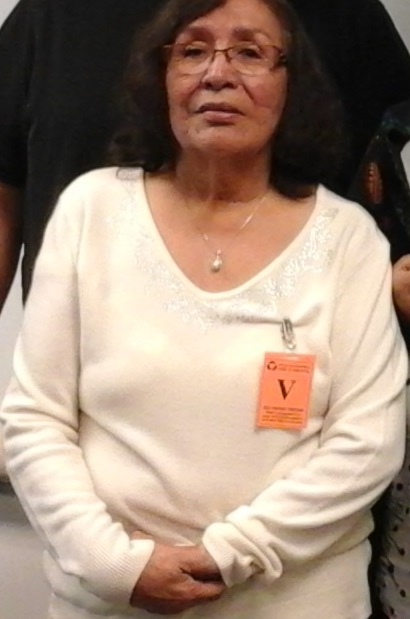
Ruby Russell, of the Blackfeet Nation on “Make No Bones About It.- 12-7-2104 at 4pm

unnamed

RubyRussell, Blackfeet Nation. shares her story with all our relatives this Sunday at 4pm. Tune in and listen to Ruby as she shares stories from her life.

Ed Johnston and Steve Robinson on KAOS 89.3 fm, November 9th, 2014 at 5pm

firststeward3

Ed Johnstone

Steve Robinson

Steve Robinson

Hank Adams on the next edition of Make No Bones About It. 10-26-2014 at 5pm

Hank-Adams   Hank Adams, once described by Vine Deloria, Jr. as being “The most important Indian” in the country, will be sharing with us on KAOS 89.3 fm.  Hank is one of the iconic figures in the American Indian civil rights movement. An Assiniboine-Sioux from Montana, he moved to the Northwest as a youth and never left. It would be difficult to find an event during the turbulent 1960s and 1970s that Hank Adams was not involved in. He was a central figure in the struggle of the Northwest coast tribes to secure their inherent fishing rights.

In 1971 he was shot in the stomach while guarding Indian fishing nets, allegedly by white fishermen. Adams and the other Indian fishing activists preserved, and eventually their acts of resistance not only helped bring about the landmark court case U.S. v. Washington – the Boldt decision – but proved to be the impetus for  an entire movement. Hank Adams was everywhere during this time period: Alcatraz, the Trail of Broken Treaties caravan, and Wounded Knee were just a few of the events in which he played a key role in. Adams was in many respects the “intellectual genius” of the movement, and wrote numerous position papers, including “The Twenty Points,” regarded as one of the most comprehensive Indigenous policy proposals ever devised.

Recently Dr. David E. Wilkins edited a collection of his best writings in a volume entitled The Hank Adams Reader (2012). In 2006, Indian Country Today named Hank as recipient of its third (Billy Frank, Jr. and Deloria being the first and second respectively) American Indian Visionary Award. Recently Hank Adams was awarded an honorary doctorate degree in Native leadership from Northwest Indian College.

Photo by Kimberly Adams

Roxanne Dunbar-Ortiz on “Make No Bones About It.” -October 26th, 2014 at 4pm

unnamed

Roxanne Dunbar Ortiz

Roxanne Dunbar-Ortiz grew up in rural Oklahoma, daughter of a tenant farmer and part-Indian mother. Her grandfather, a white settler, farmer, and veterinarian, was a member of the Oklahoma Socialist Party and Industrial Workers of the World. Her historical memoir, Red Dirt: Growing Up Okie, tells that story. Moving to San Francisco, California, she graduated in History from San Francisco State University and began graduate school at the University of California at Berkeley, transferring to University of California, Los Angeles to complete her doctorate in History, specializing in Western Hemisphere and Indigenous histories, also active in the anti-Vietnam War. From 1967 to 1972, she was a full time activist and a leader in the women’s liberation movement that emerged in 1967, organizing in various parts of the U. S., traveling to Europe, Mexico, and Cuba. A second historical memoir, Outlaw Woman: Memoir of the War Years, 1960-1975, tells that story. In 1974, Roxanne joined the American Indian Movement (AIM) and the International Indian Treaty Council, beginning a lifelong commitment to international human rights, lobbying for Indigenous rights at the United Nations. Appointed as director of Native American Studies at California State University East Bay, she collaborated in the development of the Department of Ethnic Studies, as well as Women’s Studies, where she taught for 3 decades. Her 1977 book, The Great Sioux Nation: An Oral History of the Sioux Nation, was the fundamental document at the first international conference on Indians of the Americas, held at United Nations’ headquarters in Geneva, Switzerland. Two more scholarly books followed: Roots of Resistance: A History of Land Tenure in New Mexico and Indians of the Americas: Human Rights and Self Determination. In 1981, Roxanne was invited to visit Sandinista Nicaragua to appraise the land tenure situation of the Mískitu Indians in the isolated northeastern region of the country. In over a hundred trips to Nicaragua and Honduras, she monitored what was called the Contra War. Her book, Blood on the Border: A Memoir of the Contra War, was published in 2005. Her book, An Indigenous Peoples’ History of the United States was published by Beacon Press in September 2014.

978-080700040-3

Raven visits with Terry E. Beckwith about “The Return of Termination”, October 19th, 2014 at 5pm

564979_405959782768482_1664470980_n

Terry E. Beckwith

Mr. Beckwith has worked in the Indian realty field for 40 years. He retired as Director, Palm Springs Office of the Bureau of Indian Affairs. He was Area Realty Officer; Agency Realty Office; Chief, Land Titles & Records Office; Probate Examiner, Office of Hearings & Appeals.

Beckwith’s career included positions in the Pacific Region, Western Region, Southern Plains, and Northwest Region. Beckwith was on several task forces drafting regulations. He has taught classes for ICC since 1998. He has taught classes for the Bureau of Indian Affairs and American

Indian Training Center of the Desert. Beckwith graduated from Haskell Institute (now Haskell Indian Nations University) in 1970 and has received an Award in Accounting from UCLA.

Gary Bigbear on “Make No Bones About It.” October 19th, 2014 at 4pm

gary

Gary Bigbear

Since relocating from the Great Plains to the Pacific Northwest in 2002, I have experienced living in a more densely populated urban area juxtaposed with the diverse natural habitats of forests, mountains, coastlines, the Pacific Ocean and Salish Sea. I tend to get swept up in bold colors and sounds expressed through abstracted images from imagination.  While reflecting upon my surroundings—such as roundabouts, robins, tree-scapes, coyotes, and traffic—I am inspired to draw and paint about the still-wild spaces amidst growing urban development.

Through the mediums of drawing and painting, three veins of work have evolved. Urban Escapes is a series of oil paintings about my backyard and other surviving natural spaces in and around Olympia, WA; while Black and White Drawings and Expressionist Paintings reveal glimpses or memories of time, both past and present.  My goal is to allow my work to encompass the many common, everyday mysteries that provoke the life force in each of its forms.

GARY BIGBEAR ART