Category Archives: Make No Bones Shows

Native American Author Gyasi Ross to Speak on Make No Bones About It.

Special Guest: – Gyasi Ross
Time
Sunday, August 14 · 4:00pm – 6:00pm
Location
Kaos 89.3 Fm – Olympia
2700 Evergreen Parkway
Olympia, WA

Gyasi Ross, a lawyer and motivational speaker, has agreed to write some 26 columns for Indian Country Today. So far, he’s about halfway through. A list of his columns are archived here at ICT. I remember when I read his first column about “fancy skins.” It generated many, many comments on the ICT page. No wonder. Several times while I read the piece, I stopped to argue with some of his points. What is a fancy skin? In Ross’s words: “the kind of Skin that always has a conference to attend, who always drops names, who went away to school and always talks about his/her time away at school.”

I wondered what all those Skins were thinking, the ones who are always attending a conference. I thought of the last conference I attended, a language conference in May at the National Museum of the American Indian. I actually attended as a participant, meaning I could mingle, enjoy lunch and take everything in at a somewhat leisurely pace. In the last decade, it seems whenever I attended a conference, I was working, on deadline, filing a story for the newspaper. Conference attendance meant long days, hard work. Anyway, as Ross would write– as he does several times in his columns — “I digress.”

Back to the main point, Ross’s columns. They are an interesting read for the mere fact that they are personal and conversational. He writes about a lot of sundry topics, such as stealing his sister’s diary and formal apologies to Natives from the U.S. government and military service. .

So, why is Ross writing these columns? I didn’t ask. If anyone wants to write, I strongly encourage it. I wish more Native people, anyone for that matter, would take the initiative to write about whatever is on their mind, which is what Ross seems to be doing. He’s taken it a step further by publishing it on the Internet. Good job. I strongly encourage other people to do the same. He’s chose to publish on the Indian Country Today Web site. That’s fine. I’d only say that no one needs an established Web site or news venue to publish their thoughts. That is the beauty of independent blogs.

Meanwhile, congratulations to Ross for his prolific series, he’s got about a dozen more columns already in draft form as I understand from some of our recent e-mail trades.

I’ll keep reading!

Gyasi Ross is a member of the Blackfeet Nation and his family also comes from the Suquamish Tribe. He is a lawyer, a warrior, a teacher, an entrepreneur and an author. He is co-founder of Native Speaks LLC, a progressive company owned by young Native professionals which provides consultation and instruction for professionals and companies, as well as young adults. Gyasi is currently booking dates for his presentation, “The Best: An Indian Theory of Existence.” E-mail him at gyasi.ross@gmail.com.

reference:

Home

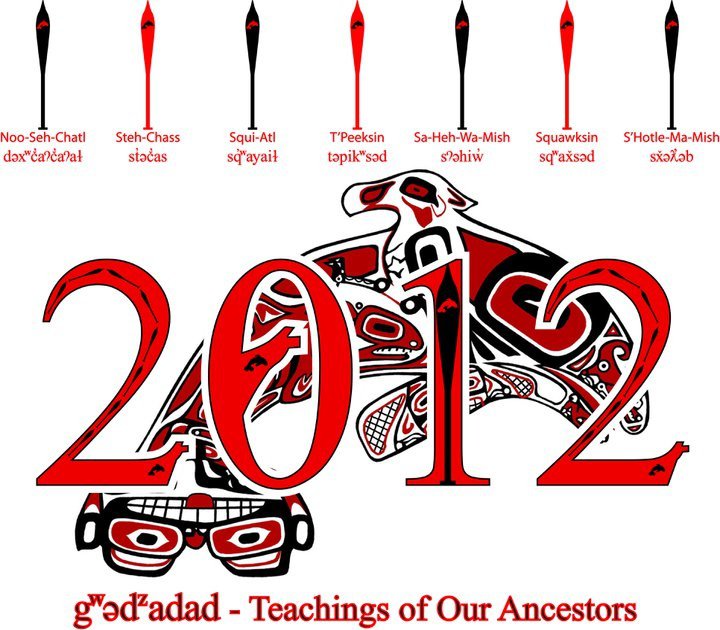
357? Days until Journeys 2012 Paddle to Squaxin Island

Time: Sunday, August 7 · 4:00pm – 5:00pm
Location
Kaos 89.3 Fm – Olympia

More Info
Join Raven as he speaks with Leslie Johnson, Director Squaxin Island Tribe Tourism Department about 2012 Paddle to Squaxin Island. Learn how we all can get started in helping with this spectacular event coming to the shores of Squaxin Island!

Robert & Elizabeth Satiacum on “Make No Bones About It.”

Time Sunday, July 31 · 4:00pm – 6:00pm

Location Kaos 89.3 Fm – Olympia, Washington

More Info Robert & Elizabeth Satiacum working together to make the world a better place for us all. Join us when we visit and talk about the many happenings with both of them in Indian Country.

Protecting Sacred Sites with Chief Phil Lane Jr and others

Time
Sunday, July 24 · 4:00pm – 6:00pm
Location
Kaos 89.3 Fm – Olympia
Olympia, WA
Created By
“Make No Bones About It.”
More Info
“Sacred places are the foundation of all other beliefs and practices because they represent the presence of the sacred in our lives. They properly inform us that we are not larger than nature and that we have responsibilities to the rest of the natural world that transcend our own personal desires and wishes. This lesson must be learned by each generation; unfortunately the technology of industrial society always leads us in the other direction. Yet it is certain that as we permanently foul our planetary nest, we shall have to learn a most bitter lesson. There is probably not sufficient time for the non-Indian population to understand the meaning of sacred lands and incorporate the idea into their lives and practices. We can but hope that some protection can be afforded these sacred places before the world becomes wholly secular and is destroyed.”

quote from p. 282 in Vine Deloria, Jr., 1994, God Is Red: A Native View of Religion, Golden CO: Fulcrum].

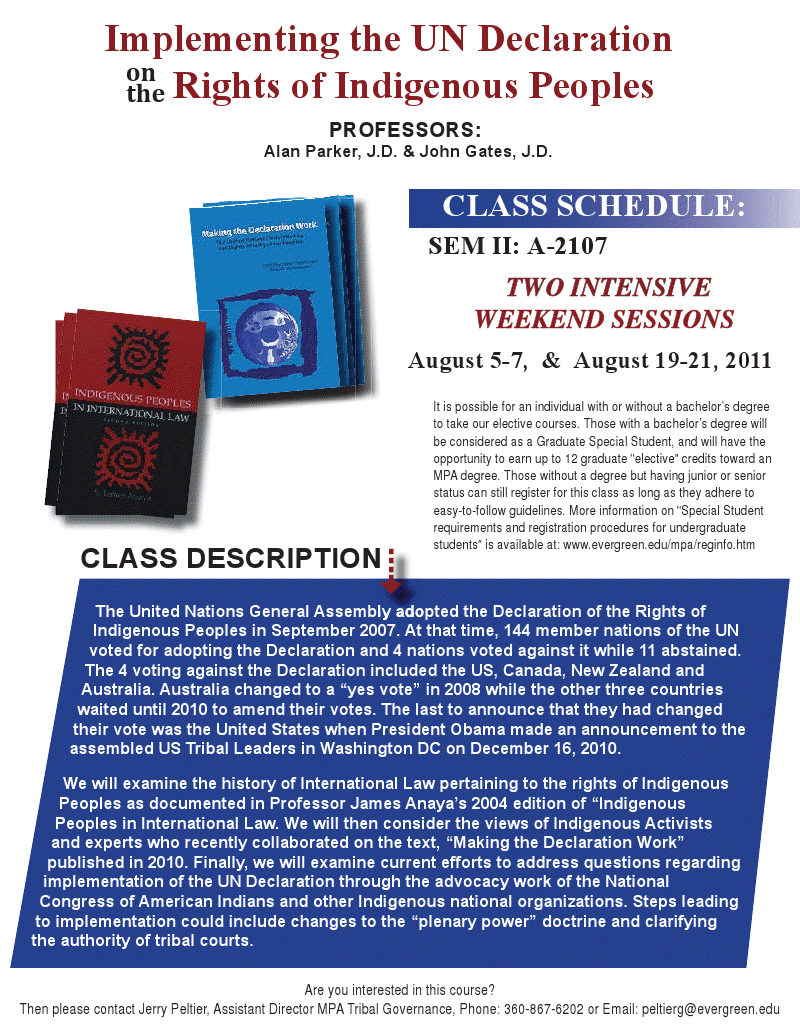
Interview with Prof John Gates and Pro Alan Parker

Interview with Prof John Gates and Pro Alan Parker
Interview Part One

Interview Part Two

Pro.John Gates and Alan Parker on “Make No Bones About it.”

Sunday, July 17 · 4:00pm – 5:00pm – Pro.John Gates and Alan Parker will be my guests on Make No Bones About it.” to discuss the United Nations Declaration on the Rights of Indigenous Peoples. Only KAOS 89.3 fm (kaosradio.org)

John David Gates, J.D.

An enrolled member of the Cheyenne River Sioux Tribe, John was born and raised in Gallup, New Mexico, which is located 135 miles west of Albuquerque. His primary a reason of professional expertise lie in the areas of federal Indian law and policy, and international indigenous human rights. John received his undergraduate degree from the University of New Mexico, and his law degree from the University Of Iowa College Of Law.

After graduating from law school, John served as prosecutor for the Cheyenne River Sioux Tribe, and served on the bench as Judge Pro Tem for the Laguna Pueblo, located in New Mexico. John taught courses in Native American Studies at the University of New Mexico from 1997/2004, where he also worked collaboratively with the faculty to establish a bachelor degree program in NAS. While employed under legal contracts with several tribes in New Mexico, John taught courses in cultural studies at Central New Mexico Community College in Albuquerque. In 2004/05, John was awarded a J. William Fulbright Senior Scholar fellowship to teach courses in federal Indian
law and international indigenous human rights at the University Of Bonn, Germany.

John currently serves as an expert witness on matters related to Native Hawai’ian sovereignty and self-determination. He currently is a full time faculty member in The Evergreen State
College Master of Public Administration/ Tribal Governance Program.

========================================

Alan Parker is the Director of the Northwest Indian Applied Research Institute at The Evergreen State College where he also has served as a member of the faculty since September of 1997. A citizen of the Chippewa Cree Tribal Nation, Parker lived for many years with his family on the Rocky Boy’s Reservation in Northern Montana. Alan graduated from the UCLA School of Law in 1972 and practiced law in Washington, DC for over twenty years before joining the Evergreen College faculty in 1997. While in Washington, DC, he directed research on tribal governments for the American Indian Policy Review Commission and was the first Native American to serve as Chief Counsel to the US Senate Committee on Indian Affairs. (1977-81, 1987-91)

During his service in the US Senate he was instrumental in securing passage of the Indian Child Welfare Act, the Indian Religious Freedom Act, the Native American Graves Protection and Repatriation Act, the Tribal Self-governance Act, the American Indian Development Finance Corporation Act and numerous tribal land and water claims settlements. He also served as President of the American Indian National Bank from 1982 through 1987 and later organized the first “Native American think tank”, the National Indian Policy Center at George Washington University. On May 21, 2000 Washington State Governor Gary Locke appointed Professor Parker as the first Native American attorney to serve on the Washington State Gambling Commission.

Professor Parker recently organized with collegue Dr. Linda Moon Stumpff, the nation’s first graduate school program in tribal management, the Master in Public Administration: Tribal Government. His research interests are currently focused on integrating cultural revitalization, governance and sustainability through implementing tribal self-determination. (see: Epistomology of Native Studies) He has also been engaged in comparative studies of indigenous nations of the Pacific Rim. As co chair of the committee on indigenous nation relationships of the National Congress of American Indians, he is coordinating treaty negotiations to establish a United League of Indigenous Nations.

More :
http://www.un.org/esa/socdev/unpfii/en/drip.html

Raven visits with Frank Wise on “Make No Bones About It.”

Raven visits with Frank Wise on Make No Bones About It

Sunday at 4-pm July 10th, 2011 only on Kaos 89.3 Fm – Olympia

Bio: Frank Wise is a Member of the: Cheynne River Sioux Tribe. His Spirit name is: Buffalo Horn Cloud. Frank Lives in: Casper Wy. He has a BSW degree from the University of Wyoming minored in Addiction Counseling. Frank mostly attends and supports Lakota Spirtual Practices but he has worked with spitual leaders of most faiths and religions. He speaks with Rave about his message: Time to come together and put aside our differance for the fhuter of our childen and our mother the Earth.

Jeff Dickison from Squaxin Island Tribe talks about Restoring the estuary.


Join Raven and his guest Jeff Dickison from Squaxin as they visit about Restoring the estuary and helping heal the water ways. Sunday, June 26 · 4:00pm – 6:00pm

“The Deschutes River has the potential to be a much more ecologically rich place than it is today,” said Dickison. “Wilder and White clearly had more respect for salmon than the people that dammed the Deschutes River, creating Capitol Lake. The original designers obviously designed the original reflecting pool in the context of the natural environment.”

Questions & Answers

What is the difference between a lake and an estuary?
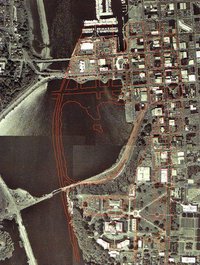
Actually, Capitol Lake isn’t really a lake at all, but a shallow reservoir created by damming the Deschutes River. In 1951, the state government built the 5th Avenue dam, blocking the Deschutes River and creating Capitol Lake.

An estuary is a biologically rich environment where a river reaches salt water. Estuaries play an important role in the lives of several species, including birds and fish. Salmon depend on estuaries for vital rearing and feeding habitat. Salmon are born in freshwater, and as they move downstream they undergo a physiological change which enables them to live in saltwater. Estuaries are the first place salmon encounter saltwater and it is important that there be enough food and habitat.

Currently, the Deschutes estuary does not exist. It has been inundated by the impoundment created in the 50s. The 5th Avenue dam blocks off any meaningful interaction between salt and freshwater that defines an estuary.

Won’t draining Capitol Lake leave a big mud hole?
Restoring the Deschutes estuary won’t really “drain” Capitol Lake. Actually, most people won’t notice a difference. Most of the time, the northern basin, or the “reflecting pool,” will not look any different than it does today. Natural tidal movement will fill the lower basin “reflecting pool” almost 80 percent of the time.

Only the southern two basins will see significant drainage, but even those will be filled as they are now during high tide. By restoring the Deschutes estuary, it is possible to retain the reflecting pool aspects of Capitol Lake.

Won’t an estuary be smelly?
No, the historic smell of the former estuary was caused by untreated sewage that was dumped directly into the Deschutes estuary. Raw sewage, not the periodic exposure of mudflats by the tides, caused an intense aroma that some still associate with the original estuary. Wastewater is now treated in Olympia before it is dumped into Budd Inlet.

Isn’t it possible to have clean water and a lake?
Virtually all of the water quality issues associated with Capitol Lake exist because it is an impounded river. Invasive species, drawn to Capitol Lake’s warm, shallow and stagnant environment are taking over the lake.

During the summer, nitrogen and phosphorous build up in the lake, depriving it of oxygen, which is vital to a healthy ecosystem. A recent report by the Washington Department of Ecology states that restoring the Deschutes Estuary would solve many of the water quality problems associated with Capitol Lake (link: http://www.scribd.com/doc/11615221/CLAMP-110608-Deschutes-Handouts).

Choosing to continue maintaining Capitol Lake is choosing to live with future water quality problems.

What will restoring the estuary do to wildlife?
Restoring the estuary will benefit native species while removing many invasive species. Capitol Lake already supports a large community of wildlife and plants, but these are not species native to our area, and have gained a foothold in Capitol Lake because it is an artificial landscape (link: http://www.scribd.com/doc/5528143/CLAMPSC090408A2).

The Puget Sound Partnership has identified eradicating invasive species like the ones that live in Capitol Lake as a high priority to restoring the entire Puget Sound ecosystem (link: http://www.psparchives.com/our_work/protect_habitat/ans.htm). As it is now, Capitol Lake is a haven for invasive species.

Isn’t Capitol Lake part of the “vision” of the Capitol Campus?
No. When the architects Walter Wilder and Harry White designed the Capitol Campus, the lake was more than forty years off and their plan specifically called for a free flowing Deschutes River (link). Their vision of a reflecting pool would have entailed diking off a portion of what is now the eastern part of Capitol Lake’s north basin to create a saltwater reflecting pool. Rather than being a shallow and warm freshwater impoundment, that reflecting pool would have been routinely flushed by the tides.

The real reason behind the creation of Capitol Lake wasn’t to complete the original “Wilder and White” vision, but rather to change the image of the nearby neighborhood. Up until the early 1940s, what is now Capitol Lake was home to a shanty town called “Little Hollywood.” In 1941 Little Hollywood was dismantled and burned, and ten years later the state completed the permanent flooding of the site.

Will we be cut off from the shoreline
because of concerns of protecting the estuary?
No, while the landscape of the shoreline and uses will change, access will not be impacted. Some uses, such as recreational fishing, could improve. For example, many other local estuaries – like Kennedy Creek at Totten Inlet – are popular sport fishing sites at low tide.

Can we cheaply dredge the lake?
Dredging Capitol Lake is an expensive solution to a problem that will never be solved without allowing the original estuary to be restored. All of the sediment carried by the Deschutes River is now deposited into Capitol Lake, slowing filling it up. Estuaries, because of their tidal influence, naturally disperse sediment into the marine environment. But, because the Deschutes River is dammed, the sediment has nowhere to go.

Dredging will be a multi-million dollar undertaking each time and it only solves one problem associated with the damning of the Deschutes. Water quality, invasive species, and other problems will continue to exist even with an expensive, aggressive dredging plan.

Is this part of a radical plan to return the entire area to a pristine state?Absolutely not. One of the important things to remember that restoring the Deschutes River estuary won’t and can’t be a total restoration of the local ecosystem. Too many things – from filling in nearby tidelands to urban development – have happened and there is no reasonable way to turn back the clock.

Restoring the estuary is a simple, sensible step to restoring as much of function of the local eco-system as we can.

Jeff Dickison, Policy Analyst, Squaxin Island Tribe, (360) 432-3815, jdickison@squaxin.nsn.us

LINKS:
http://www.squaxinisland.org/deschutes/milfoil.html
http://www.squaxinisland.org/deschutes/free_flowing.html

The Signs Are Clear and Everywhere! The Time of Fulfillment and Unified Action is Now!

Raven visits with Chief Phil Lane Jr. -The Signs Are Clear and Everywhere! The Time of Fulfillment and Unified Action is Now! June 19th, 2011 from 4pm-6pm

Bio:
Chief Phil Lane Jr
Hereditary Chief Phil Lane Jr. is an enrolled member of the Yankton Dakota and Chickasaw First Nations and is an internationally recognized leader in human and community development. He was born at the Haskell Indian Residential School in Lawrence, Kansas in 1944. He is a citizen of both Canada and the USA and was on the IILG agenda in both 2009 and 2010.

An Evening with Joanelle Romero on “Make No Bones About It.”

Join Raven has he visits with his guest Joanelle Romero. June 5th, 2011 at 5pm only on KAOS 89.3 FM

Joanelle Romero bio:
Actor – Humanitarian/Singer/Songwriter/Director/Producer (SAG, BMI)

…Red Nation Celebration – Owner/Founder/President/Excutive Director~ Where Culture Meets Community ~ Red Nation at the forefront … In Vision, Creativity, Leadership, Inspiration & Sustainability for American Indian & Indigenous Nations in Media & Arts. ABOUT RED NATION CELEBRATION Heritage, Culture, History, Tradition Red Nation Celebration (RNC) ~ Where Culture Meets Community is a 501 (c) (3) non-profit American Indian arts organization established to present contemporary and traditional American Indian performing arts of diverse artistic disciplines. To encourage understanding of cultural traditions, performing arts, preservation, and the advancement of American Indian, Alaska Native and Indigenous Nations. Red Nation Celebration (RNC) MISSION is dedicated to bringing Native American content and the arts to the mainstream media, new audiences, American Indian & Indigenous communities, and the world by developing partnerships with leaders of the entertainment industries and Tribal Nations.

Check out