Tag Archives: Indigenous

Raven visits with Denise Bellecourt Levy- November 18th, 2012 5pm

Denise Bellecourt is the first born child of Vernon and Carol Ann (Holmgren) Bellecourt in Saint Paul Minnesota in July of 1960. Vernon and Carol Ann were the owners and operators of two beauty salons in St. Paul. When Denise was four years old the Bellecourt family, including brothers Marcus and Bret, moved to Denver, Colorado. Denise was raised in Denver until she was 15 years old, when she move d back home with her dad Vernon to the White Earth Reservation in northern Minnesota where her dad is from.

Denise’s dad, Vernon Bellecourt became a major leader in the American Indian Movement in 1968, which caused the breakup of her parents marriage in 1970. Denise became a major helper in her Dad’s home with many responsibilities at a young age. Denise was in charge of helping to raise her brothers and sister. Denise also was totally in charge of keeping her Dad’s children and home when he was gone on his work for AIM. Denise also has two younger siblings, Raven and Blackwolf, from her Dad’s second family with her stepmother Lyna Hart. Denise was brought up in the American Indian Movement from age 10. Denise is an AIM baby who is now a mother of two grown children and two grandsons.

Denise’s son John Clark, was born in 1979. Denise’s son’s father was killed in a tragic car accident in 1979 two months after her son was born. Denise started attending Bemidji State University in 1980 as a single parent. While in college Denise had another child, Adrianne Levy, who was born in 1980. Denise graduated from Bemidji State University in 1986 with a double major in Criminal Justice and Indian Studies. After a brief one year stint at University of North Dakota Law School, Denise quit law school to be home with her young children and work full time.

Denise worked for the White Earth Reservation in many capacities from Receptionist to Adoption Social Worker for nearly 25 years. Denise also worked for Anishinabe Legal Service as a Paralegal after she left employment with the White Earth Reservation Tribal Council. Denise also did a lot of volunteer work her community over the years including Chairwoman of the Local Indian Education Committee where her children and now grandchildren go to school. Denise was instrumental in the coordination of many cultural events and pow-wows in the local school district, at Headstart where she worked as a Multi-Cultural Coordinator with 3 and 4 year olds, and at the Reservation Tribal College where she worked as a Grant Writer for the submission of a grant for a tribal college language program. Denise also was on the White Earth Land Recovery Project Board of Directors where she served in numerous capacities including Chairwoman of the board. Denise also served on the Curriculum Advisory Committee and was the President of the local Parent Teacher Student Organization for the Ogema, White Earth, Waubun School District when her children were attending school there. Denise was the Chairwoman/Coordinator for the White Earth Reservation Annual June Celebration in 2000 and 2001, and was presented an award from the Tribal Council for best celebration ever.

Denise resides on the White Earth Indian Reservation with her husband, Michael Levy. Currently Denise is working on an autobiography of her life, tentatively titled American Indian Movement Daughter regarding her life as a child of AIM leader Vernon Bellecourt. Denise is also working on culturally appropriate books for children.
Raven visits with “Sihasin” November 18, 2012 4pm

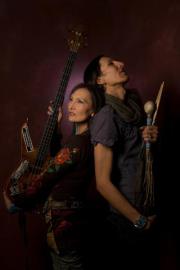
Clayson Benally and Jeneda Benally of Blackfire are excited to announce their new musical side project “Sihasin”! A Navajo word that means Hope and Assurance is the basis for the duo’s new sound. Bass and Drums with vocal harmonies giving way to Navajo singing and melody creates a duophonic energy that leaves you with a feeling of Get Up, Stand up, use your voice and DO! Their unique new sound continues the power and energy of resistance for environmental and social injustices.
Biography
Brother and sister originally from Black Mesa on the Navajo Reservation in Arizona, were born into the heart of a political land dispute separating them by a fence from traditional homeland and family. They grew up protesting the environmental degradation and inhumane acts of cultural genocide against their traditional way of life.Their musical style encompasses many genres of music including rock, punk, folk, world. Jeneda and Clayson are at home on any stage.

Current Location
Navajo Nation, Arizona
Press Contact
bertabenally@gmail.com
Booking Agent
bertabenally@gmail.comBIO:
SIHASIN

(See-ha-szin)

Dine’ word- to think with hope and assurance. The process of making critical affirmative action of thinking, planning, learning, becoming experienced and confident to adapt.

Brother and sister, Jeneda and Clayson Benally of Blackfire from the Navajo (Dine’) Nation in Northern Arizona have created their own unique brand of music with bass and drums. They grew up protesting the environmental degradation and inhumane acts of cultural genocide against their traditional way of life. Their music reflects hope for equality, healthy and respectful communities and social and environmental justice.
http://sihasin.com/

September 16th, 2012 at 5pm Tara Evonne Trudell shares her poetry

Tara Evonne Trudell will share with us her poetry, art, and love of the spoken word. “I started writing poetry again after a 10-year break and was intrigued by the healing process the words brought to the surface. Writing poetry can be like catching butterflies: the words flutter so quickly from deep within and I capture them as quickly as I can on paper. Then I go back and shape the poem, looking at how the words interact,” Trudell said. Trudell, 44, is earning her bachelor of fine arts in media arts with and emphasis in filmmaking. Her films have already garnered awards. The Las Vegas single mother of four returned to Highlands in 2010. Trudell’s roots run deep in Northern New Mexico on her mother’s side, dating back seven generations. Villanueva was named for Trudell’s great-great grandmother, Manuela Villanueva. The poetry reading with her father will be filmed as the culmination of a documentary Trudell is producing from her summer poetry reading series called “Poetry in Random Places.” She is collaborating with fellow media arts student Faith Toledo on the project. Toledo helped film Trudell’s poetry readings this summer at northern New Mexico venues ranging from the Axle Contemporary Gallery and Lucky Bean Café in Santa Fe to the Las Vegas Farmer’s Market. Trudell also filmed herself reading poetry in natural settings such as cornfields and scenic canyons. Trudell’s films are rich in what she calls her earth shots: a flowing river, threes thrashing in the wind, a hawk soaring overhead, clouds filling a leaden sky, a lingering sunset. Earth images also infuse her poetry. “I want people to recognize the beauty of the land and nature and be moved in some way. The more we cultivate our connection to the earth, the stronger we become,” Trudell said.  Trudell is also a human rights activist, with a particular passion for immigration issues. Her poetry was selected for inclusion in the anthology, Poetry of Resistance: A Multicultural Response to Arizona SB 1070 and Other Xenophobic Laws, slated for publication through the University of Arizona Press. The Aug. 19 poetry reading is free but donations are accepted. Proceeds will help with the production expenses for Trudell’s documentary, “Poetry in Random Places.”

Without you we can do very little…

ATTENTION OLYMPIA RELATIVES: I WILL BE COLLECTING BLANKETS FOR THE NEXT FEW WEEKS BEFORE THE WINTER SETS IN SOUTH DAKOTA AREA. I AM HELPING COLLECT BLANKETS FOR OUR RELATIVES IN SOUTH DAKOTA. I AM WORKING WITH GOOD THINKING 4 ALL OUR RELATIONS  TO BRING THE WARM TO THE PEOPLE.  A BLANKET CAN SAVE A LIFE.

Every year, we lose a few more people — mostly elders — because they freeze to death. The past few winters in South Dakota have been lethal, and this year’s promises to be a hard winter too … If you live out of the country, please use our PayPal link at Godthinking … and to the  families, children and elders.

www.4allourrelations.org/

Olympia Washington drop off site:

Traditions :  300 5th Avenue SW, 98501 Olympia, WA · Get Directions Website  http://www.traditionsfairtrade.com/pages/tradhome.html

Save Pe Sla

Will be talking to Chase Iron Eyes,  and others about what is happening in Lakota Territory. Save Pe’Sla Sunday at 4pm pacific. There is 2 lines into the station. We also have 2 hrs to let the world know what is going on and what they need to do to make it right. The number is 360-867-5267 and its 4pm pacific let me know if you are willing to call in. Thank you all for what you do for the people. Please spread the word. Pe’ Sla, also called “Old Baldy,” is vital to Oceti Sakowin star knowledge and provid…

es evidence of our historical ties to the Black Hills as well. The Black Hills are a terrestrial mirror of the heavens above. Pe’ Sla, an open, rather bare expanse of land compared to its surroundings, corresponds to the Crab Nebula, a gaseous cloud remnant of a supernova explosion that happened in 1054 AD. It is no longer visible with the naked eye- but my people remember it. Like many other Indigenous groups, our ceremonies are tied directly to the Universe and the natural cycles of Ina Maka (Mother Earth). Therefore, it only serves that Pe’ Sla, a location in the heart of the Black Hills that serves as a basis for our star maps, is also a sacred site where ceremonies must be observed each year. According to our beliefs, these rituals must be performed to keep the Universe in harmony and preserve the well being of all, Native and non-Native alike. You see, to the Lakota, Dakota and Nakota, Pe’ Sla is not merely prairie. Its grounds are holy. It is our Church of the Holy Sepulchre. It is our Mecca. Pe’ Sla is our wailing wall, where we are meant to pray. The danger of the Oceti Sakowin losing Pe’ Sla is real, and imminent. Should Pe’ Sla pass into the hands of someone other than us, it’s highly likely that it will be developed. The State of South Dakota has expressed that it wants to use eminent domain to build a road right through the heart of Pe’ Sla. Development of Pe’ Sla would effectively cut off our access to it, and spell its destruction as a sacred site. Worse yet, we only have 9 days left before auction day. After analyzing our legal options, it was understood that due to time constraints and the fact that Pe’ Sla is currently owned by a private party (the Reynolds family), our only viable option to ensure Pe’ Sla remains a sacred site for future generations of Oceti Sakowin, as well as other Tribes like the Cheyenne and Kiowa who hold similar beliefs and ceremonies, was to buy it. The cost for Pe’ Sla at auction, also called “Reynold’s Prairie,” is estimated to run anywhere from $6 to $10 million. Chase Iron Eyes, founder of Lastrealindians.com, Inc., spearheaded the effort to save Pe’ Sla. Rodney Bordeaux, President of the Rosebud Sioux Tribe, took the initiative to bring his concerns about Pe’ Sla to the Rosebud council, who voted to act as a conduit to unite all Oceti Sakowin Tribes. Within days, the collaborative effort to save Pe’ Sla spread far and wide across the Dakotas, and now, the nation. Grassroots efforts have mobilized Oceti Sakowin Tribal members who are working hard to find solutions, and raise awareness. Right now, in council chambers across The Sioux Empire of old, Tribal leaders are working, against all odds, to raise enough money to buy back land that was stolen from them by the U.S. government. Remember, the Sioux never accepted the Black Hills Settlement as proposed by the United States Supreme Court- who held that the Black Hills were wrongfully taken from us. This effort, by the united Oceti Sakowin to save one of our sacred sites, is unprecedented. Unlike stereotypical portrayals, the majority of Sioux Tribes still struggle financially. Unemployment is high, and many Tribal members live in poverty. Yet there are traditional Lakota, Dakota, and Nakota who are prepared to give till it hurts to save Pe’ Sla. Pe’ Sla is rightfully ours. It was passed down to us from our ancestors, who were here many millennia before European invaders arrived. Now we implore you; stand with us. We need your help. Pray for us and our efforts to save Pe’ Sla. Share this story. Contact your congressman and voice your concerns for Pe’ Sla, the Oceti Sakowin sacred site that’s on the auction block. Contribute to our cause to buy back Pe’ Sla. Donations may be made online with LastRealIndians here or through the Rosebud Sioux Tribe/Pe Sla, 11 Legion Ave., P.O. Box 430, Rosebud, SD 57570. All donations to the Tribe are tax-deductible and will only be used toward the purchase of Pe Sla. We’ve drawn a line in the sand. This effort may take all we’ve got, but we won’t lose Pe’ Sla without a fight. We are doing it for our children, and yours. Ruth Hopkins (Sisseton-Wahpeton/Mdewakanton/Hunkpapa) is a writer, speaker,former science professor and tribal attorney. She is a columnist for Indian Country Today Media Network and LastRealIndians.com. Read more:http://indiancountrytodaymedianetwork.com/ict_sbc/black-hills-auction-saving-pe-sla http://indiancountrytodaymedianetwork.com/ict_sbc/black-hills-auction-saving-pe-sla#ixzz24F7Wex00

Tribal Journey 2012

Billy Frank Jr. on habitat decline and treaty rights

Billy Frank Jr., chairman of the Northwest Indian Fisheries Commission, talks about how the decline of salmon and salmon habitat are putting the tribes’ treaty rights at risk.

http://blogs.nwifc.org/treatyrightsatrisk/

PBS NewsHour features Swinomish Climate Change Initiative and Billy Frank Jr.

Program: PBS NewsHour

Episode: Northwest Salmon People Face a Future Without Fish

For Northwest tribes, salmon fishing is more than a food source, it’s a way of life. Now the climate may push the fish towards extinction. Together with KCTS9 and EarthFix, NewsHour visited the Swinomish Indian reservation to see how they are coping.


http://video.pbs.org/video/2257248299

Join us as we visit with Barney Bush and Kris Barney this July 22, 2012, at 4pm.

Join us as we visit with Barney Bush and Kris Barney this July 22, 2012, at 4pm.

Before returning full time to his Ohio River homelands, poet/education- activist/patriot Barney Bush wrote about his homelands and the destruction of water, sky, land, forests , animals, people and became published and translated internationally. He has taught in numerous colleges and universities in the U.S. and has a B.A. in Humanities from Ft. Lewis College, Durango Colorado, a Masters of Arts in English and Fine Arts from the University of Idaho in Moscow, Idaho, and sixty five hours beyond the masters. He has also taught writing and English logic classes in Native American schools all over North America including Alaska and Hawaii. He has been a guest speaker in universities of western Europe as well as North and Central America.

Bush has also served as a writer-in- residence for numerous arts councils including those in New York, North Carolina, Illinois, Kentucky, Oklahoma, Vermont and more. From 1989 through 2005 he was on contract with nato Records in Paris, France, where he recorded numerous musical and spoken poetry albums. All lyrics were written by Bush, and music was composed by Tony Hymas, English composer and recording artist, who employed the use of Native American music and performers throughout the albums. One of their early albums, (Left for Dead), was admitted to the list of the “Greatest Experimental Hits in the History of Music.”

Bush is also the first indigenous poet admitted to the Society of Artists, Composers and Editors of Music (SACEM), Paris, France.Shawnee poet, Barney Bush, was inspired to react to the losing of his homelands. During the sixties he became involved with the American Indian Movement which was just forming in Minneapolis, Minnesota. During this time, he became involved in protests over the lack of understanding about Native people in their own homelands. He was an organizer, among many, of several schools throughout Indian country and helped, in 1970, create the first Native American Studies programs for colleges, high schools and grade schools in the United States. Bush came to see that the only way to save and promote the growth of homelands and culture was through organizing and truly learning the culture of colonial America. He believes that Native peoples’ owning and sharing their own businesses and schools is a primary factor in purchasing back our homelands for future generations.

http://www.vinyardindiansettlement.org/sample-page/

about Kris:
Kris Barney ” Dine’ Poet & traditional farmer from Tse’ Chi’zhi'”

Ya’a’teeh. Shi ei Kristopher Barney yinishye’. Honaghaanii Nishli’, Tlashchi’i’ Bashishchiin, Tachiinii Da Shi Che’, Todiko’zhi doo Kiisani Dine’e’ Da Shi Nali’. Tse’ Chi’zhi’ dęę

There is no compromise. I’ve lived all my life with one of the worlds biggest and ugliest coal stripmines in my back yard, i am the descendant of medicine people and warriors. My ancestors never went on the Long Walk to Hweeldi’, I am a survivor and hold the medicine of freedom, words, emotions that draw their power, strength, beauty and purpose from the first wind, breath of creation.

I am a Honaghaanii man and Nashdoistoh is my protector

A Visit with Ray Ward of the Chumash Nation

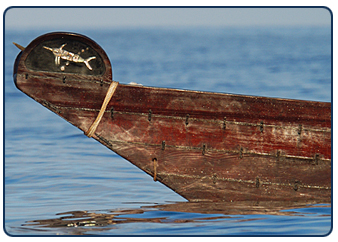
We will be visiting about the Chumash returning with the Tomol to Salish Country. Very excited to have this visit with Brother Ray!!

Ray Ward is a captain of the ‘Elye’wun and the Chair of the Chumash Maritime Association. Ray, and other members of the Chumash community, created a beautifully tiled artwork at the village of Syuxtun (West Beach) in Santa Barbara. The Syuxtun Story Circle won the Santa Barbara Beautiful Award for Public Art in 2010. Ray is currently heading the building of the BCC’s community tomol. Our newest tomol is nearly built and is expected to do her first voyage this Spring 2012.

Click to visit the Chumash Maritime Association
http://www.chumashmaritime.org/