Category Archives: Make No Bones Shows

Redbone speaks with Veteran Warren Gohl of Seneca Nation -12-15-2013, 4pm

20101113-183041-pic-421005702_t607

Veteran Warren Gohl of Tacoma.
(STEVE ZUGSCHWERDT | FOR THE KITSAP SUN)

Veteran Warren Gohl of Seneca Nation

Department of Corrections 1980 – 2006. Retired as Community Corrections Officer 3 – Tacoma DOC.
US Army 1959 – 1980. Retired as Chief Warrant Officer, US Army.

American Indian Background: Descendant maternally of Chief Comstock, Seneca on the Sandusky, Ohio. Tribe relocated pursuant to Treaty of Greenville, Ohio, in 1832, to Indian Territory. Later formed as Seneca-Cayuga Tribe of Oklahoma.

Indian Country Voluntary Activities :

2003 – Present: Chaplain, Inter-Tribal Warriors Society. A veterans support organization sponsored by the Muckleshoot Tribe of Auburn, Washington. Society provides scheduled honor guard memorial services to deceased veterans at Tahoma National Cemetery and American Indian veterans in their communities.

2007 – 2013: Traditional American Indian Religious Services Provider, Stafford Creek Corrections Center, DOC. Contracted by the United Indians of All Tribes Foundation, Day Break Star, Seattle. Provided traditional religious services to the Stafford Creek American Indian/Alaskan Native Circle.

2010 – 2012: On call American Indian Religious Services Provider, Washington State Hospital Forensic Confinement Center.
Provided traditional religious services to American Indian and Alaskan Native inmates.

2010 – Present: Member, Joint American Indian Veterans Advisory Council to the Veterans Adminstration Northwest Region.
Represents the Inter-Tribal Warrior Society and the American Lake Veterans Hospital Sweat Lodge.

2012 – Present: White Bison Wellbriety facilitator, Special Confinement Center, DSHS, McNeil Island,WA. Provides American Indian/Alaskan Native Circle traditional based values to counteract influences of sexual violence and trans generational trauma.

2012 – Present: Member of the Race and Pedagogy Initiative, Chair, Dr.Dexter Gordon, University of Puget Sound, a national levle academia and community based program designing methodology to interdict minority ethnic “School to Prison Pipeline” and unobstruct the “Prison to Community Pipeline”.

2012 – Present: Chief Elder, Elder Council, American Lake Veterans Hospital Sweat Lodge. Council provides American Indian traditional purification sweat lodge to male and female veterans afflicted with conditions of PTSD, Tramautic Brain Injury and Sexual Trauma. Sweat Lodge available as requested as adjunct therapy for veteran family members and VA staff.

2013 – Present: On Call Traditional American Indian Religious Services Provider to American Indian and Alaskan Native psychiatric/substance abuse in-patients of the Seattle Veterans Hospital. Recommended by the Seattle Indian Health Board to provide this service.
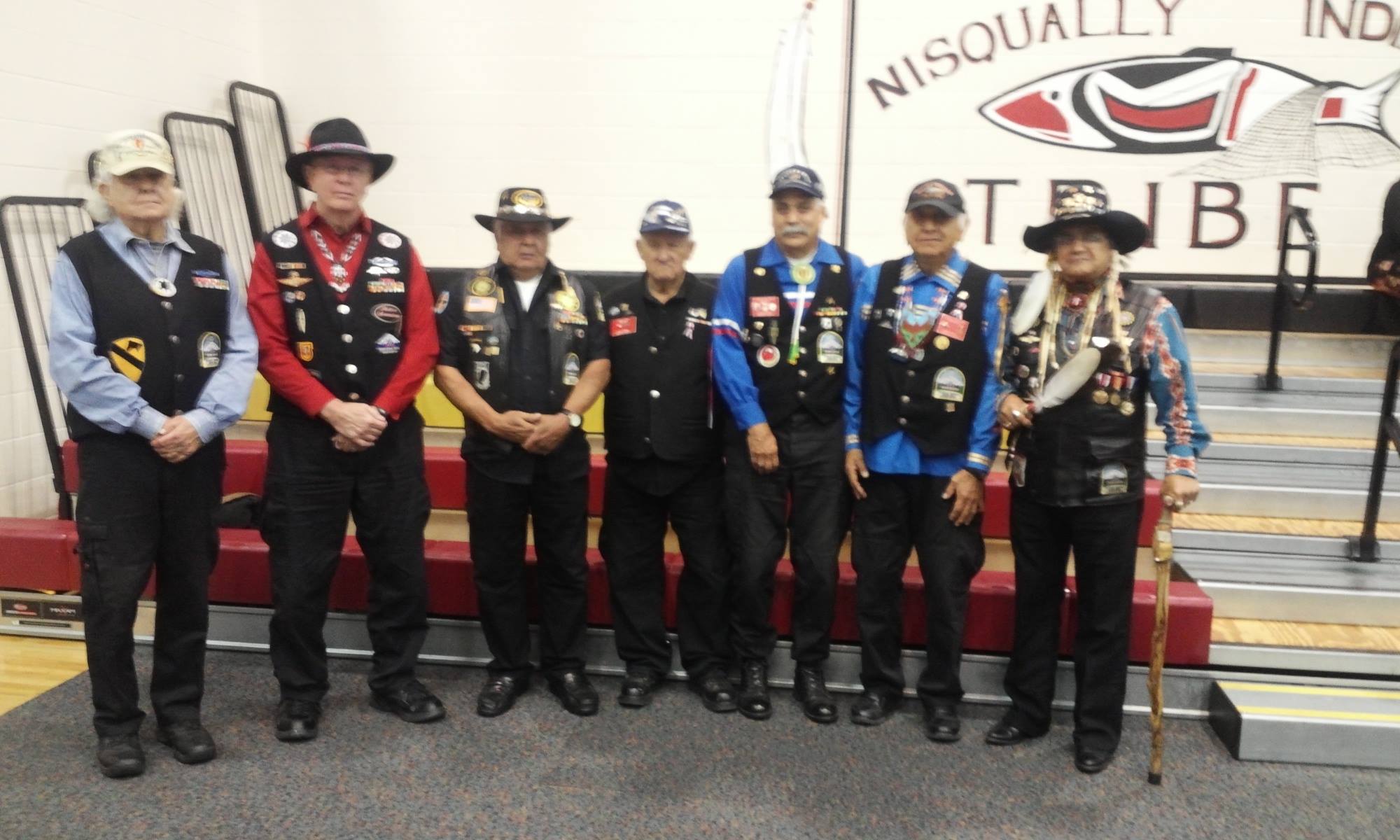
1402986_10151658551326887_2091850248_o
Warren Gohl far left

AUDIO OF THE SHOW CAN BE  FOUND BY CLICKING THIS LINK:
REDBONE SPEAKS TO WARREN GOHL

Join Editor Gregory Fields, Coast Salish carver Felix Soloman (Lummi/Haida), Ben Covington ( Lummi). December 1, 2013 at 4pm

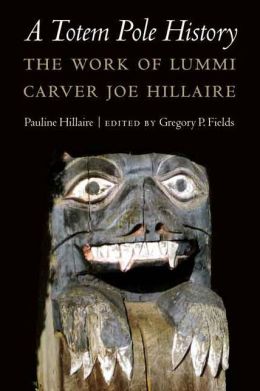
9780803240971_p0_v2_s260x420

Join Editor Gregory Fields, Coast Salish carver Felix Soloman (Lummi/Haida),  Ben Covington ( Lummi). As we learn more about:

A Totem Pole History: the Work of Lummi Carver Joe Hillaire
The book includes chapters by Felix Soloman, Bill Holm,  Barbara Brotherton, Skokomish artist and scholar CHiXapkaid Michael Pavel,  Melonie Ancheta,  and others. In addition to the book, a media companion (a DVD and two audio CDs) titled “Coast Salish Totem Poles” will be available and includes Lummi stories, songs, and an illustrated presentation of Pauline Hillaire interpreting several of her father’s major totem poles.


KAOS Radio: December 1, 2013 at 4pm, on Join Editor Gregory Fields, Coast Salish carver Felix Solomon)Lummi/Haida), Ben Covington ( Lummi).

The Evergreen State College

The EvergreenLibrary: has an exhibit featuring the book.

The bookstore has copies of the book and media companion for sale.

Dec. 3rd, from 3-5 pm, in Sem 2 C 1105 for the inaugural release of Pauline Hillaire’s new book, A Totem Pole History: The Work of Lummi Carver Joe Hillaire (U. of Nebraska Press), that explores Salish visual arts, storytelling, and cultural traditions. The editor, Greg Fields (U. of So. Ill.), Lummi Carver, Felix Solomon (who restored some of Joe’s poles), and others involved with the publication will give a presentation. The Hillaire family has a long history at Evergreen, and throughout Puget Sound, in establishing Native education, arts, and cultural programs. Joe Hillaire’s work includes the celebrated 1963 World’s Fair, “Journey to the Sky” and “Man in Transition” poles, and the Kobe Japan “Friendship” pole, that were featured at the Seattle Art Museum in a recent exhibit. Hillaire’s artistic legacy and philosophy is documented in the book, which is one of the pivotal works on Puget Salish art and history. Sponsored by: Creativity and Diversity in American Culture: Art and Narrative In Response to Place; Bella Bella or Bust; The Longhouse; the Library; the Deans.

Seattle Art Museum: Joseph Hillaire

Carver of the Century 21 Exposition Totem Pole

Carver of the Kobe-Seattle Sister City Friendship Pole

The Seattle Public Library digital collections. Joseph Hillaire’s 1961 trip to Kobe to install and dedicate the Kobe-Seattle Sister City Friendship pole includes images of Hillaire’s travels in Japan and pictures of Seattle Mayor Gordon Clinton, and Seafair Queen Linda Juel, both of whom accompanied Hillaire on the trip.

Harvest Moon on the next Make No Bones About It. November 24, 2013 at 4pm

1463699_10151632867646887_1126763424_n

Harvest Moon is a Quinault Ambassador, historian, basket weaver and storyteller whose name means “A light shining forth in the midst of darkness”. She has been telling stories over half her lifetime, ones that will make you laugh, cry and will move you. She speaks from her heart and spirit, leaving people looking at a different perspective of the Northwest Coast Native Americans. She has received the “Peace and Friendship Award”, from the Washington State Historical Society in recognition of significant contributions to the understanding of N.W. Indian Heritage and has served two terms for “The Washington Commission for the Humanities.” In addition, Harvest Moon has received grants from the Seattle Arts Commission, Bainbridge Island Arts and Humanities and Heritage Arts Council for “Artist in Residency” through out Washington Schools.

http://www.turtleislandstorytellers.net/tis_washington/transcript_h_moon.htm

Joey Gray on the next Make No Bones About it. October 20th at 5pm

JG at INM Jan 2013 UW

Joey Gray (Métis, Okanagan, European) is a computer systems and management consultant for nonprofit organizations. She’s a lifelong organizer who led an international movement to integrate team sport so that women and men now compete together as equals at the top levels of play. Locally around the Salish Sea, nationally in the U.S. and Canada, and internationally from Asia to Europe, Joey co-founded, directed, coached, and oversaw national and world championships, recreation programs, organizations, teams, …and other events. She had the honor to act as head official for a new sport in The World Games held under the patronage of the International Olympic Committee, and to award the medals four years later.
But even as Secretary-General and Treasurer on the Executive Committee of a world sport federation – one of few women in such a leadership role – Joey recognized that modern sport as we know it is unsustainable. The championship system and any legitimacy that comes from it is dependent on artificially cheap fuel and excessive waste. We know it’s destructive. It’s destructive not only for Indigenous people worldwide, but for every living thing affected by pollution and climate change.
So several years ago, Joey re-directed her efforts to instead support a wide range of environmental and education groups, campaigns, and peaceful grassroots actions. She stopped flying, doesn’t own a car, lives in a tiny place, and, along with many other caring people, uses her information systems skills and nonprofit leadership experience to make choices like these more and more appealing and fun for all — especially bicycle infrastructure, growing food, politics, conservation, education, and leaving terrible toxic tar sands in the ground right where it belongs. @tarsandsactionseattle
Image

Chief Oren Lyons on Make No Bones About It. September 29,2013 @ 4pm

11195_10151532171441887_1502566475_n

Oren R. Lyons is a traditional Faithkeeper of the Turtle Clan, and a member of the Onondoga Nation Council of Chiefs of the Six Nations of the Iroquois Confederacy (the Haudenosaunee).

Lyons graduated from Syracuse University with a degree in Fine Arts and soon moved to New York City, where he worked for Norcross Greeting Cards. He started as a paste-up artist but later became an art and planning director for Norcross. His background in art has helped him become an accomplished illustrator of books and a …painter.

In 1970, Lyons returned to his ancestral homeland in upstate New York to act as Faithkeeper of the Turtle Clan. In this capacity, he is entrusted with keeping alive his people’s traditions, values and history.

Oren Lyons is Associate Professor at SUNY (University at Buffalo), in the Center for the Americas. He teaches courses on Native American history and studies, and advises graduate students. Prof. Lyons also appears at many conferences and meetings, speaking on American Indian topics, human rights, interfaith dialogue, and the environment.

Aside from his work at the University and the Turtle Clan, Lyons is the co-founder of the national American Indian quarterly news magazine Daybreak, of which he has been the publisher since 1987. He also edited the book Exiled In The Land Of The Free: Democracy, The Iroquois and The Constitution (1992) , a major study of the Indian’s impact on American democracy and the United States Constitution.

An essay from Oren Lyons, “Our Mother Earth,” is included in Seeing God Everywhere: Essays on Nature and the Sacred .

Julian Brave NoiseCat on KAOS Radio – September 15, 2013 at 4pm

1185104_10151522709401887_532026893_n

Julian Brave NoiseCat, son of Ed Archie NoiseCat and Alexandra Roddy, is a member of the Canim Lake Band and a descendant of the Lil’Wat Nation of Mt. Currie. His paternal grandparents are Antoinette Archie and the late Ray Peters, and his maternal grandparents are Suzanne Roddy and the late Joe Roddy. He is in his third year at Columbia University where he studies history. This summer he continued learning Secwepemctsín with his kye7e (grandmother), while conducting and writing a research paper on current and historical words for the white man in Secwepemculecw. He loves his family.

Image courtesy of Izumi Watanabe

Jewell James, Lummi Nation on KAOS 89.3 FM September 15,2013 AT 5:00

james%20crop1

Jewell James and the Lummi House of Tears carvers have created a totem pole Kwel’hoy (“We Draw the Line”) and are travelling with it in a journey of blessing across the west. Please join the Lummi Tribe at Kwel’hoy ceremonies for offering prayers of protection for sacred lands, sacred waters, and treaty rights of Native peoples.

photo credit Liz Jones / KUOW
Jewell James is a longtime leader of the Lummi Tribe.

Dennis Banks shares about “Declare War on Diabetes” Motorcycle Run in 2014 and much more. September 15, 2013 at 5:30pm

DennisBanksAIM-c

BRIEF BIOGRAPHY OF DENNIS BANKS

Dennis Banks is a Native American leader, teacher, lecturer, activist, and author. He is an Anishinabe, Ojibwa, born on Leech Lake Indian Reservation in northern Minnesota. In 1968 he co-founded the American Indian Movement (AIM), and establishing it to protect the traditional ways of Indian people and to engage in legal cases protecting treaty rights of Natives-such as hunting and fishing, trapping, wild riceing.

Banks earned an Associates of Arts degree at Davis University and taught at Deganawida Quetzecoatl (DQ) University (an all Indian-controlled institution), where he became the first American Indian chancellor.

In 1994, Banks led the four-month Walk for Justice (WFJ) from Alcatraz Island in San Francisco to Washington, DC. The purpose was to bring public awareness to current Native issues. Banks agreed to head the “Bring Peltier Home” campaign in 1996 bringing Native Americans and other supporters together in a national drive for executive clemency for political prisoner Leonard Peltier.

He also had roles in the movies War Party, The Last of the Mohicans, and Thunderheart. A musical tape “Still Strong” featuring Banks’ original work as well as traditional Native American songs was completed in’93 and a musical video with the same name was released in’95.

Source: American Indian Movement

 http://www.aimovement.org/iitc/index.html#BANKS

http://www.dennisbanks.org/index.php/biography-short

Donald Vann on “Make No Bones About It” -September 8th, 2013


The images of full blood Cherokee artist, Donald Vann, speak of peace and tranquility of solitude. They speak of yesterday’s tradition and tomorrow’s promise. Through his work, Donald takes the viewer to a place that is as real to him as the tangible world. To see his paintings is to feel the crunch of snow beneath one’s feet, to hear the wind whisper through the aspen trees and to smell the wood smoke and buffalo of hide tipis. It is to know the soft-spoken man behind the paper and paint.  Donald Vann

“All my life,” Donald explains, “I have had this desire to paint with images I can express thoughts and feelings I could never put into words. Through my art I am able to transcend the limitations of the spoken word.”

It is more than just his Native American heritage that Donald strives to share. Warriors on horseback, a medicine man greeting the dawn and young maidens gathering wood are only the means of conveying moods that are much more universal. He uses those images to tell how he feels about the unseen forces that influence life. Donald draws his greatest inspiration from the earth, sky, and from the rhythms of nature. His creations have a quality that allow the viewer to share some of the inner facets of the Indian soul. “In our world, there is an unspoken quality, a feeling that touches and flows through everything … all of us as well as all things of the earth. If one listens to these forces, he will find himself painting instinctively with the feeling of his heart about his ancestral beliefs and the way people live today.”

These spiritual elements have been a part of his life for as long as he can remember. “Growing up I was always a loner.” Donald recalls, “I spent a lot of time hunting, but that was really just a way of being by myself out of doors. That is where I felt the most comfortable and in tune with the natural spirits evident in all things.”

When he wasn’t camping with his grandfather or hunting in the woods near his boyhood home outside Stilwell, Oklahoma, Donald remembers painting. “I didn’t fit in too well at school, the one art class I took, I flunked. I always thought education got in the way of learning. I was much more interested in the teachings of the holy man for my clan and in the survival and herb skills my grandparents taught me.”

Combining his love for art and his Cherokee heritage, Donald is able to create moving images that speak of the Indian way of life and capture the hearts of art collectors worldwide. He is recognized for his haunting images of his people’s heritage, especially his portrayal of the Trail of Tears. He was proclaimed “one of the best known Indian artists of the 20th century” by the Cherokee National Historical Society. The Smithsonian Institution’s Museum of the American Indian honored him with their top painting award for watercolor medium. He has also won first place ribbons in juried competitions at Oklahoma’s Red Earth Exhibit, Colorado Indian Market and National American Indian Arts Exposition.

More than 50 different editions of his signed and numbered prints are now collectors items. He has taken top honors at shows from Texas to Ohio, and Minnesota to North Carolina. Yet, it is the public’s acceptance is what matters most to Donald.

“Through my images,” Donald says when asked of his success, “I hope people will be inspired to learn more about the customs and values of America’s native people. Our traditions teach many things that can help all people. In today’s fast-paced world, it is too easy to get cut off from one’s heritage and lose sight of the things that are truly important. If I can make people see with their hearts instead of their eyes, then my art has spoken. Then I have succeeded.” http://www.donaldvann.com/

Jewell James shares about Kwel ‘hoy: “We Draw the Line”.

KWEL HOY’ (“We Draw the Line”)

Reclaiming the Sacred and Protecting Xwe’chi’eXen from Coal

The House of Tears carvers of the Lummi community has created a tradition of carving and delivering totem poles to areas struck by disaster or otherwise in need of hope and healing. Now it is Lummi Nation’s own sacred landscape, Xwe’chi’eXen, that needs hope, healing and protection. The most imminent threat to this sacred landscape and to treaty rights associated with Xwe’chi’eXen comes from a proposal to build North America’s largest coal port: the Gateway Pacific Terminal.

THE JOURNEY

The Kwel hoy’ Totem Pole journey,  September 15-29, 2013, will start in the Powder River Basin and follow the coal train route through Indian Country, up to Xwe’chi’eXen.  The journey will conclude in British Columbia, where the totem pole will be placed in the homeland of the Tsleil-Waututh Nation, demonstrating unity with the Canadian First Nations’ position opposing the transport of Tar Sands by pipelines across their territories.  There, the totem pole will be met by  Tribes and First Nations that have travelled from all direction.  The Totem Pole will be placed as a means of  reinforcing the message: Kwel hoy.’

The House of Tears Carvers and a team of support people and witnesses will accompany the Totem Pole on its 1,200 mile long journey. At each event, Tribal members, non-Tribal local citizens, elected officials, and the press will be invited to attend.

CONNECTING THE PEOPLES OF THE WEST

One primary goal of the journey is to connect tribal nations along the coal corridor.  Tribal Nations innately understand and honor the need to protect sacred landscapes and treaty rights.  Uniting the Tribal Nations is important for this particular issue and for Tribal communities that would be affected by coal transport and export.

The proposed coal rail line and port brings very different cultural communities together in a common cause. The proposal has unique ramifications not only for Tribal Nations, but also for communities all along the rail lines and shipping lanes that would be affected by coal export. Communities, commerce, livelihoods, public health, tourism, agriculture, fisheries, air and water safety, natural resources, quality of life would all be adversely impacted. In asking for blessings and strength from communities along the coal transportation corridor, the Kwel hoy’ Totem Pole brings together the Peoples of the West. People of many faiths can stand united in protecting the sacred, and people of many traditions can support honoring treaty rights and the traditional livelihoods they ensure. People from all affected communities can stand against this project.

BACKGROUND

by Jewell James (House of Tears Carvers)

Xwe’chi’eXen (Cherry Point) has deep spiritual and cultural significance to our people. It is a sacred landscape that includes ancient reef-net sites and a 3,500 year-old village site. Our Hereditary Chief of the Lummi Nation tsilixw (Bill James) describes it as the “home of the Ancient Ones.” It was the first site in Washington State to be listed on the Washington Heritage Register and is eligible for the National Register of Historic Places.

If built, the Gateway Pacific Terminal at Cherry Point (Xwe’chi’eXen) in Washington State would be the largest coal export facility in North America. The mines are connected to the proposed port site by rail lines that run from Wyoming and Montana through Idaho, eastern Washington, along the Columbia River Gorge, and then up the coast of Puget Sound. Bulk cargo carriers would ship the coal through the Salish Sea to Asia.

The project will result in significant, unavoidable, and unacceptable interference with treaty rights and irreversible and irretrievable damage to Lummi spiritual values. As a result, the Lummi Nation in 2012 adopted a formal position to oppose the proposed project. As Lummi Councilman Jay Julius, in opposing the proposed coal port, has said, Kwel hoy’: “We draw the line.” This position was also adopted in 2013 by the Affiliated Tribes of Northwest Indians.

DOCUMENTATION/WITNESSES

Witnesses will document and publish (via this blog) photos, writings, sketches, and videos of both the journey and preparation for the journey when culturally appropriate. The blog will feature entries from Lummi Nation members and by people along the journey.  Journalists, photographers and a documentary film crew will be invited along for the journey.
http://totempolejourney.com