Category Archives: Make No Bones Shows

David Troutt director of Nisqually Indian Tribe Natural Resources, visits with Raven on March 29th, 2015 at 5pm

b952bde0-b929-11e4-9257-1503d0decb18-780x1115

David Troutt is director of Nisqually Indian Tribe Natural Resources and chair of Puget Sound Salmon Recovery Council

David Troutt, of Dupont, has served as the natural resources director for the Nisqually Indian Tribe since 1987. He heads a diverse department comprised of salmon harvest management, two large salmon hatcheries, shellfish management, data operations, environmental management, wildlife management, legal, administration, and budget development and monitoring. He also serves as chair of the Nisqually River Council and president of the Nisqually River Foundation. Mr. Troutt also has served on the Washington Biodiversity Council, the Executive Committee of the Tri-County Response to the Endangered Species Act, the Development Committee of the Shared Strategy for Puget Sound, the Steering Committee for the Hatchery Reform Project, and as a voting member of the Resource Advisory Committee for the Mount Baker-Snoqualmie National Forest. Mr. Troutt received his bachelor of science degree from the University of Washington School of Fisheries.

To save orcas, we must save salmon

Salmon scientists zoom in on plankton

Raven visits with Peter Ali on “Make No Bones About It.” March 22, 2015 at 4-5pm

10704067_10202675672325380_1643643262126433408_n

Peter Ali is  a well known Native American Flutist, a teacher,  storyteller  and more. Learn about Peter Ali this week on KAOS 89.3 fm , Olympia.

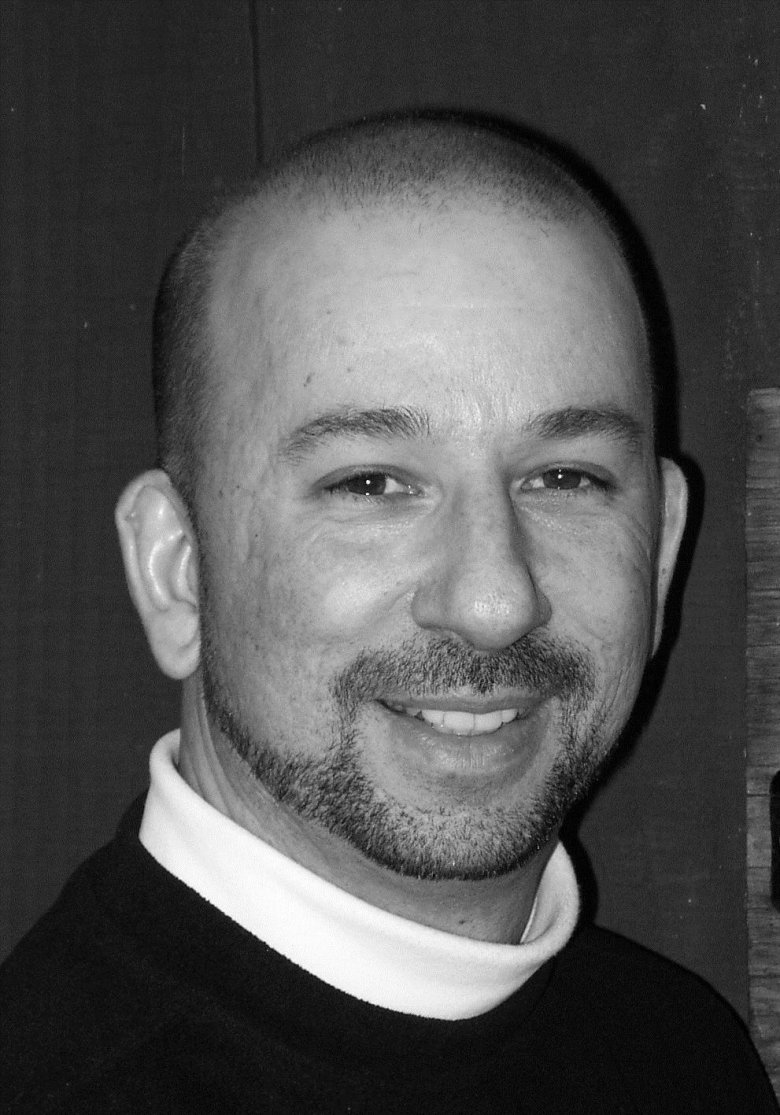
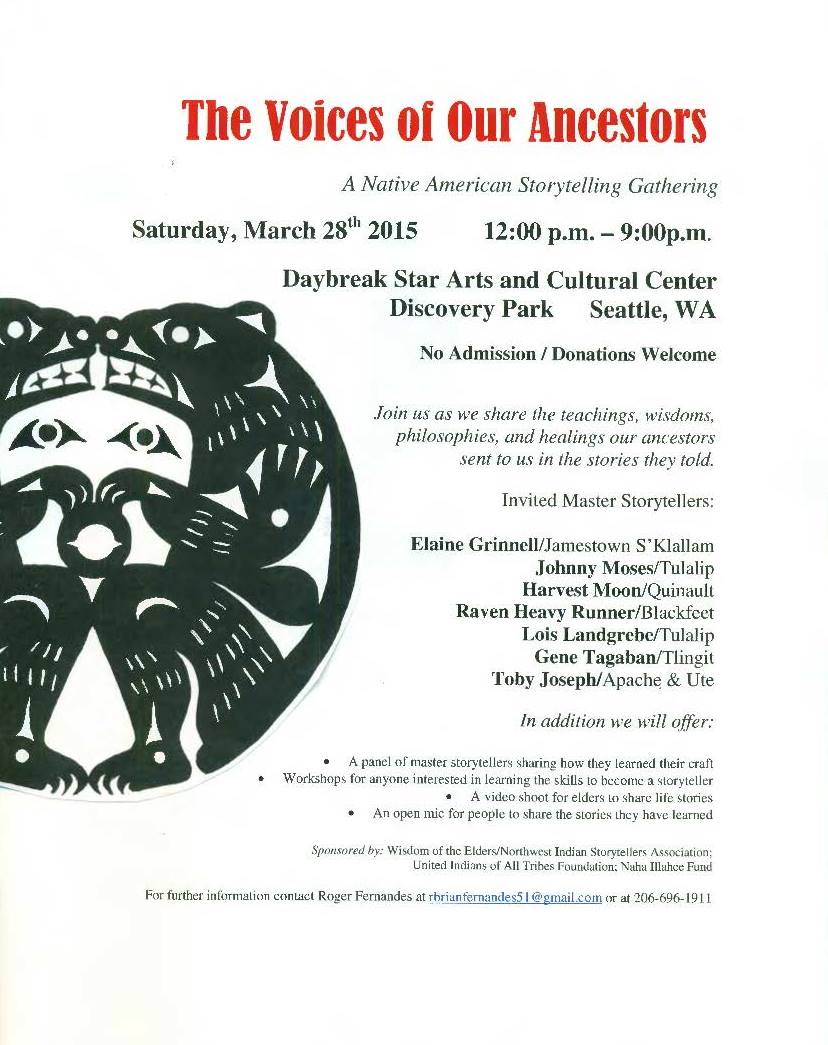
Roger Fernandes on Make No Bones About It. 3-8-2015

11050791_10205155669764003_7448051637111608613_o

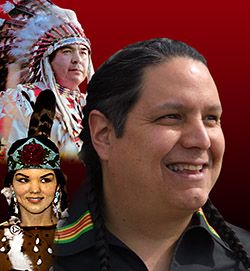
Aleticia Kyle Silverwood Tijerina, PhD and Che Jim on “Make No Bones About It. 2-22-15 from 5-5:30pm

Join Raven as he visits with Aleticia Kyle Silverwood Tijerina, PhD. about The Big Mountain Sustainable Housing Land Recovery Project .

Aleticia Kyle Silverwood Tijerina, PhD

Aleticia Kyle Silverwood Tijerina, PhD (Odawa/Irish/Italian)

Dr. Aleticia Kyle Silverwood Tijerina, joined the Red Nation movement in 1983 as a young woman.  Leaving the East Coast where she was writing plays and performing, she headed to the southwest to pursue the dream of performance art with her own indigenous peoples.  Settling in Flagstaff, Arizona, she created the El Quetzalcoatl Teatro theater troupe and became involved in the political struggle of the Dine people living in Big Mountain Arizona who were in the fight of their lives to resist relocation off their traditional lands.  In 1983, she committed to dance for four years at the Sun Dance ceremony on Big Mountain that was hosted by the family of Louise Benally.  The Chief of the Big Mountain Sun Dance is Lakota Chief Leonard Crow Dog.  The Lakota dance was being conducted to help bring strength to the grandmothers and 100 families at Big Mountain who were being forced off their land by the US government.

Today, Dr. Tijerina continues to commit herself to social justice issues which impact her own indigenous peoples through organizational development projects.  In 2014, she created the Big Mountain Sustainable Housing and Land Development Project that is raising money to support green housing on the Navajo reservation.  Louise Benally was chosen as a recipient of a broader green housing initiative led by Community Rebuilds who is spearheading a project to support indigenous social activists and others through the green housing initiative.

BIOGRAPHY

10257003_10152333333334140_1510517936344235429_n

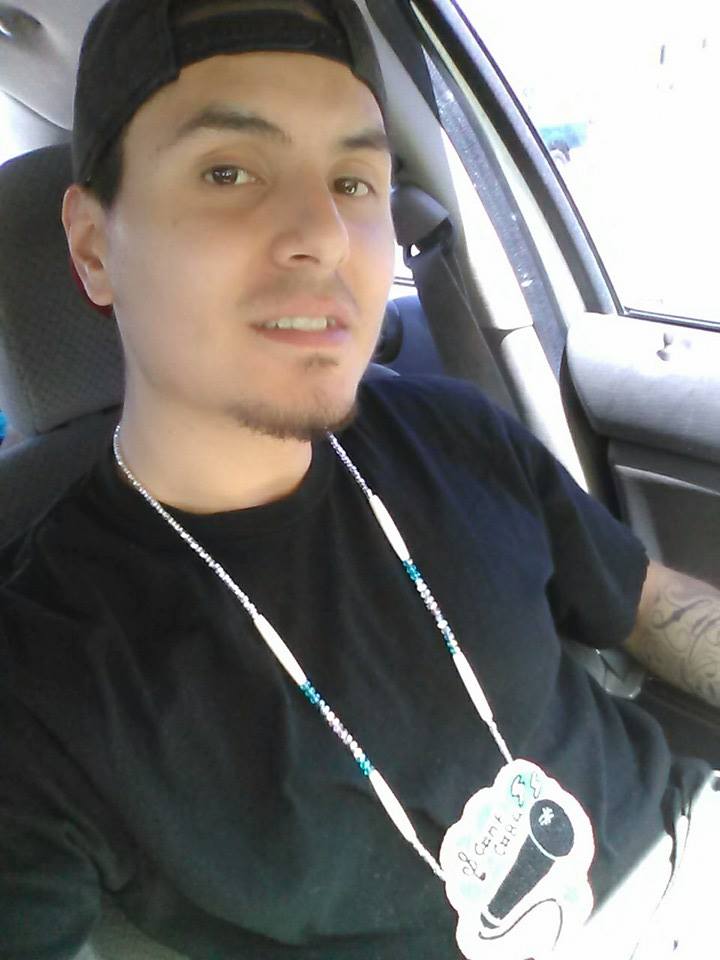
We will be joined with Che Jim

Che Jim (Dinéh/Odawa) was born in1989 and raised in Flagstaff Arizona, son to Alan Jim and Aleticia Tijerina and a father of 2. He has been involved in traditional native ceremonies his entire life, including the Big Mountain Sundance on the land of Louise Benally. Che, along with his mother and sister, Asdzaanazbaa, formed the project in order to build eco-friendly housing to those living on the reservation.

Che is currently working as a consultant for rehabilitation programs promoting sobriety for native people through native culture and traditional teachings. He and his family travel multiple times a year to different communities around the country to help in various spiritual events and show support to those in need.

Shayne Bennett on KAOS 89.3 fm – 2-15-2015 at 4pm

Shayne 1

I am Māori who links to Te Arawa and Ngati Kahungnunu tribes on the North Island of New Zealand.

I have a background in Corporate IT, HR and Government services on three continents.  Born in New Zealand, I spent my formative years in Australia and now live in Canada.  I currently travel between Canada, Australia and New Zealand following my ancestors calling.

6 years ago my ancestors called me back to New Zealand to live and that is how I was shown the current healing work that I do.  I have been an energy healer for all of my life and this ability has been active in me throughout my business career as well. By following the calling of my heart space most of my healing today is remote or distant healing.  I am able to shift energies from people and land that includes trauma in this lifetime and past lives, release Family and tribal trauma passed down through generations, remove Kehua (evil spirits) from the environment and bring harmony and peace to what I connect to.

Since my early twenties I’ve connected with and studied many alternative therapies. Two were significant — LomiLomi (Hawaiian Massage) and Romiromi (Traditional Māori Healing).  Both powerful Polynesian healing modalities.   My Remote Healing work came about as an extension of my Traditional Māori Healing  practise in New Zealand.

Traditional Māori Healing is centuries old and has been passed down from generation to generation in the form of Romiromi and Mirimiri bodywork and ancient Māori teachings. Māori are the indigenous people of New Zealand and have a rich and deep cultural heritage based on their connection to the land and their spiritual beliefs. Romiromi and Mirimiri are physical bodywork treatments that focus on removing blocked energy at a cellular level, creating more space and freedom in the body. Stimulation of pressure points and deep tissue massage removes toxic waste and synchronizes the central nervous, lymphatics, cardio vascular and endocrine systems within the body. Romiromi also balances male and female energies and most importantly balances the mauri (life force) with the wairua (spirit). Blocked energy on any level can create imbalance in the body which can lead to disease. This extraneous energy can sometimes be held in the DNA or be an accumulation of held emotions in this lifetime.

Suzan Satiacum, Nancy Shippentower and Robert Satiacum speak about Fishing Rights Struggle and more. 4-5pm, 2-8-2015

Suzan Satiacum Nancy Shippentower RobPoster

left to Right Suzan Satiacum, Nancy Shippentower and Robert Satiacum.

Learn the Truth about what happened during the Fishing Struggle and the what is still happening today.

Join us on “Make No Bones About It”, for an On the Air Reunited after 29 yrs. February 8th at 5pm

10704309_758758644173538_892638386866168775_o

Join us on “Make No Bones About It.” February 8th, 2015 at 5pm  for the on air  reunited after 29 years to the date we hear from GW Galbreath & Michael Lane.

GW Galbreath & Michael Lane  – the original co-hosts of Indian World (1986) GW Galbreath & Michael Lane – which became the Indigenous Peoples Network which became View From The Shore. Michael is back at Evergreen teaching in the MPA program.

Eddy Lawrence on “Make No Bones About It.” 2-1-2015 at 4pm

558758_105469789603477_2026547083_n

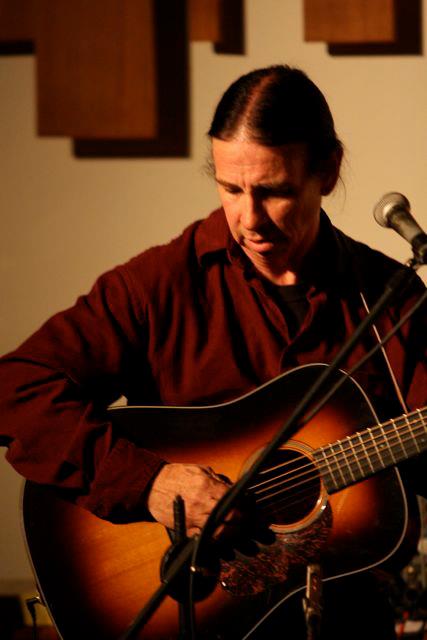
Eddy Lawrence

Image from : Palmer Street Coffeehouse, Plattsburgh, New York, 2009

Born and raised in Birmingham, Alabama, Eddy Lawrence spent a decade in New York City before settling in the North Country of New York State in 1992. His songs and recordings have garnered critical praise in many publications, including Dirty Linen, Acoustic Guitar, The Village Voice, CMJ, Folk-Roots, Performing Songwriter, New Country, and Sing Out!.

Eddy has appeared at clubs, coffeehouses, and festivals across North America, both as a headliner and as an opening act for many well-known artists. These days, he performs in concert with his wife, Kim, who accompanies him on upright bass. The duo has recently released a new all-acoustic CD called “My Second Wife’s First Album”. The recording is their first together and the ninth album of Eddy’s original songs.

Eddy first gained attention in New York City’s thriving East Village music scene of the early 1980s. He got his start with the seminal NYC roots-rock band, LESR, before releasing his first solo album, “Walker County” in 1986. That LP was an acoustic homage to his home state of Alabama, recorded in his Lower East Side walk-up apartment, using sparse instrumentation: acoustic guitar, mandolin, and bass. For the next 15 years, Eddy worked the folk music circuit, playing coffeehouses, festivals, and clubs in support of the acoustic albums he was releasing. He mainly toured in the Northeastern US, but sometimes traveled farther afield and crisscrossed the US several times. “Going to Water”, released in 2001, harked back to his rock and roll days, featuring electric guitars, bass, and drums. In 2004 he released “Inside My Secret Pocket”, an album that featured both acoustic and electric material.

Shortly after the release of “Secret Pocket”, Eddy scaled back promotion of his own albums and songwriting in order to focus on producing recordings by Native American artists, several of which were released on his own Snowplow label. These CDs, which he produced, arranged, recorded, and played on, were well-received in Indian Country and two of them were nominated for Native American Music Awards (NAMMYs).

With “My Second Wife’s First Album”, Eddy has reentered the world of the singer-songwriter, returning to the acoustic sounds that first brought attention to his music back in the 1980s. Growing up in Alabama, with deep roots in the red clay of then-rural Walker County, Eddy was immersed in the old-time folk, country, blues, and bluegrass traditions that flourished there. He has called the area where he came from “the place where the Appalachians meet the Delta”, in reference to the musical melting pot that fused traditional European and African elements, spawning the folk, blues, gospel, rock, and soul music that heavily influenced popular music worldwide in the latter half of the twentieth century.

Eddy’s songs have appeared on many compilation albums, including NPR’s “Car Talk Car Tunes” and nine Fast Folk albums, which have been acquired by the Folkways division of the Smithsonian.

Venues where Eddy has performed include: The Birchmere, the Bluebird Café, The Bottom Line, Bound for Glory, Caffe Lena, Johnny D’s, Middle East Nightclub, Minstrel Coffeehouse, Ram’s Head Tavern, Roaring Brook Concerts, Vancouver Folk Music Festival (main stage) and many others.

http://www.snowplowrecords.com/

Eddy Lawrence – Bio

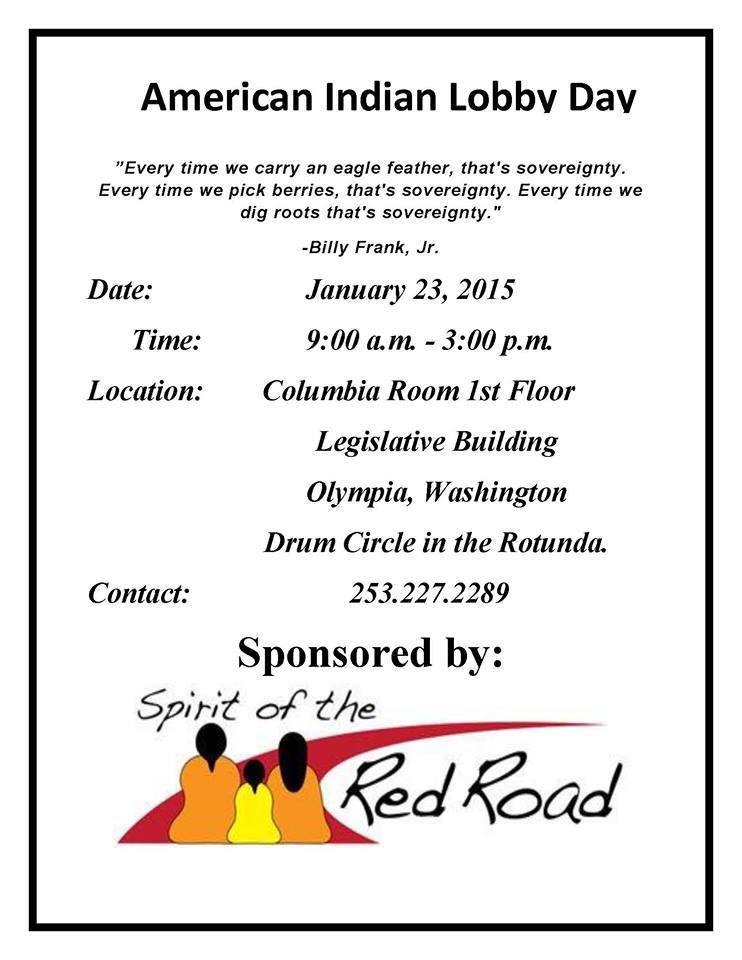
American Indian Lobby Day 2015

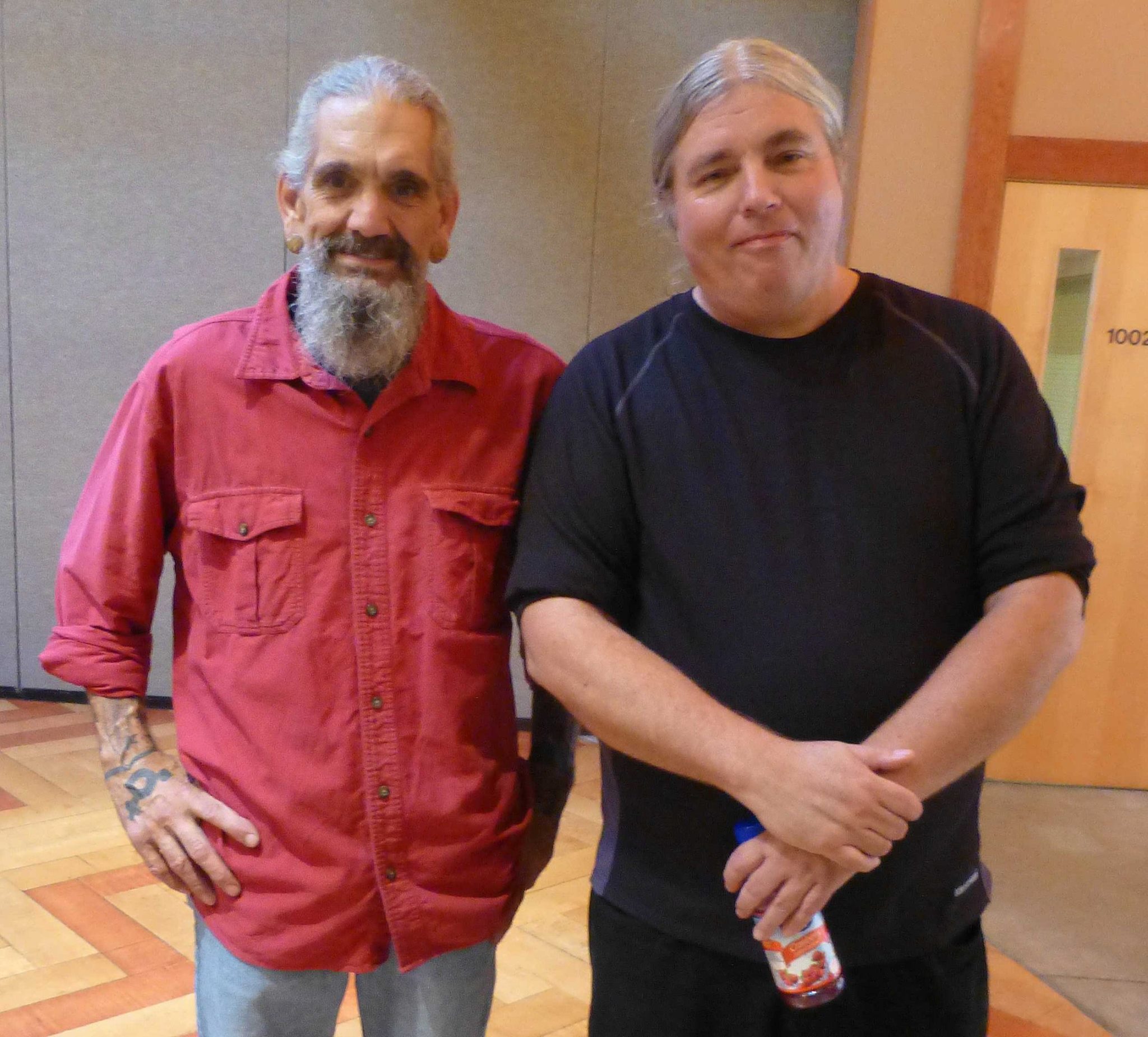
Robert Satiacum and Robert Upham 

American Indian Lobby Day 2015 Flier

2015 Flier

Some of the Bills to look for

5433 1441 1280

This slideshow requires JavaScript.

Stephany Seay of Buffalo Field Campaign shares on KAOS 89.3, 1-11-15 at 5pm

let buffalo roam.jpg

Buffalo Field Campaign

* Update from the Field

Very dark and burly baby buffalo donning its winter coat. BFC photo by Stephany. Click photo for larger image.

Happy New Year Buffalo Friends! Let us hope – and act to ensure – it is a good one for wild buffalo.

At the time of this writing, the field remains quiet. But this will likely change very soon. Winter has finally arrived bringing frigid air and accumulating snow. The deepening snow will drive the buffalo down into lower elevations, where rifles and capture facilities await them. BFC and Friends of Animals Wildlife Law Program filed an emergency rule-making petition to stop the slaughter but the government has yet to respond.

Once the killing begins, scenes like this will be common. BFC photo by Stephany. Click for larger image.

All wild buffalo defenders must prepare for a busy season. It’s going to take all of us to apply the necessary pressure to stop the slaughter. You can begin by taking action to support Endangered Species Act protection for these gentle giants. You can also email and call Yellowstone National Park Superintendent Dan Wenk and tell him to stop the slaughter before it begins yell_superintendent@nps.gov / 307-344-2002.

WILD IS THE WAY ~ ROAM FREE!