Tag Archives: Raven Redbone

Deloria Many Grey Horses shares on “Make No Bones About It.” 4-26-2015 at 4:30 pm

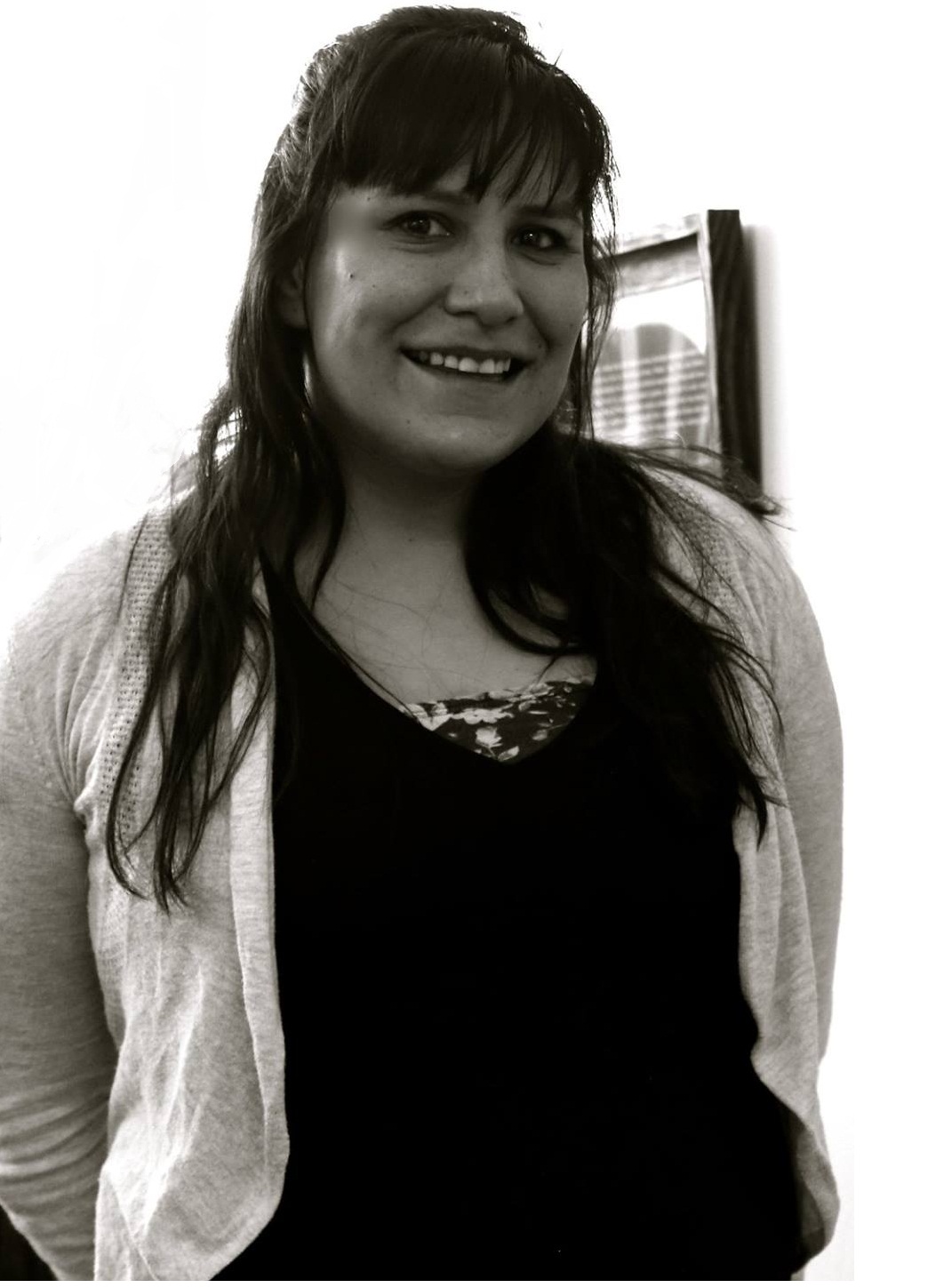
10511600_10104143737982673_5751566715818436358_oDeloria Many Grey Horses‘ projects give voice to at-risk Indigenous youth. Many Grey Horses draws out the youths’ perspectives and cultural understandings from their stories. As one of the main youth leaders in a documentary, A Place at the Table, she helped to spread awareness on what it means to live in mainstream culture while holding on to your roots. Many Grey Horses worked in Thailand, Cambodia, the Philippines, and Indonesia, on behalf of the Four Worlds International Institute, with the Canadian Government funded SEARCH Project. This initiative worked with Regional Southeast Asia Partners for Advancing Human Rights, Gender Issues, Child Protection, Ethnic Minorities and Indigenous Peoples.

This initiative focused on curriculum development and facilitating training programs for co-creating community-based social media, improving digital literacy and strengthening digital technology capacities for regional, national and local NGO’s. Many Grey Horses’ work has a special emphasis on ethnic minority and Indigenous young peoples and their communities. Her recent work as project manager of the Manual of Aboriginal Best Practices in Sports and Wellbeing is aimed at a young audience. The manual helps young Indigenous people deal with cultural identity loss and emotional disconnection amidst other social and economic pressures. An Aboriginal engagement consultant at the Office of the Child and Youth Advocate in Alberta, Many Grey Horses’ work addresses the physical, mental, emotional and spiritual health of Indigenous youth. She notes that 68% of young people in care in Alberta are Indigenous and in Edmonton, the percentage of Indigenous youth in the criminal justice system hovers around 80%. In this role, she is dedicated to creating a strong relationship between Indigenous communities and government, provide cultural awareness training for youth serving agencies and provide rights based training to youth in care and in the criminal justice system. From the Kainai Nation, Many Grey Horses uses storytelling as a vehicle to deliver each person’s message. She gives Indigenous young people personal freedom to express themselves.
http://fwii.net

Quanah Parker Brightman on KAOS Radio 89.3 fm on April 26, 2015 at 5pm

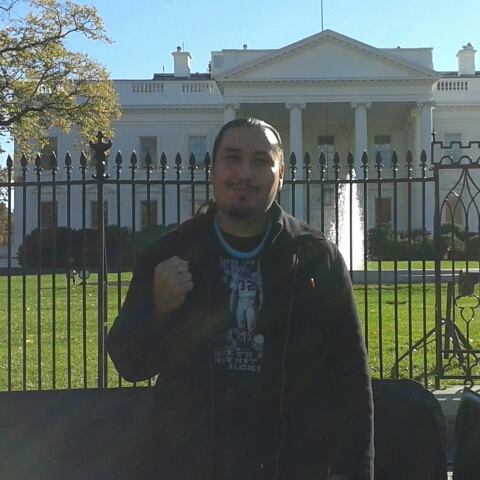
Quanah Parker Brightman in Washington D.C.

Quanah Parker Brightman is a Lakota Sioux and Creek Indian who was born in Oakland California. Quanah Brightman is the National President of United Native Americans Inc., a non-profit indigenous movement organization formed by Dr. Lehman L. Brightman in San Francisco, California in 1968 to promote the decolonization and unity of all Indigenous People.

In his capacity as member of UNA, Mr. Brightman has testified before the United Nations Listening Sessions and the U.S. Department of Education’s Urban Indian Education Listening and Learning Sessions and founded Idle No More in the San Francisco Bay Area. .

Quanah Parker Brightman has led and participated in many pro-indigenous protests, marches, and sit-ins throughout the United States. Mr. Brightman is a strong advocate against the many hate crimes that are affecting Indigenous people around the world. He advocates for the enforcement of all indigenous treaties made with the United States, reparations and accountability of the theft of tribal ancestral lands and natural resources, the protection of Native American sacred sites and burial sites, pro-indigenous curriculum to be taught in public schools (K-12), ending the use of the blood quantum, improving the negative image of indigenous people and ending tribal corruption in Indian gaming.

If you are interested in scheduling Quanah Parker Brightman to present a workshop or be a guest lecturer, please call (510)672-7187 or qbrightman75@hotmail.com

Alan Parker, a Citizen of the Chippewa Cree Tribal Nation, on “Make No Bones About It.” 3-15-2015, 5pm

580084_108849322587214_1149278275_n

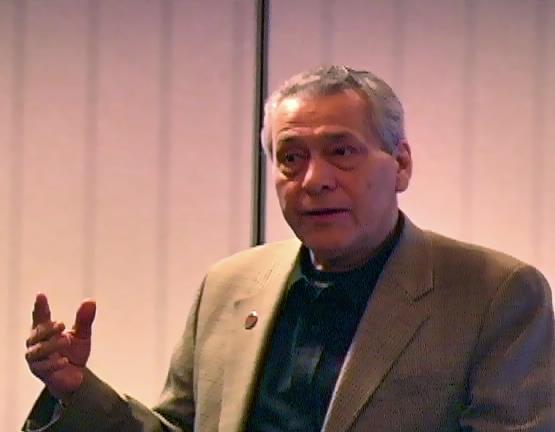
Alan Parker, a Citizen of the Chippewa Cree Tribal Nation, serves as Adjunct Faculty for Tribal Students enrolled in the Indigenous Development and Advancement PhD program at Te Whare Wānanga o Awanuiārangi.

Alan Parker served as Staff Director, Committee on Indian Affairs, United States Senate, Washington, DC, where was appointed by Senator Daniel K Inouye, Chairman of the Committee. His responsibilities as Staff Director included the development of a comprehensive legislative program for the Committee. Major legislative initiatives of the Committee during this time included the Indian Gaming Regulatory Act, the National Museum of American Indian Act, the Indian Self-Governance Act, the Native American Graves and Repatriation Act and the Indian Housing Act. In the 1980’s, Alan served as President, The American Indian National Bank, Washington, DC. The AINB was the only National Bank in the US owned and operated by Indian Tribes. Established in 1974, the Tribal Shareholders engaged in commercial banking serving a market of Tribal Business enterprises. Prior to this, he was appointed by Sen. James Abourezk and served as Chief Counsel, Select Committee on Indian Affairs, United States Senate, Washington, DC, from April 1977 until July 1980. The Select Committee was created to serve as the first independent legislative Committee within the US Congress with responsibility for all legislative proposals dealing with Native American issues and concerns. They also exercised congressional oversight authority over federal agencies and offices charged with US Trust Responsibilities and public services for the 350 Indian Tribal and Alaska Native communities located in the US. Major legislative activities conducted under Parker’s term in this office included The Indian Child Welfare Act, The American Indian Religious Freedom Act, and Tribal Colleges authorizing Authority as well as historical Indian Land and Water Rights Legislative Settlements.

Education Achievements: Parker attended UCLA School of Law, Los Angeles, California, where he received a Juris Doctor degree in June 1972. Parker’s work researching Tribal and State Court Relationships led to publication of his work in the University of Montana Law Review

Military Service: In June 1965 Parker was drafted into the US Army and was sent to Officer Candidate School where he received a commission as a Lieutenant in the Signal Corps and served until August 1968 when he was honorably discharged. Prior to being discharged he was awarded a Bronze Star medal for meritorious service under combat conditions in the Republic of South Vietnam.

Roger Fernandes on Make No Bones About It. 3-8-2015

11050791_10205155669764003_7448051637111608613_o

Eddy Lawrence on “Make No Bones About It.” 2-1-2015 at 4pm

558758_105469789603477_2026547083_n

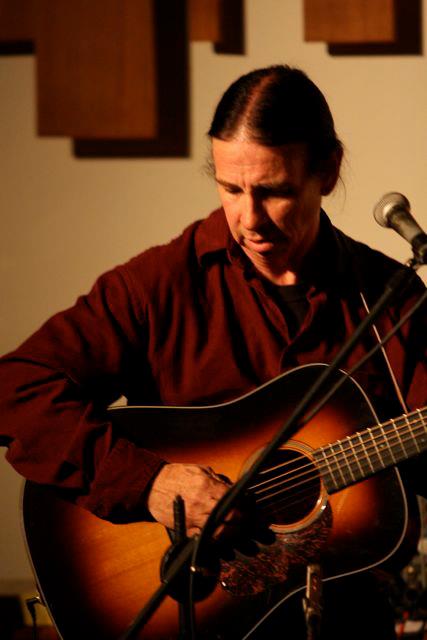
Eddy Lawrence

Image from : Palmer Street Coffeehouse, Plattsburgh, New York, 2009

Born and raised in Birmingham, Alabama, Eddy Lawrence spent a decade in New York City before settling in the North Country of New York State in 1992. His songs and recordings have garnered critical praise in many publications, including Dirty Linen, Acoustic Guitar, The Village Voice, CMJ, Folk-Roots, Performing Songwriter, New Country, and Sing Out!.

Eddy has appeared at clubs, coffeehouses, and festivals across North America, both as a headliner and as an opening act for many well-known artists. These days, he performs in concert with his wife, Kim, who accompanies him on upright bass. The duo has recently released a new all-acoustic CD called “My Second Wife’s First Album”. The recording is their first together and the ninth album of Eddy’s original songs.

Eddy first gained attention in New York City’s thriving East Village music scene of the early 1980s. He got his start with the seminal NYC roots-rock band, LESR, before releasing his first solo album, “Walker County” in 1986. That LP was an acoustic homage to his home state of Alabama, recorded in his Lower East Side walk-up apartment, using sparse instrumentation: acoustic guitar, mandolin, and bass. For the next 15 years, Eddy worked the folk music circuit, playing coffeehouses, festivals, and clubs in support of the acoustic albums he was releasing. He mainly toured in the Northeastern US, but sometimes traveled farther afield and crisscrossed the US several times. “Going to Water”, released in 2001, harked back to his rock and roll days, featuring electric guitars, bass, and drums. In 2004 he released “Inside My Secret Pocket”, an album that featured both acoustic and electric material.

Shortly after the release of “Secret Pocket”, Eddy scaled back promotion of his own albums and songwriting in order to focus on producing recordings by Native American artists, several of which were released on his own Snowplow label. These CDs, which he produced, arranged, recorded, and played on, were well-received in Indian Country and two of them were nominated for Native American Music Awards (NAMMYs).

With “My Second Wife’s First Album”, Eddy has reentered the world of the singer-songwriter, returning to the acoustic sounds that first brought attention to his music back in the 1980s. Growing up in Alabama, with deep roots in the red clay of then-rural Walker County, Eddy was immersed in the old-time folk, country, blues, and bluegrass traditions that flourished there. He has called the area where he came from “the place where the Appalachians meet the Delta”, in reference to the musical melting pot that fused traditional European and African elements, spawning the folk, blues, gospel, rock, and soul music that heavily influenced popular music worldwide in the latter half of the twentieth century.

Eddy’s songs have appeared on many compilation albums, including NPR’s “Car Talk Car Tunes” and nine Fast Folk albums, which have been acquired by the Folkways division of the Smithsonian.

Venues where Eddy has performed include: The Birchmere, the Bluebird Café, The Bottom Line, Bound for Glory, Caffe Lena, Johnny D’s, Middle East Nightclub, Minstrel Coffeehouse, Ram’s Head Tavern, Roaring Brook Concerts, Vancouver Folk Music Festival (main stage) and many others.

http://www.snowplowrecords.com/

Eddy Lawrence – Bio

Stephany Seay of Buffalo Field Campaign shares on KAOS 89.3, 1-11-15 at 5pm

let buffalo roam.jpg

Buffalo Field Campaign

* Update from the Field

Very dark and burly baby buffalo donning its winter coat. BFC photo by Stephany. Click photo for larger image.

Happy New Year Buffalo Friends! Let us hope – and act to ensure – it is a good one for wild buffalo.

At the time of this writing, the field remains quiet. But this will likely change very soon. Winter has finally arrived bringing frigid air and accumulating snow. The deepening snow will drive the buffalo down into lower elevations, where rifles and capture facilities await them. BFC and Friends of Animals Wildlife Law Program filed an emergency rule-making petition to stop the slaughter but the government has yet to respond.

Once the killing begins, scenes like this will be common. BFC photo by Stephany. Click for larger image.

All wild buffalo defenders must prepare for a busy season. It’s going to take all of us to apply the necessary pressure to stop the slaughter. You can begin by taking action to support Endangered Species Act protection for these gentle giants. You can also email and call Yellowstone National Park Superintendent Dan Wenk and tell him to stop the slaughter before it begins yell_superintendent@nps.gov / 307-344-2002.

WILD IS THE WAY ~ ROAM FREE!

Robert A. Williams Jr. on “Make No Bones About It.” Another Perspective on American Indian Law. 1-11-15 at 4pm

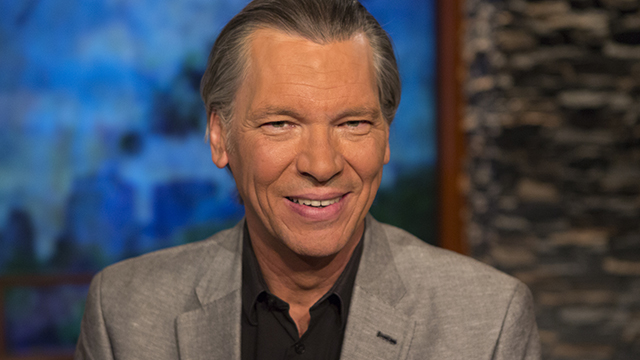
Robert Williams

Robert A. Williams, Jr. is the E. Thomas Sullivan Professor of Law and Faculty Co-Chair of the University of Arizona Indigenous Peoples Law and Policy Program. Professor Williams received his B.A. from Loyola College (1977) and his J.D. from Harvard Law School (1980). He was named the first Oneida Indian Nation Visiting Professor of Law at Harvard Law School (2003-2004), having previously served there as Bennet Boskey Distinguished Visiting Lecturer of Law. He is the author of The American Indian in Western Legal Thought: The Discourses of Conquest (1990), which received the Gustavus Meyers Human Rights Center Award as one of the outstanding books published in 1990 on the subject of prejudice in the United States.  He has also written Linking Arms Together: American Indian Treaty Visions of Law and Peace, 1600-1800 (1997) and Like a Loaded Weapon: The Rehnquist Court, Indian Rights and the Legal History of Racism in America (2005). He is co-author of Federal Indian Law: Cases and Materials (6th ed., with David Getches, Charles Wilkinson, and Matthew Fletcher, 2011). His latest book is Savage Anxieties: The Invention of Western Civilization (Palgrave Macmillan 2012). The 2006 recipient of the University of Arizona Koffler Prize for Outstanding Accomplishments in Public Service, Professor Williams has received major grants and awards from the Soros Senior Justice Fellowship Program of the Open Society Institute, the John D. and Catherine T. MacArthur Foundation, the Ford Foundation, the National Endowment for the Humanities, the American Council of Learned Societies, the U.S. Department of Education, the U.S. Department of Justice, and the National Institute of Justice. He has represented tribal groups and members before the Inter-American Court of Human Rights, the Inter-American Commission on Human Rights, the United Nations Working Group on Indigenous Peoples, the United States Supreme Court, and the Supreme Court of Canada. Professor Williams has served as Chief Justice for the Court of Appeals, Pascua Yaqui Indian Reservation, and as Justice for the Court of Appeals and trial judge pro tem for the Tohono O’odham Nation. He was named one of 2011’s “Heroes on the Hill” by Indian Country Today for his human rights advocacy work as Lead Counsel for the Hul’qumi’num Treaty Group of Canada before the Inter-American Commission on Human Rights.

Biography

Roy Henry Vickers on the next “Make No Bones About It.” 12-14-2014 at 4:30pm

10866676_10205894356816909_1089419125_n

Canadian artist Roy Henry Vickers is best known around the world for his limited edition prints. He is also an accomplished carver, design advisor of prestigious public spaces, a sought-after keynote speaker, and publisher and author of several successful books.

In addition, he is a recognized leader in the First Nations community, and a tireless spokesperson for recovery from addictions and abuse.

Roy has received many awards and honours for his art and community involvement. Among them are a hereditary chieftainship and several hereditary names he has received from Northwest Coast First Nations.

In 1994, Maclean’s magazine included Roy as the first artist ever in its Annual Honour Roll of Extraordinary Canadian Achievers. In 1998, the Province of British Columbia appointed Roy to the prestigious Order of B.C. and in 2003, Roy received the Queen’s Golden Jubilee Medal. In 2003, a video featuring Roy was part of the successful Vancouver 2010 Olympic Bid.

In 1987, at the Commonwealth Summit in Vancouver, the original of Roy’s painting A Meeting of Chiefs was the official gift of the Province of British Columbia to Queen Elizabeth II. Limited edition prints of the painting were presented to the 48 Commonwealth Heads of State.

During their Vancouver Summit in 1993, former Soviet leader Boris Yeltsin and former U.S. president Bill Clinton received artist’s proofs of Roy’s print The Homecoming as the Province’s official gift.

roy candid bio picRoy’s work can be found in private and public collections and galleries around the world including the National Museum of Man (Ottawa, Ontario), University of British Columbia’s Museum of Anthropology (Vancouver), the McMichael Canadian Art Collection (Kleinburg, Ontario) and the National Museum of Japan (Osaka).
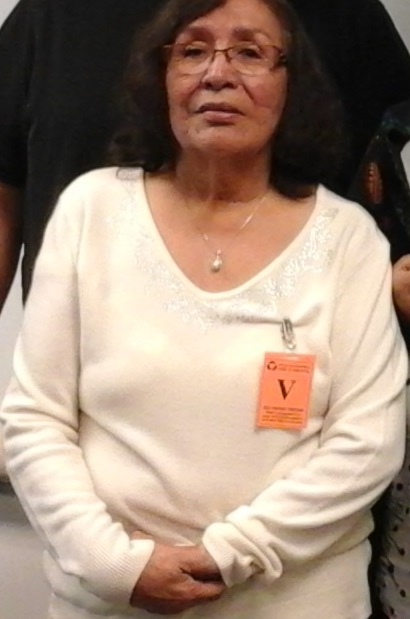
Roy Henry Vickers was born in June 1946 in the village of Greenville, in northern British Columbia. Roy has stayed on the northwest coast of British Columbia ever since, residing at various times in Hazelton, Kitkatla, Tofino and Victoria.

Roy’s love and respect of the magnificent natural beauty of this area is clearly evident in his art. His boldly colourful sunsets, subdued misty rivers and peaceful winter scenes reflect the essence of the west coast of Canada.

Roy’s father was a fisherman with the blood of three northwest coast First Nations’ Tsimshian, Haida and Heiltsuk flowing in his veins. Roy’s mother was a schoolteacher whose parents had immigrated to Canada from England. This unusual mixed heritage has had a strong influence on Roy’s art.

Roy studied traditional First Nations art and design at the Gitanmaax School of Northwest Coast Indian Art in Hazelton.

Using these building blocks Roy, through hard work and intensive research, created his authentic and personal style of expression – a harmonious fusion of traditional and contemporary, old and new, personal and universal.

In many of his pieces, Roy uses superimposed ‘shadow images’ that add another layer of depth, history and myth to his clear, clean images. His signature Eagle Moon and various suns appear on many pieces as well.

The resulting art touches deeply and is accessible to people all over the world regardless of their background, age, beliefs or traditions.

Roy Henry Vickers Bio

Ruby Russell, of the Blackfeet Nation on “Make No Bones About It.- 12-7-2104 at 4pm

unnamed

RubyRussell, Blackfeet Nation. shares her story with all our relatives this Sunday at 4pm. Tune in and listen to Ruby as she shares stories from her life.

E. D. “Marty” Martinez (MSG US Army Retired) Tonight at 4:30 pm-11-2-2014

E. D. “Marty” Martinez (MSG US Army Retired)

Born amongst humble means and a multiracial family I arrived in 1952 in the cityof Santa Barbara, CA.  Where my Father and Mother started their own bakery for the people of Santa Barbara.  I have two older and one younger sibling.  Lived inSanta Barbara until age five and then moved on to Anderson, CA where my father worked with family, at a bakery, there and later took a managerial baker position with the Safeway Company in Redding, CA.

An opening to a new store came about three years later and so at age nine we
moved to Paradise, CA where I literally grew up.  I was a child of the woods and
nature and spent every opportunity wondering the canyons and woods near my
home.  Active in scholastics, sports and spiritual pursuits.  Graduated from H.S.,
accepting a scholarship to UCLA.  Was an athlete and fraternity member during
my short stay.

Volunteered for the US Army in late 1971.  I entered the service, back then, as a
36C-Telephone Installer and Construction Lineman.  It seemed according to my
recruiter the only job open!!!  Got to basic and soon found out I was the old man
at 20!  Graduated from Basic and went to my Advanced Individual Training at Ft.Gordon, GA.

There fate intervened in the form of Airborne Recruiters wanting to know if some  of us wanted to jump out of perfectly good airplanes?  Well, being the curious lad
I am, I ended up volunteering to do just that.  The Army sent me to Ft. Benning, GA where I graduated from Airborne training.  While I was there, another curious thing happened, Special Forces Recruiters showed up at Jump School and asked if we  wanted to be, the best of the best?  Well, my sense of adventure got the best of me.

I volunteered for Special Forces training where I was immediately sent to Ft. Bragg, NC to begin my, best of the best, training.  Several months later I was fortunate enough to walk across the stage and receive my hard earned Green Beret.  I was  assigned to a unit in 7th Special Forces Group.  I asked my Sergeant Major if it was  possible to get to Southeast Asia before everything was over.  Knowing my curious self I didn’t want to waste all this training and not to have used it!

He said he could get me there, if and only if, I went to Ranger School.  So, being
me, I said sign me up!  Spent two and a half months back in Georgia at Ft.
Benning and earned my Ranger tab.  Got back to Bragg and my ticket was waiting. Thus, starting a 27 year military career.  Placed my footprints all across this Earth. Only one continent, I never managed to tread, Antarctica.  Flown over it, never placed my foot on it.

I am one of those natives that has actually been walking the road all along but
never realizing it until my awakening!  Always knew I had several tribes in my
background.  Until a little research showed I have Comanche, Cherokee,
Yaqui and Mayan.  I was blessed and honored to be asked to join the VA Sweat
Lodge Elder Council a few years ago.  Our Chief, Warren Guhl, has been on your
Show discussing the Inipi and our work there.  I am forever grateful for his asking, so, here we are!


Native American Special Observance 2014 Flyer

VA-ART-Flyer-10-20-14-b